If you’ve ever woken up at 3 a.m. to your alarm blaring because your dog jumped on the couch, you know how frustrating false alarms can be. You’re not alone. Over 67% of U.S. households have pets, and most traditional alarm systems weren’t built for them. The good news? Pet-friendly alarm systems exist - but not all of them work the way they claim. So how do you know if yours actually keeps your pets safe without triggering false alarms?
What Makes an Alarm System Pet Friendly?
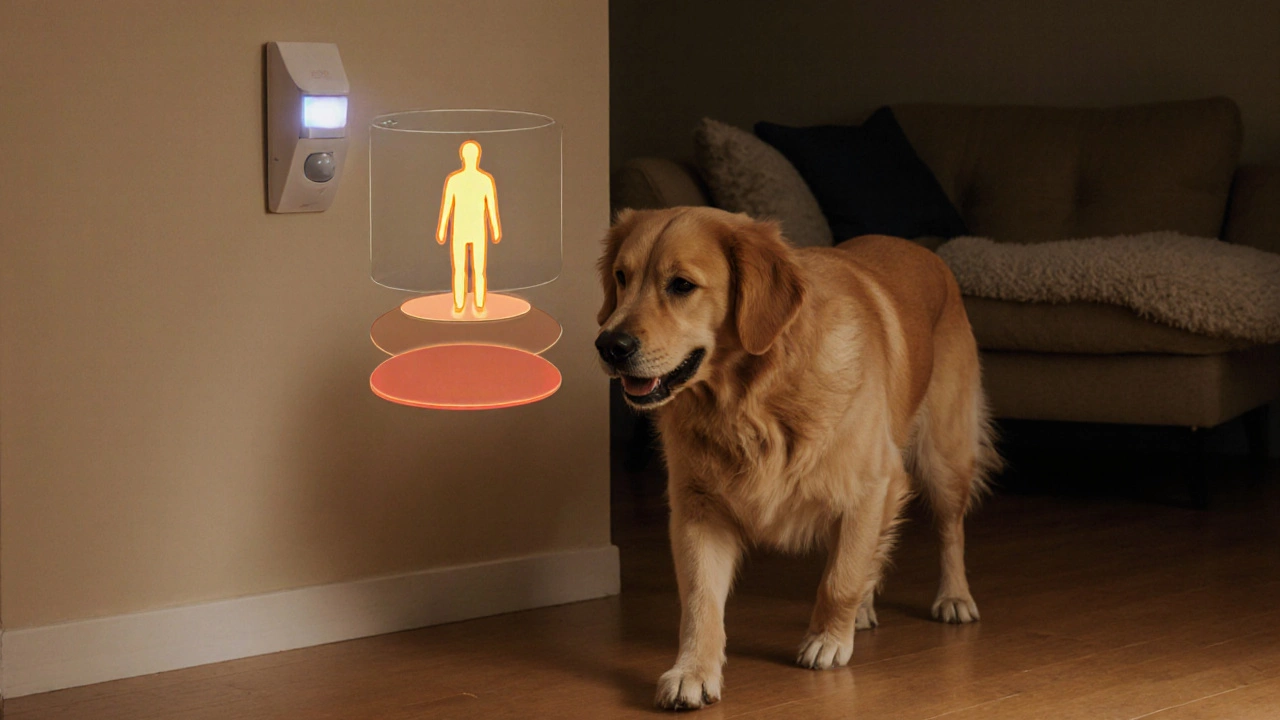
A pet-friendly alarm isn’t just a system that says “pet immune” on the box. It’s one that uses smart technology to ignore your dog or cat while still detecting a human intruder. The core tech behind this is called pet immunity motion sensor technology, which uses Passive Infrared (PIR) sensors. These sensors don’t just detect movement - they detect body heat. And they’re designed to filter out the heat signatures of animals below a certain weight. Most systems today are calibrated to ignore pets under 40 to 60 pounds. That means a 15-pound cat or a 50-pound golden retriever should be invisible to the sensor - as long as the system is properly set up. But here’s the catch: weight isn’t the only factor. How your pet moves, where the sensor is mounted, and even the temperature of the room can affect performance.How Pet Immunity Sensors Actually Work
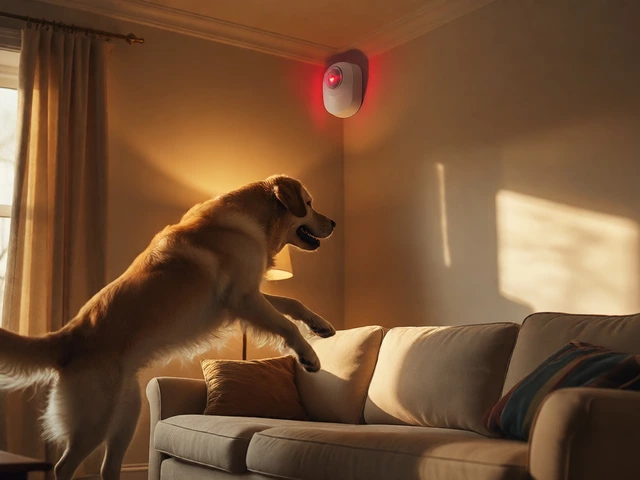
These sensors don’t just have one big detection zone. They’re split into multiple horizontal zones, like layers in a cake. The bottom layers - closest to the floor - are programmed to be less sensitive. That’s where your pet’s heat signature usually shows up. The upper zones, where a human’s torso would be, remain fully active. Manufacturers use special Fresnel lenses to create these zones. Some systems, like Vivint’s, even let you choose between two pet weight thresholds: 33 pounds or 55 pounds. Others, like SimpliSafe, offer three sensitivity levels in their app: pets under 15 lbs, under 30 lbs, or under 50 lbs. Ring’s system is similar but less reliable for larger dogs. Users report that even on the lowest setting, their 45-pound border collie still triggers the alarm. The key is that these sensors focus on heat patterns, not motion alone. A cat walking across the floor creates a small, low heat signature. A person entering the room creates a taller, more concentrated heat shape. The sensor’s algorithm looks for that difference. But if your pet jumps onto the couch or climbs onto a counter, they might enter the upper detection zone - and that’s when false alarms happen.Which Brands Actually Deliver on Pet Friendliness?
Not all systems are created equal. Based on 2025 testing and user reports, here’s how the top brands stack up:| Brand | Pet Weight Limit | Adjustable Settings | Extra Pet Features | Reliability for Large Pets |
|---|---|---|---|---|
| ADT | Up to 60 lbs | Professional setup only | SMART Monitoring (text alerts), no false dispatches | High - trusted by 28% of pet owners |
| SimpliSafe | Up to 60 lbs | Three sensitivity levels via app | Temperature alerts, camera two-way talk, intruder verification | High - works for most dogs under 60 lbs |
| Vivint | Up to 80 lbs (new 2025 models) | Two sliders: pet size + sensitivity | AI-powered pet detection, smart lock access for pet sitters | Best - leading in AI pet recognition |
| Frontpoint | Up to 40 lbs | Fixed setting | Basic motion detection only | Moderate - only for small to medium pets |
| Ring | Up to 50 lbs (claimed) | Three app settings | Camera-based alerts, no environmental monitoring | Low - 28% of pet owners report false alarms |
ADT and SimpliSafe are the most reliable for households with dogs under 60 pounds. Vivint is the clear winner if you have a larger pet - their 2025 models now support up to 80 pounds and use AI to analyze movement patterns, not just weight. Ring, despite being popular, consistently underperforms for medium-to-large dogs. Frontpoint is fine for cats and small dogs, but not much else.

Installation Matters More Than You Think
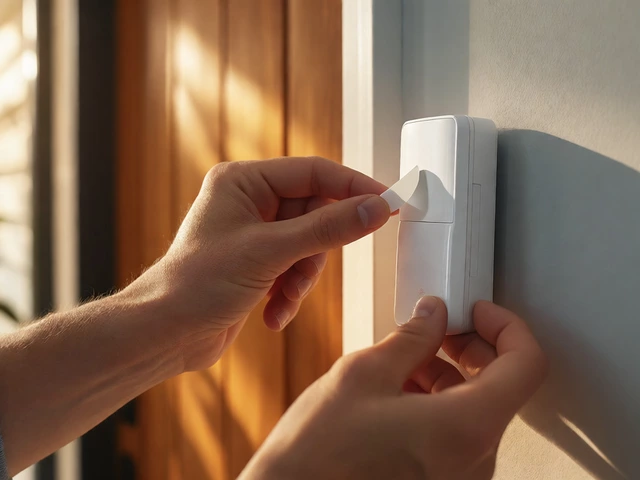
Even the best pet-friendly sensor won’t work if it’s installed wrong. Experts at CPI Security and Roombanker agree: placement is everything.- Mount sensors 7 to 8 feet high. That puts the lower, pet-ignore zones right above your pet’s usual path.
- Avoid pointing sensors directly at pet doors, windows, or heat vents. Pets love to sit near those, and heat from vents can confuse the sensor.
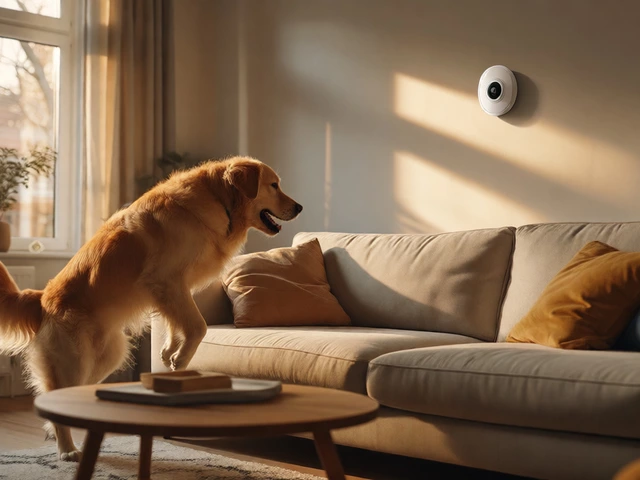
- Don’t install sensors where pets jump - like near couches or beds. If your dog leaps onto the sofa, they might cross into the human detection zone.
- Test the system with your pet. Walk around the room while they’re moving normally. See if the alarm triggers. Try having them jump, stretch, or lie down in their favorite spots.
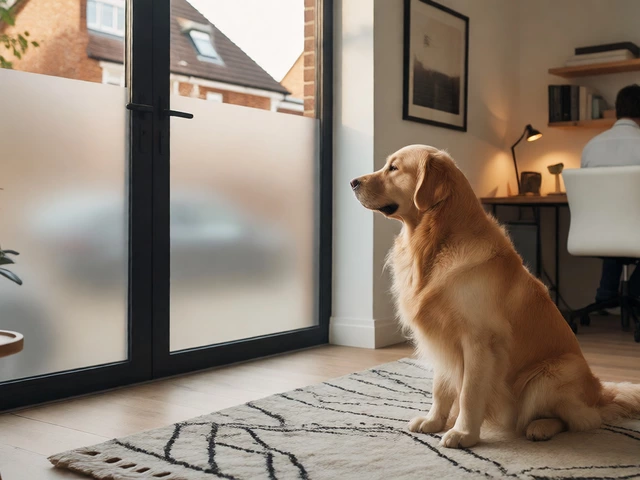
One user on Reddit, u/PetLoverSecurity, tested their SimpliSafe system with two dogs - a 55-pound golden retriever and a 62-pound husky. The retriever never triggered it. The husky did - twice. Why? Because he liked to stand on his hind legs to look out the window. That’s a classic failure point. Weight limits assume pets stay on the floor. If yours jumps, climbs, or stands tall, you need a smarter system.
Don’t Forget Environmental Safety for Pets
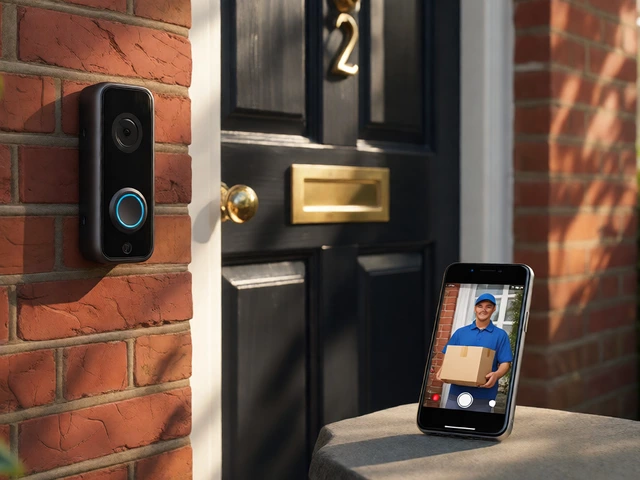
A pet-friendly alarm isn’t just about stopping false alarms. It’s also about keeping your pet safe when you’re away. That’s why smoke and carbon monoxide detectors are just as important as motion sensors. SimpliSafe and Vivint now include temperature sensors that alert you if your home gets too hot or cold for your pet. This is huge for owners of reptiles, birds, or elderly dogs with health issues. If your system doesn’t monitor temperature, you’re missing a critical layer of protection. And here’s something most people overlook: two-way audio. If your alarm has a camera with speaker and mic, you can talk to your pet while you’re at work. Over 70% of SimpliSafe users with pets use this feature weekly - not to check for intruders, but to calm their dog down or tell them “good boy” when they’re being quiet.
How to Test Your System Right Now
You don’t need to buy a new system to find out if yours is truly pet friendly. Here’s a quick 5-step test:- Check the manual or app for the maximum pet weight rating. If it doesn’t say, assume it’s not designed for pets.
- Locate all motion sensors. Are they mounted high on walls? Are they pointing at pet beds, windows, or stairs?
- Turn on the system in “test mode” (most apps have this). Let your pet move around normally for 10 minutes.
- Have your pet jump onto furniture or walk near heat sources. Watch for triggers.
- If the alarm went off, try lowering the sensitivity setting - if your system allows it. If it still triggers, the sensor isn’t pet-proof.
If your system fails this test, don’t just live with it. False alarms waste your time, stress your pet, and can even lead to fines from your local police department in some areas. Upgrade or reposition your sensors. It’s worth it.
What’s Coming Next in Pet-Friendly Alarms
The industry is moving away from weight-based systems. The next generation uses AI to recognize pets by shape, movement, and even breed patterns. Vivint’s 2025 system already does this - it doesn’t just ignore animals under 80 pounds. It knows the difference between a cat, a dog, and a human based on how they move. By 2027, ABI Research predicts 65% of premium systems will use machine learning for pet detection. Some are even testing integration with pet wearables - think smart collars that tell the alarm system, “This is my dog, don’t trigger.” For now, if you have a large dog, a cat that climbs, or multiple pets, don’t settle for a system that just says “pet friendly.” Look for AI-powered detection, adjustable zones, and environmental monitoring. The old weight-limit approach is outdated.Final Checklist: Is Your Alarm Really Pet Friendly?
Before you trust your system with your pet’s safety, ask yourself:- Does the manual or product page clearly state a pet weight limit? (If not, skip it.)
- Can I adjust sensitivity settings in the app or on the device?
- Are sensors mounted 7-8 feet high and away from pet hotspots?
- Does the system include smoke/CO detection and temperature alerts?
- Have I tested it with my pet moving normally - including jumping?
If you answered yes to all five, you’re good. If not, it’s time to make a change. Your pet deserves a security system that doesn’t scare them every time they stretch.
Can my cat trigger a pet-friendly alarm?
Most pet-friendly systems are designed to ignore cats, even large ones, since they typically weigh under 20 pounds. But if your cat jumps onto counters, shelves, or couches near the sensor, they might enter the upper detection zone and trigger an alarm. Mount sensors higher and avoid pointing them at areas your cat likes to perch.
Do pet-friendly alarms work for multiple pets?
Yes, as long as all your pets are under the system’s weight limit. Most systems handle two or three pets fine - as long as they’re all under 50-60 pounds. If you have a mix of a large dog and a small cat, the system will ignore both. But if you have two large dogs over 60 pounds, you’ll likely get false alarms. No system currently handles multiple large dogs reliably.
Why does my alarm go off when my pet is sleeping?
Your pet’s body heat might be changing enough to trigger the sensor - especially if they’re near a vent, heater, or window that’s warming up the room. Also, if the sensor is too low or pointed directly at their bed, it can mistake their breathing or shifting as a human. Try repositioning the sensor or lowering sensitivity.
Are wireless alarms better for pets than wired ones?
No - the wiring doesn’t affect pet immunity. What matters is the sensor technology. Both wireless and wired systems can be pet-friendly if they use advanced PIR sensors with zone detection. Focus on the brand, weight limit, and adjustability, not whether it’s wired or wireless.
Can I add pet-friendly sensors to my existing alarm system?
Yes, if your system supports third-party sensors. SimpliSafe and Ring allow you to add compatible pet-friendly motion detectors. ADT and Vivint usually require their own equipment. Check your system’s compatibility list before buying new sensors. Don’t assume all motion sensors are pet-friendly - only buy ones labeled specifically as “pet immune.”