Infrared Security Technology: How It Works and Why It Matters
When dealing with Infrared, the invisible part of the light spectrum that detects heat and motion. Also known as IR, it lets cameras see in total darkness and helps sensors spot intruders without a flicker of light.
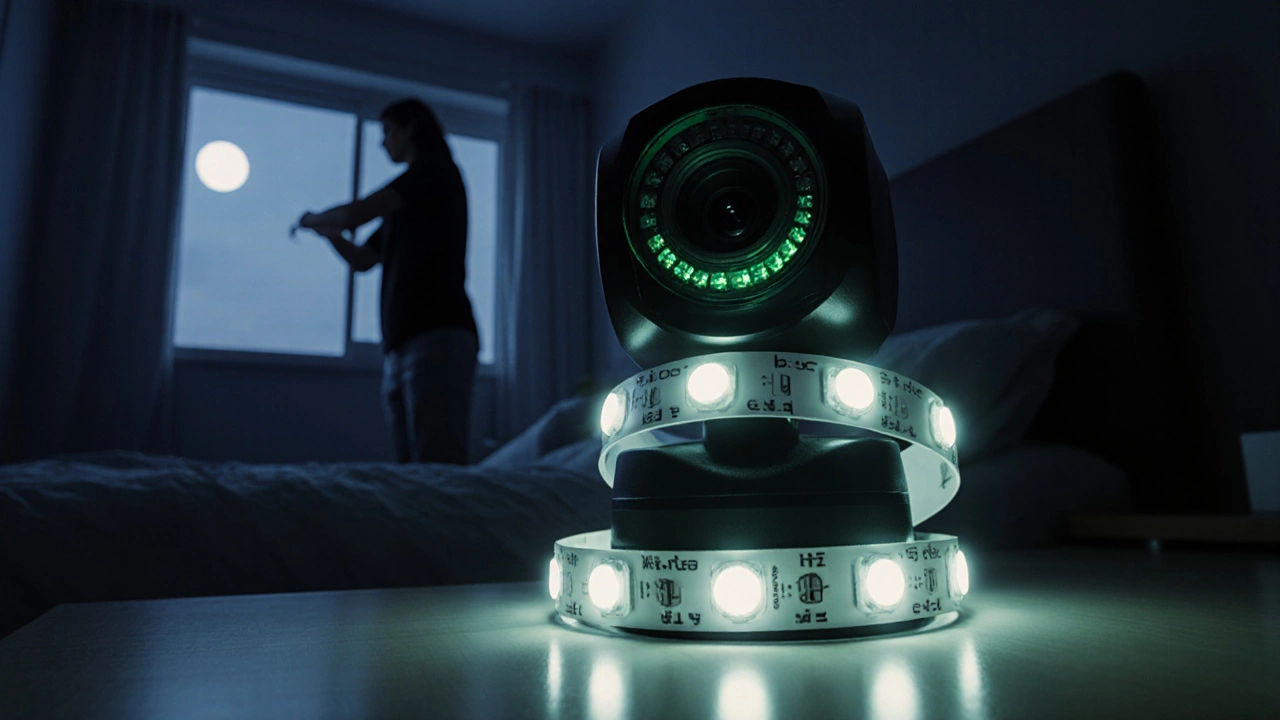
One of the most common uses is in PIR motion sensor, a passive infrared detector that triggers an alarm when a warm body moves across its field. This sensor relies on the fact that infrared wavelengths change when a person passes by, making it a cheap and reliable first line of defense. Night vision camera, a security camera equipped with IR LEDs to illuminate scenes invisible to the human eye, uses the same principle to capture clear footage after sunset. Meanwhile, thermal imaging, technology that visualizes heat signatures rather than reflected light, pushes infrared a step further, letting you see people through smoke, fog, or even walls in some cases.
Key Infrared Applications in Home Security
Because infrared works without visible light, it pairs perfectly with modern security camera, a device that monitors property and sends alerts in real time. Whether you choose a wired PoE model or a battery‑powered Wi‑Fi unit, the IR component guarantees usable footage 24/7. Together, these tools create layered protection: PIR sensors detect movement, night vision cameras record it, and thermal imaging adds an extra safety net for blind spots or harsh environments.
Below you’ll find a curated list of articles that break down each of these technologies, show you how to install and troubleshoot them, and explain how they fit into a smarter, more resilient security system.
10
Oct
Learn how to see in total darkness using infrared, thermal imaging, and low‑light cameras. Get tech comparisons, DIY hacks, and expert tips for a reliable night‑vision setup.