
Burglary Deterrence Calculator
Security Configuration
Estimated Burglary Deterrence
60%+ burglars avoid homes with visible alarms (University of North Carolina study)
81%+ burglars flee when alarms activate (ADT data)
85%+ police response rate with verified alarms (RapidSOS data)
When you hear a siren blaring from your neighbor’s house, do you wonder if it actually stops a burglar-or just wakes up the whole block? It’s a question that matters more than you think. If alarms don’t scare off criminals, then why spend the money? But if they do, then why do so many homes still get broken into? The truth isn’t simple. Alarms aren’t magic shields. They’re part of a bigger game-one where criminals weigh risk, reward, and opportunity in seconds.
Most Burglars Check for Alarms First
Before even touching a window or picking a lock, most burglars look for signs of security. A 2023 study from the University of North Carolina found that 83% of convicted burglars actively scan homes for alarms, cameras, or security signs before deciding whether to break in. That’s not luck. It’s strategy. They’re not random smash-and-grab artists. They’re calculating. They want the easiest target-the one with no alarms, no cameras, no dogs, no lights on.
And here’s the kicker: 60% of them will walk away if they see an alarm system. Not because they’re scared of the noise. But because alarms raise the risk. If you’re caught, you’re more likely to be identified. More likely to be arrested. More likely to go to jail. That’s not fear of the alarm itself. It’s fear of the consequences.
Visible Alarms Work Better Than Hidden Ones
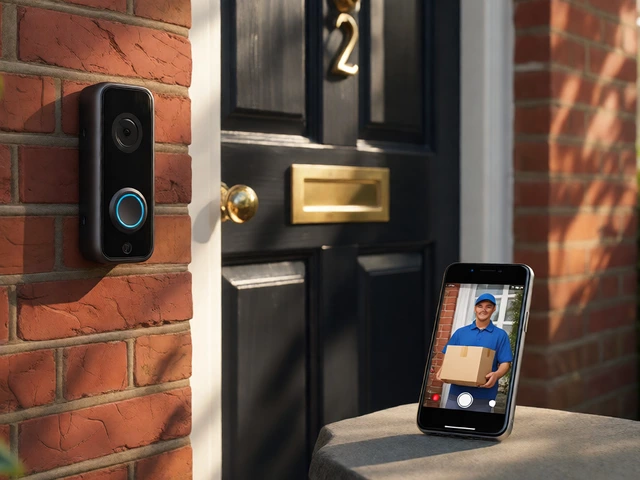
It’s not enough to have an alarm. It has to be obvious. A study by ADT showed that 60% of burglars say visible security cameras and alarm signs directly influence their choice of target. A yard sign that says “Protected by ADT” or a camera mounted above the front door? That’s a red flag. It says: “This home is watched. Someone’s paying attention.”
That’s why so many people install fake cameras. They think it’s enough. But criminals know the difference. A fake camera looks cheap. It’s mounted crooked. The lens is dull. Real ones have wires, blinking LEDs, and branding. And if you’ve got real cameras, you’re more likely to have real monitoring too. That’s the real deterrent.
When the Alarm Goes Off, Most Burglars Run
Imagine you’re inside a house, breaking in. You’ve got 8 to 10 minutes before someone notices. You’re moving fast. Then-BRRRRRRT. The alarm screams. What do you do?
According to ADT’s data, 50% of burglars would drop everything and run immediately. Another 31% might hesitate, look around, and then leave. Only 13% would keep going. That’s not a gamble. That’s a 81% chance the alarm stops the crime before it’s finished.
Why? Because alarms don’t just scare. They draw attention. Neighbors hear it. Police might come. Cameras capture your face. You’re no longer invisible. And for most burglars, being seen is the worst-case scenario.

But Alarms Alone Aren’t Enough
Here’s the problem: not all alarms are created equal. A basic, unmonitored siren? It might scare off a casual burglar-but not a pro. DeepSentinel’s 2023 analysis found that 40% of criminals aren’t deterred by traditional alarms at all. Why? Because they’ve seen them before. They know how to disable them. They’ve jammed signals. They’ve cut power lines. They’ve waited for the noise to stop.
And here’s the real issue: false alarms. The FBI says over 95% of alarm activations are false. A dog barking. A storm rattling a window. A kid forgetting to disarm the system. Police departments in 78 major U.S. cities now ignore unverified alarms. Why? Because they’re overwhelmed. They’ve got real emergencies. They can’t waste time chasing ghost alarms.
So if your alarm doesn’t connect to a monitoring center that verifies the threat with video or audio, it’s mostly just noise. And noise doesn’t stop determined criminals.
Smart Systems Are the New Standard
The game has changed. Today’s most effective systems don’t just scream. They watch. They listen. They verify. Companies like DeepSentinel and RapidSOS now use AI to analyze video and sound in real time. If the system sees a person breaking a window, hears glass shattering, and confirms movement inside-only then does it alert police. False alarms drop from 95% to under 3%.
That’s why police response rates for verified alarms have jumped from under 5% to over 85% in cities using these systems. It’s not magic. It’s technology that finally makes alarms credible again.
And it’s not just alarms. The best setups combine cameras, door sensors, smart locks, and motion lights-all working together. A burglar sees a camera, then a blinking porch light turns on, then the front door locks automatically. That’s not a house. That’s a trap. And most burglars won’t walk into a trap.

Who Still Gets Broken Into?
So why do 1.4 million burglaries still happen every year in the U.S.? Because security isn’t universal. Homes without any protection are 300% more likely to be targeted, according to DeepSentinel. But even among homes with alarms, the weakest ones still get hit.
Those are usually the DIY systems with no monitoring. The ones where the siren goes off but no one’s watching. The ones with cameras pointed at the driveway instead of the front door. The ones buried in the basement, forgotten after installation.
And then there’s location. In high-crime neighborhoods, some criminals are desensitized. They’ve seen alarms before. They know which ones are real. They’ve got tools to bypass them. That’s why layered security matters more here-motion lights, reinforced doors, neighborhood watch groups, and community alerts.
A 2023 study by the National Sheriffs’ Association found that homes in active neighborhood watch programs had 28% fewer break-ins-even without fancy tech. Human eyes still matter.
What Actually Works
So if you want to keep your home safe, here’s what you need:
- Visible cameras-front door, side entrances, garage. Not hidden. Not fake.
- Professional monitoring-with video verification. No point in an alarm if no one responds.
- Smart sensors-on all ground-floor windows and doors.
- Yard signs and window decals-they’re cheap, and they work.
- Outdoor lighting-motion-activated lights make it harder to approach unseen.
- Regular testing-test your system monthly. Fix false triggers. Update software.
Don’t rely on one thing. Alarms are part of a team. Cameras are the eyes. Sensors are the ears. Monitoring is the brain. And you? You’re the commander.
It’s Not About Fear. It’s About Risk.
Burglars aren’t afraid of alarms. They’re afraid of getting caught. And alarms-when done right-make getting caught way more likely. That’s why they work. Not because they’re loud. Not because they’re high-tech. But because they turn a quiet, anonymous crime into a risky, public one.
The best alarm system isn’t the most expensive one. It’s the one that makes you look like the hardest target in the neighborhood. And that’s something even the most experienced thief will think twice about.
Do burglars avoid homes with alarms?
Yes, 60% of burglars actively avoid homes with visible alarm systems, according to a University of North Carolina study. They look for easy targets, and alarms raise the risk of being caught. But only if the system is obvious and well-maintained.
Are alarm systems worth the cost?
If you choose a system with professional monitoring and video verification, yes. Homes with verified alarm systems see up to 300% fewer burglaries than unprotected homes. The monthly cost-$40 to $60-is far less than the average $2,700 loss from a single burglary, according to FBI data.
Do police respond to home alarms?
Only if the alarm is verified. In most U.S. cities, police ignore unverified alarms because 95% are false. But with video or audio verification, response rates jump to over 85%. Systems like RapidSOS and DeepSentinel now partner with 1,800+ police departments to prioritize verified alerts.
Can burglars disable alarms?
Yes, especially older or DIY systems without backup power or cellular connectivity. Signal jammers can block wireless alarms, and cutting power can shut down battery-dependent units. Professional systems with cellular backup, tamper alerts, and battery backups are much harder to disable.
Do fake security cameras deter burglars?
Not reliably. Experienced burglars can spot fake cameras by their lack of wiring, poor placement, or dull lenses. Real cameras have blinking LEDs, brand logos, and proper mounting. A fake camera might fool a casual observer-but not a determined intruder.
What’s the biggest mistake people make with alarms?
Assuming the alarm alone is enough. The biggest mistake is installing a system without monitoring, verification, or visible signage. An alarm that nobody hears or responds to is just noise. The most effective systems combine visible deterrents, real-time verification, and professional response.