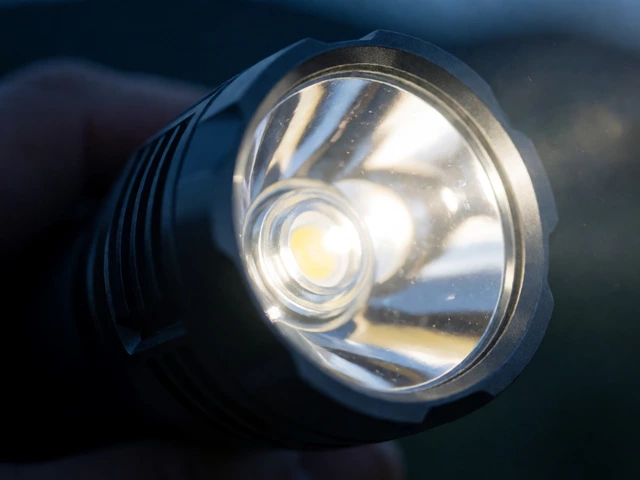
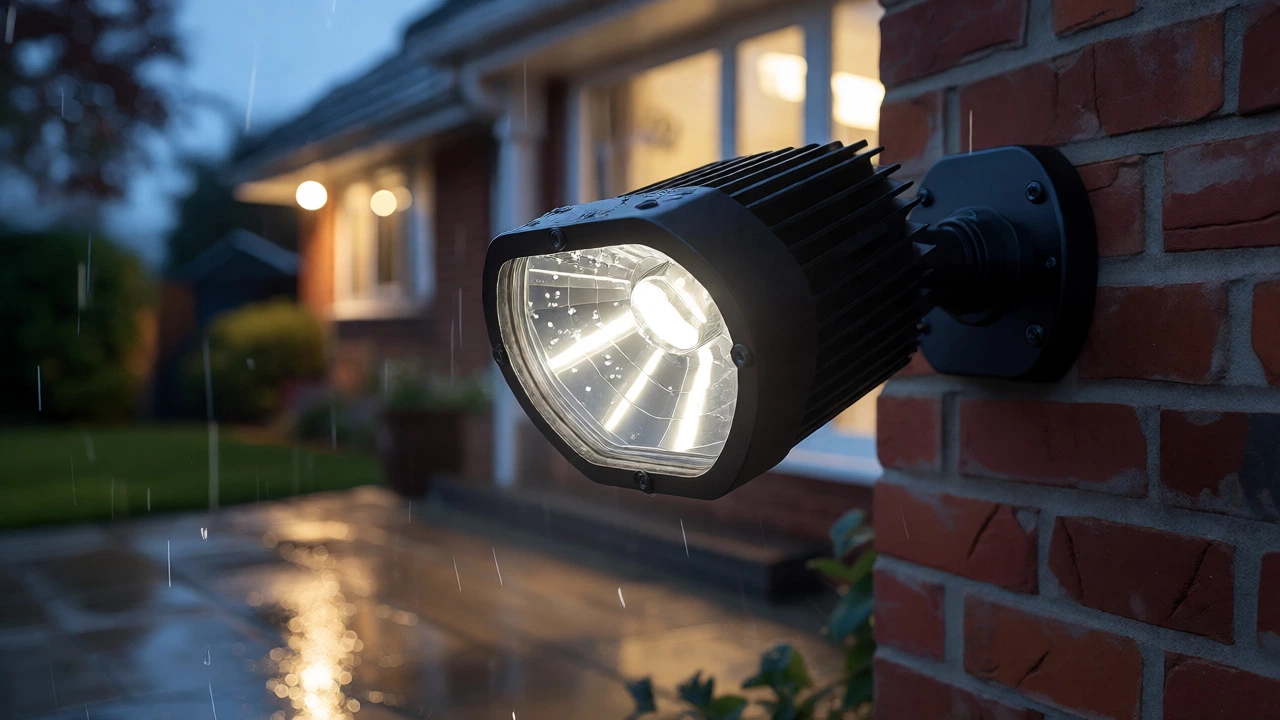
LED Security Light Lifespan Estimator
Manufacturers often quote theoretical lifespans (like 50,000 hours) that don't account for heat, moisture, or cheap drivers. This tool estimates how many years your specific fixture will actually last before needing replacement.
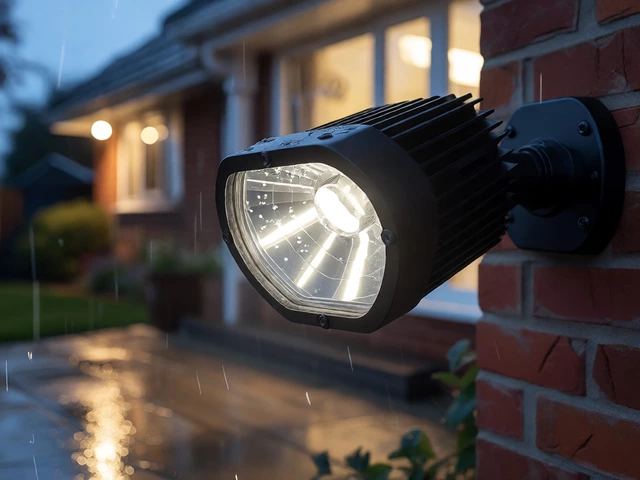
You just installed a sleek new LED security light, and it looks great. But how long will it actually stay bright before you’re climbing a ladder again? The short answer is complicated: while manufacturers often promise decades of service, real-world conditions like heat, moisture, and cheap drivers can cut that time in half.
Most people assume an LED bulb lasts forever because the chip itself rarely burns out like an old incandescent filament. That’s true-the semiconductor might survive for years-but the rest of the fixture? Not so much. In this guide, we’ll break down what those confusing hour ratings on the box really mean, why your $30 big-box store light might fail in three years while a commercial unit lasts fifteen, and exactly how to maximize the life of your outdoor lighting.
The Myth of "Forever": Rated Hours vs. Real Years
When you look at the packaging for an LED floodlight, you’ll see numbers like 25,000, 50,000, or even 100,000 hours. It’s tempting to do the math and think, "If I run this for 8 hours a night, 50,000 hours means it will last over 17 years!" While the math checks out, the reality is messier.
These ratings refer to the theoretical lifespan of the LED chips under ideal laboratory conditions. They don’t account for the driver electronics, the plastic housing, or the motion sensor-all of which are often the first parts to fail. A more realistic expectation for residential-grade fixtures is significantly shorter. For standard consumer products, expect 3 to 5 years of reliable performance. Commercial-grade units with better thermal management can stretch that to 10-15 years. Industrial fixtures designed for harsh environments may hit that 20-year mark, but they cost a premium.
| Fixture Tier | Rated Hours (L70) | Real-World Expectancy (6 hrs/night) | Common Failure Point |
|---|---|---|---|
| Budget / Big Box | 15,000 - 25,000 | 3 - 5 Years | Driver failure, seal degradation |
| Mid-Range Residential | 25,000 - 40,000 | 7 - 10 Years | Motion sensor issues, minor dimming |
| Commercial Grade | 50,000 - 60,000 | 12 - 15 Years | Housing corrosion, lens clouding |
| Industrial / Premium | 60,000 - 100,000+ | 15 - 20+ Years | Rare; usually obsolete tech before failure |
Understanding L70: Why Dimming Is Normal
Here is a concept that confuses many homeowners: LEDs rarely die suddenly. Instead, they fade. This is measured by the L70 rating. An L70 rating of 50,000 hours doesn't mean the light explodes at hour 50,001. It means that after 50,000 hours of use, the light output has dropped to 70% of its original brightness.
Is a light at 70% brightness still useful? Often, yes. You might not notice the difference until you compare it side-by-side with a brand-new unit. However, if your goal is maximum security visibility, relying on a fixture that has dropped below L70 might leave dark spots in your yard. Most manufacturers design their warranties around this metric. If your light fails completely before reaching its rated L70 hours, it’s likely due to a component failure rather than natural lumen depreciation.
The Real Killers: Heat, Moisture, and Cheap Drivers
If the LED chip is immortal, what kills your security light? Three main culprits:
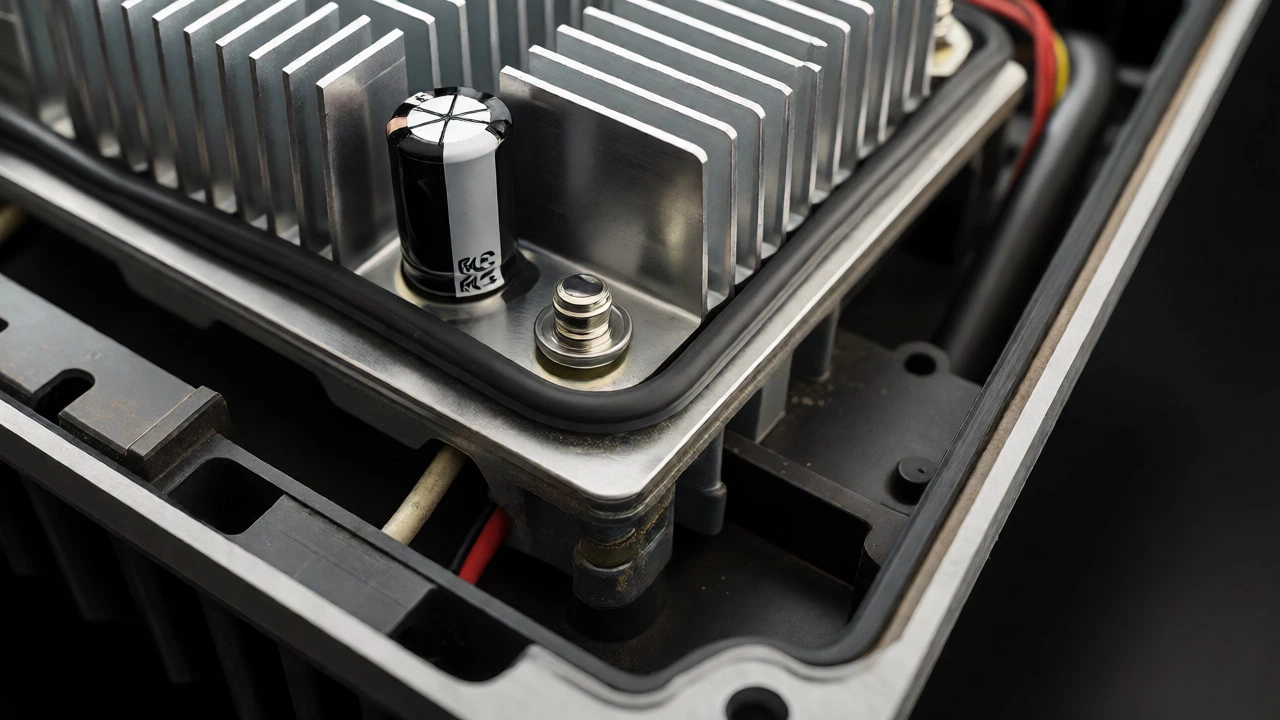
- Heat: LEDs hate hot feet. If a fixture is mounted in an enclosed area where air can’t circulate, or if the heat sink (the metal fins on the back) is too small, the internal temperature rises. This accelerates the degradation of both the chips and the electronics.
- Moisture: Look for the IP Rating (Ingress Protection). For outdoor use, you need at least IP65. Lower ratings allow dust and water vapor to seep in, corroding the circuit board and causing shorts during rainstorms.
- The Driver: This is the little box inside the fixture that converts your home’s AC power to the DC power the LEDs need. It’s essentially a mini power supply. In budget fixtures, these components are often low-quality capacitors that dry out or blow up long before the LEDs wear out. This is the most common reason a "new" LED light stops working entirely.
A study by Tekhol LED highlighted that while theoretical chip life is high, real-world module failure often occurs within 5-8 years due to driver breakdowns and seal failures, particularly in humid or coastal climates. If you live near the ocean, salt spray can destroy unsealed electronics in as little as two years.
Usage Patterns Matter: Motion Sensors vs. Always-On
How you use the light changes its lifespan dramatically. An always-on floodlight running 12 hours a night accumulates wear much faster than one triggered by motion.
Consider this scenario: A motion-activated light turns on for only 3 minutes when someone walks by. Even if it triggers 20 times a day, that’s just one hour of runtime per night. At this rate, a 25,000-hour rated light could theoretically last over 60 years. The limiting factor becomes the mechanical reliability of the PIR sensor, not the LED.
Conversely, a dusk-to-dawn light running continuously for 12 hours a night hits 4,380 hours a year. A 25,000-hour budget fixture would reach its L70 point in roughly 5.7 years. If you want longevity, using motion sensors or timers to reduce runtime is the single easiest way to extend life.
Buying Guide: How to Spot a Long-Lasting Light
Don’t just grab the cheapest option off the shelf. Spend five minutes checking these specs to ensure you’re buying something that will last:
- Check the Warranty: This is the best proxy for quality. A 1-year warranty suggests the manufacturer expects the driver to fail soon. Look for 5-year or longer warranties on residential units. Commercial brands often offer 10-year warranties.
- Look for Aluminum Housings: Plastic housings crack under UV exposure and trap heat. Aluminum acts as a heat sink, pulling heat away from the LEDs. If the back of the fixture is plastic, walk away.
- Verify the IP Rating: Ensure it is IP65 or higher. IP65 means it’s dust-tight and protected against water jets. For heavy rain areas, IP66 is safer.
- Brand Reputation: Stick to established lighting brands like Philips, Sylvania, or specialized outdoor vendors. Generic no-name brands sold online often exaggerate their hour ratings.
Troubleshooting Early Failures
If your LED security light dies early, check these common issues before throwing it out:
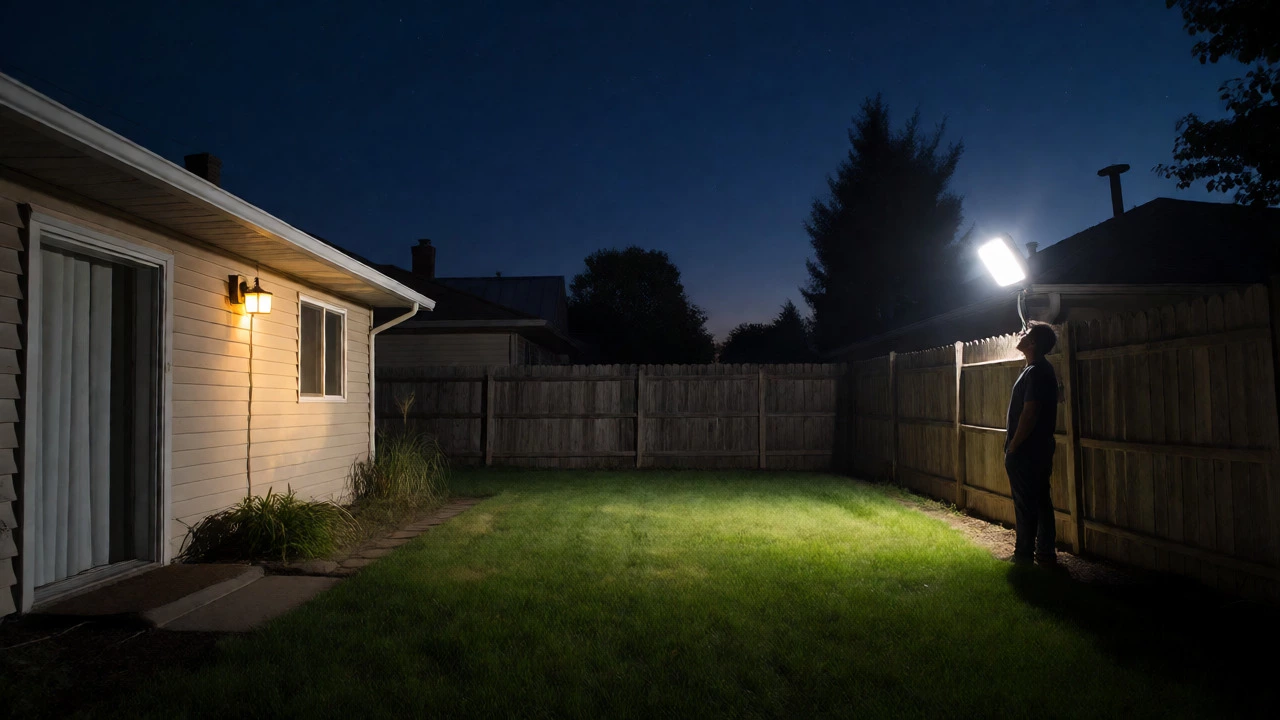
- Sensor Malfunction: Sometimes the LED works, but the motion sensor gets stuck in the "off" position due to dirt, spider webs, or extreme cold. Clean the sensor lens with a soft cloth.
- Voltage Spikes: If you live in an area with unstable power, surges can kill the driver instantly. Installing a surge protector at the junction box can save your fixture.
- Overheating: Did you mount the light flush against a wall without ventilation? Move it to a location with airflow, or switch to a fixture designed for enclosed mounting.
Frequently Asked Questions
Do LED security lights burn out like regular bulbs?
Not typically. Unlike incandescent bulbs that have a filament that snaps, LEDs degrade slowly by losing brightness (lumen depreciation). However, the electronic driver inside the fixture often fails completely, causing the light to stop working abruptly, which feels like a traditional burn-out.
Is a 50,000-hour rating accurate for my backyard light?
It is a theoretical maximum under perfect lab conditions. In a real backyard exposed to sun, rain, and temperature swings, a mid-range fixture with a 50,000-hour rating will realistically provide about 7-10 years of good service before becoming noticeably dim or failing electronically.
Why did my new LED floodlight fail in less than a year?
Early failure is almost always due to a faulty driver or poor sealing allowing moisture ingress. Budget fixtures often use cheap capacitors in the driver that cannot handle heat cycles. Check if the fixture was overheated due to lack of ventilation or if it suffered a power surge.
Does turning the light on and off frequently shorten its life?
No. Unlike fluorescent lights, LEDs are not affected by frequent switching. In fact, using motion sensors to turn the light on only when needed significantly extends its overall calendar life by reducing total operating hours.
What does the IP rating mean for outdoor lights?
IP stands for Ingress Protection. The first number indicates protection against solids (dust), and the second against liquids (water). For outdoor security lights, you generally need an IP65 rating (dust-tight and protected against water jets) to ensure longevity in rain and wind.