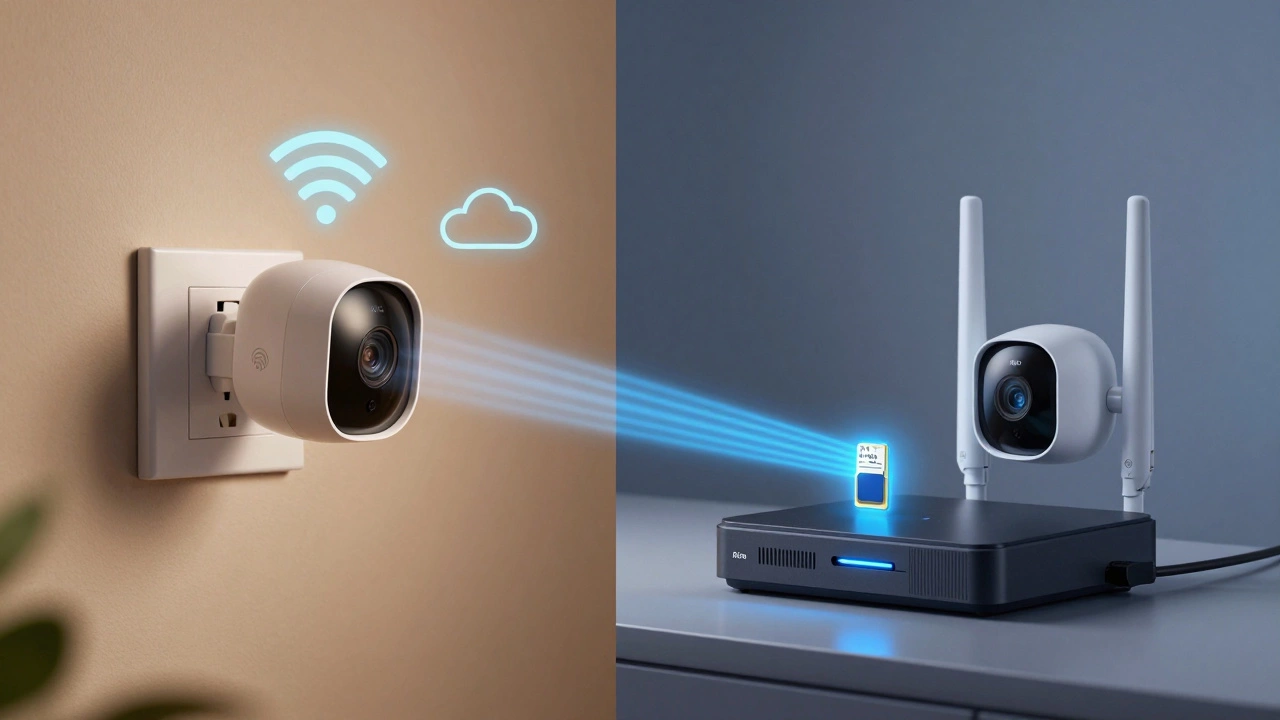
No Internet Cameras – Secure Surveillance Without Wi‑Fi
When talking about no internet cameras, security cameras that function without an internet connection, relying on wired links or local storage. Also known as offline CCTV, they eliminate bandwidth fees, avoid cloud‑privacy worries, and keep your footage safe even if the internet drops. No internet cameras encompass several practical setups, from fully wired systems to devices that store video on‑site, making them a solid choice for anyone who values reliability over remote convenience.
Wired Security Cameras: The Backbone of Offline Surveillance
One of the most common wired security cameras, cameras that connect directly to a recorder or monitor using Ethernet or coaxial cables. They offer stable power, consistent video quality, and no latency caused by Wi‑Fi interference. Because they draw power through the cable, you often skip separate adapters, which reduces clutter. In a typical home setup, a wired camera paired with a digital video recorder (DVR) or network video recorder (NVR) will capture high‑resolution footage 24/7, storing it on a local hard drive that only you can access.
Another popular offline option is a PoE camera, a power‑over‑Ethernet device that receives both power and data through a single cable. PoE simplifies installation—no need to run separate power lines—and supports long cable runs up to 100 meters. The PoE switch acts as the hub, feeding power and sending video to the NVR. This setup reduces points of failure and keeps your system secure from remote hacking attempts, because the video never leaves your private network.
For true offline storage, many users turn to local storage CCTV, systems that write video directly to internal drives, SD cards, or external NAS devices without cloud backup. Local storage gives you immediate playback, zero monthly fees, and total control over retention policies. You can set motion‑triggered recording to save space, or keep continuous footage for forensic use. Because the data stays on‑site, it’s insulated from internet outages and third‑party data breaches—two big concerns with Wi‑Fi cameras.
Choosing a no internet camera solution depends on where you need protection. In apartment blocks with weak Wi‑Fi, a wired or PoE setup guarantees clear video. Retailers that handle cash prefer offline storage to meet compliance and avoid data leakage. Rural homes with spotty broadband find peace of mind knowing their alarm system will still record even when the router is down. In all these scenarios, the core idea is simple: offline surveillance reduces reliance on external networks, cuts recurring costs, and boosts privacy. Below you’ll find a curated list of articles that walk you through data usage, lighting strategies, legal considerations, and hands‑on guides for getting your no‑internet camera system up and running.