Pet Immunity Motion Sensor: How It Keeps Your Alarm Quiet When Fido Walks By
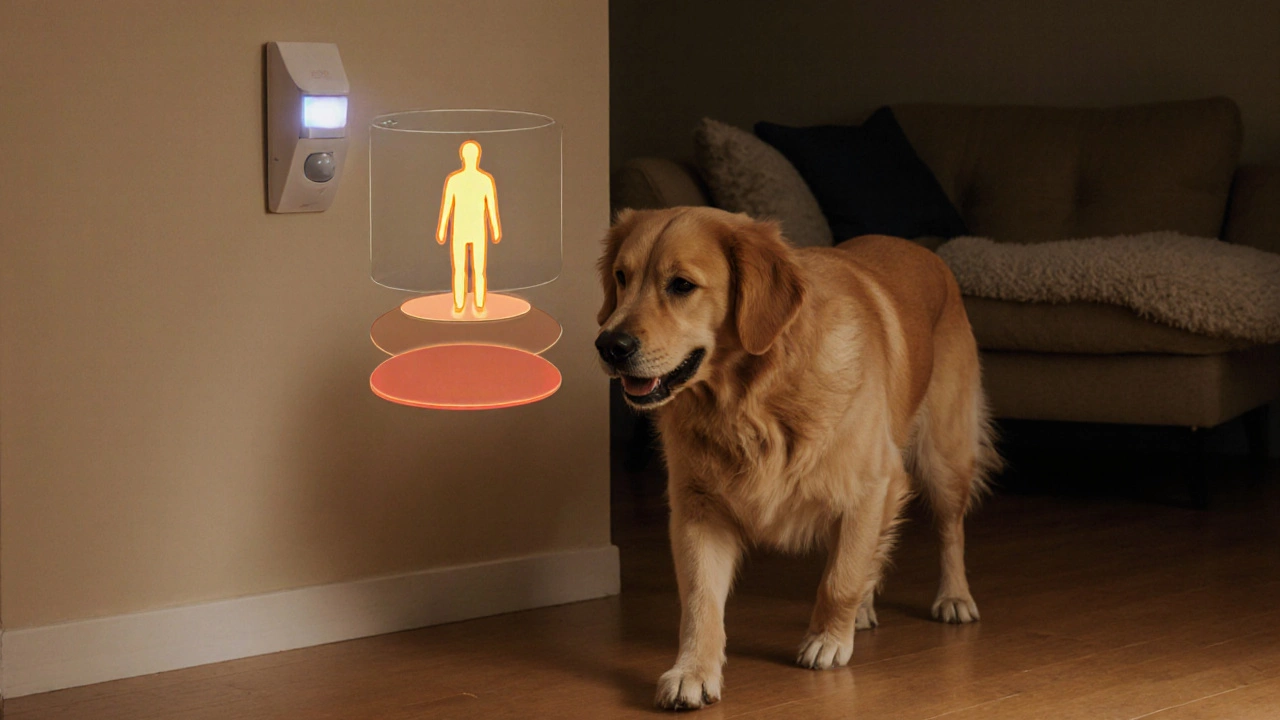
When you hear a motion sensor go off, you expect a burglar — not your cat jumping onto the couch. That’s where a pet immunity motion sensor, a type of motion detector designed to ignore small, low-moving heat signatures like those of cats and dogs. Also known as pet-friendly motion sensor, it uses advanced algorithms and sensor positioning to focus on human-sized heat patterns while tuning out pets under a certain weight. This isn’t magic — it’s smart engineering. These sensors don’t just detect movement; they analyze height, speed, and heat distribution. A 40-pound dog moving across the floor? Ignored. A person standing up from a chair? Triggered.
Not all motion sensors are built the same. Standard ones see any warm body as a threat. But a pet immunity motion sensor, a specialized security device that filters out animal movement using dual-technology detection. Also known as pet-tolerant alarm sensor, it often pairs infrared heat detection with microwave motion sensing. Together, they confirm if what’s moving matches a human profile — not a pet. That’s why these sensors are common in homes with medium to large dogs, or multi-pet households. You don’t need to lock your pet in a room every time you leave. You just need the right sensor.
Some systems even let you adjust the sensitivity zone. If your dog jumps on the sofa, you can set the sensor to ignore the lower 2 feet of the room. Others use ceiling mounts to look down, making it harder for pets to trigger them. And if you’ve ever dealt with false alarms from a windy curtain or a flickering light, you know how annoying it is. A good pet immunity sensor cuts out those distractions too.
It’s not just about comfort — it’s about reliability. If your alarm goes off every time your cat walks by, you’ll start ignoring it. And that’s when real danger slips through. A system that works when you need it — and stays quiet when you don’t — is the only kind worth having.
Below, you’ll find real-world tests and comparisons of systems that actually deliver on pet immunity. No marketing fluff. Just what works, what doesn’t, and how to pick one that fits your home — and your pets.
30
Nov
Learn how to tell if your alarm system truly ignores pets without triggering false alarms. Discover which brands work best for dogs and cats, how to test your setup, and what features actually matter for pet safety.