Device Security Risk Estimator
No device is 100% secure. This tool estimates relative vulnerability based on the "Security as an Economic Trade-off" model discussed in the article.
Analysis Result
Your estimated vulnerability score:
You might be looking for a magic bullet. A smartphone that spies back. A laptop that locks out every hacker on the planet. In the world of smart home security is the practice of protecting connected household devices from unauthorized access and data theft., we often treat "unhackable" as a feature you can buy off the shelf. But if you ask any senior security engineer in Sheffield or Silicon Valley, they will give you the same answer: it does not exist.
The short answer to "which device cannot be hacked?" is none. Every digital device with a processor and memory has a non-zero probability of being compromised. This isn't just pessimism; it is a fundamental law of computer science. Security is not a state of being; it is an economic trade-off between the cost of defending a system and the value of the data inside it.
The Myth of the Perfectly Secure Machine
Why do we keep chasing this ghost? The idea dates back to the 1990s with high-assurance military systems. We assumed that if we built a wall high enough, no one could climb it. By 2014, experts at institutions like UC Berkeley were already teaching that "no system is completely, 100% secure against all attacks."
Think about your daily life. You lock your front door. Does that mean your house is unbreakable? No. It means breaking in requires more effort than picking a pocket. Cybersecurity works the same way. The goal is not to make hacking impossible; it is to make it so difficult and expensive that the attacker gives up and targets someone else.
Modern security literature explicitly states that perfect security is fundamentally impossible. Why? Because systems are complex. They have thousands of lines of code written by different people. They rely on hardware manufactured globally. And crucially, they are operated by humans who make mistakes. As long as those three factors exist, vulnerabilities will exist.
Air-Gapped Computers: The Closest Thing to Unhackable
If you want to get close to unhackable, you need to look at air-gapped computers is computing systems physically isolated from unsecured networks like the internet.. These are machines that have never touched the web. No Wi-Fi card. No Ethernet cable. No Bluetooth. They sit in a room, disconnected from everything.
For decades, these were the gold standard for nuclear facilities, military command centers, and banking mainframes. The logic was simple: if there is no network connection, there is no remote entry point. You cannot hack what you cannot reach. Wired magazine’s 2014 Hacker Lexicon defined these systems as having infiltration that is "in most instances" impossible via remote means.
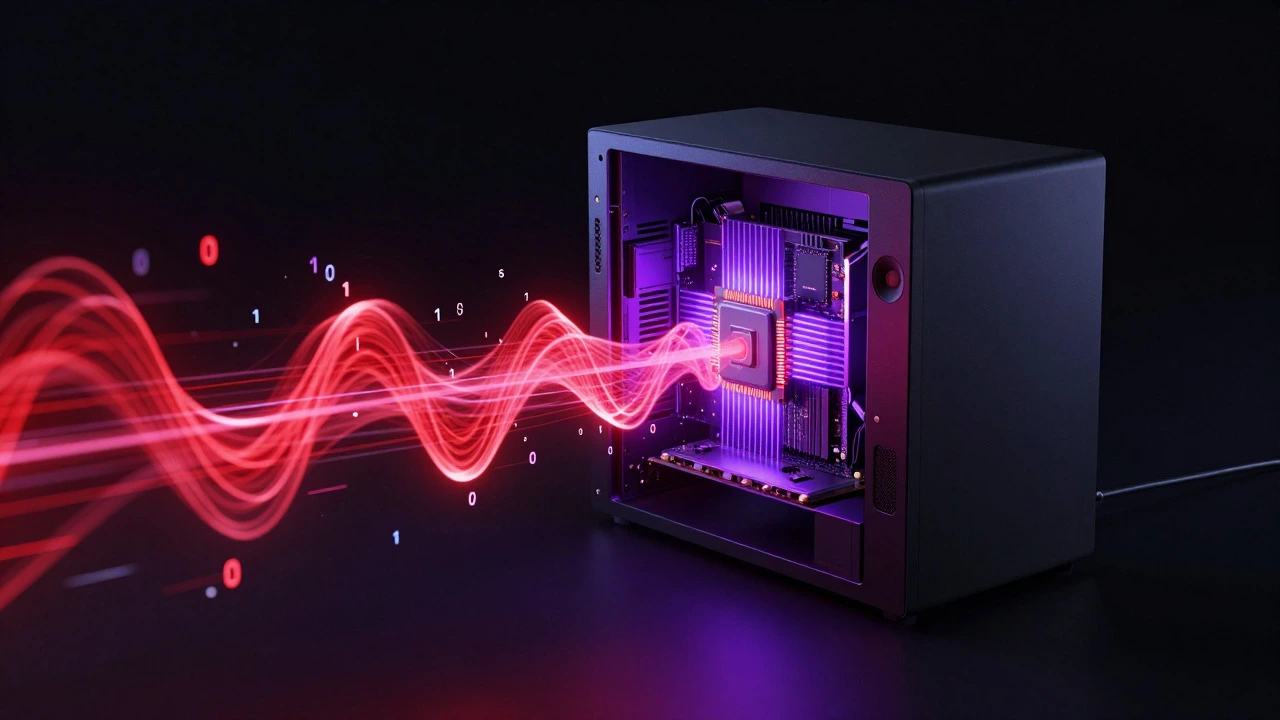
However, "impossible" is a dangerous word. Between 2018 and 2024, researchers proved that even these isolated fortresses leak secrets. How? Through side channels. Your computer emits heat. It vibrates when the hard drive spins. It radiates electromagnetic waves. Hackers found ways to turn these physical emissions into data streams.
How Hackers Break the Air Gap
You might think disconnecting the cable stops the hackers. It stops the easy ones. But sophisticated attackers use physics, not just code. Here is how they breach the gap:
- Acoustic Emissions: Malware can control the speakers or the power supply unit to emit clicks or hums at specific frequencies. A microphone nearby (or even a sensitive vibration sensor) can record these sounds and decode them into binary data.
- Electromagnetic Radiation: When a disk reads data, it creates tiny electrical currents. These currents emit radio waves. Researchers demonstrated using SATA cables as improvised antennas to broadcast data wirelessly out of a Faraday cage.
- Optical Signals: Some malware blinks the tiny LED lights on a keyboard or motherboard in Morse-code-like patterns. A camera across the room can capture these flashes and reconstruct the stolen files.
- Thermal Leaks: Processing data generates heat. Advanced sensors can detect minute temperature changes corresponding to CPU activity, allowing attackers to infer what data is being processed.
In 2023, a study published in Communications of the ACM highlighted that air-gapped networks remain vulnerable to these covert channels. The Stuxnet worm, discovered in 2010, famously used infected USB drives to jump the air gap in Iranian nuclear facilities. This shows that human behavior-plugging in a friend's flash drive-is often the weakest link, not the software itself.
| Device Type | Attack Surface | Vulnerability to Remote Hacking | Vulnerability to Physical/Side-Channel |
|---|---|---|---|
| Standard Smartphone | High (Wi-Fi, Cellular, Apps) | Very High | Medium |
| Hardened Phone (e.g., Up Phone) | Medium (Firewall, Toggles) | Low | Medium |
| Air-Gapped PC | Low (No Network) | Negligible | High (if targeted) |
| Fully Shielded Server | Minimal | None | Low (requires proximity) |
What About "Unhackable" Phones?
You may have seen ads for phones marketed as "unhackable." Devices like the Up Phone offer impressive features: visual firewalls, hardware switches to kill the camera and microphone, and scheduled secure reboots. These are excellent tools for privacy-conscious users.
But let’s be clear. These phones run on standard operating systems. They use chips made in the same factories as your average Android or iPhone. If a vulnerability is found in the underlying processor or the OS kernel, the hardware switch doesn't save you. Marketing labels like "unhackable" reflect a hardened threat model, not an absolute guarantee. They are significantly harder to hack than a default-configured Samsung or Apple device, but they are still subject to zero-day exploits and supply-chain compromises.
Smart Home Security: Managing Risk, Not Eliminating It
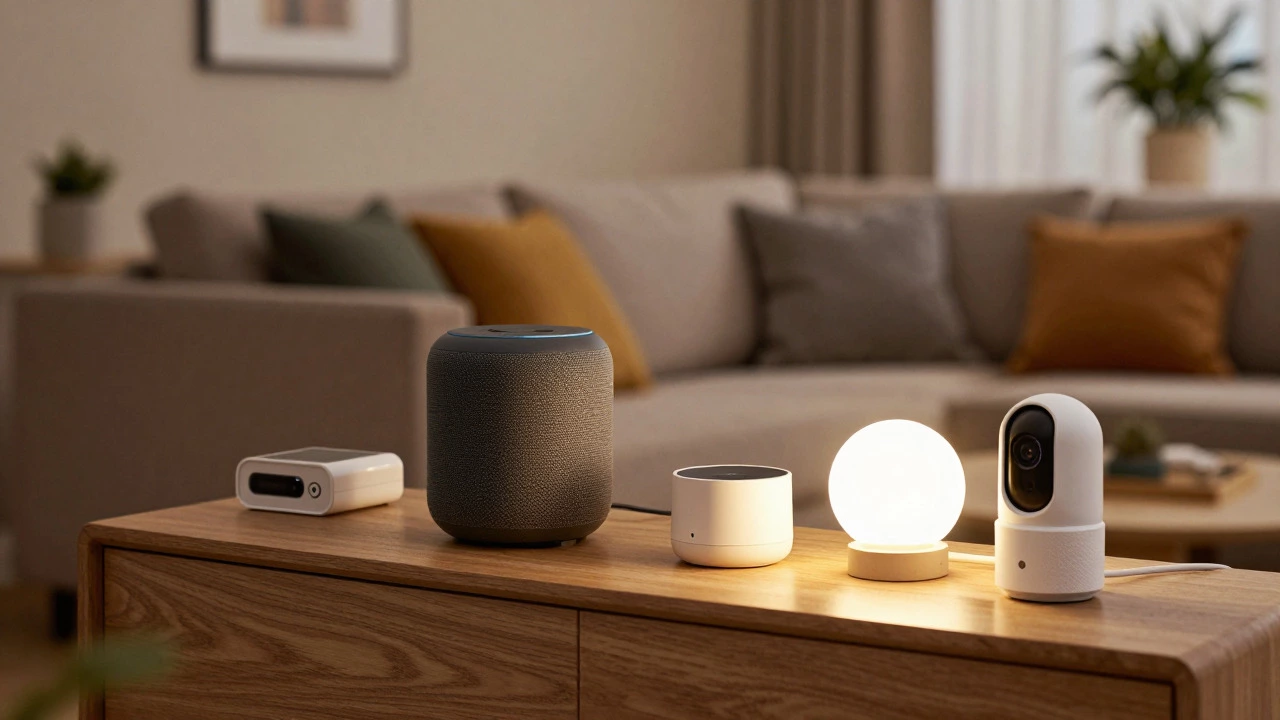
So, how does this apply to your home? You probably don't need a Faraday cage around your living room TV. But understanding that nothing is unhackable changes how you set up your smart home ecosystem is a network of interconnected IoT devices controlled via apps or voice assistants..
Instead of looking for a mythical secure device, focus on reducing the attack surface. Here are practical steps to make your devices sufficiently hard to hack for typical criminals:
- Segment Your Network: Put your smart bulbs, cameras, and fridges on a separate Guest Wi-Fi network. If a cheap smart plug gets hacked, the attacker stays in the guest zone and cannot touch your laptop or bank details.
- Disable Unused Features: Turn off Bluetooth on devices that don’t need it. Disable remote access on your security cameras unless you are actively checking them from abroad.
- Update Firmware: Manufacturers patch known holes. An outdated router is an open door. Enable automatic updates where possible.
- Use Strong, Unique Passwords: Stop using "password123" for your baby monitor. Use a password manager to generate random strings for every device.
- Physical Inspection: For high-value assets, check for tampering. Is the lens on your doorbell covered? Has the casing been pried open? Physical security complements digital security.
The Human Factor: The Real Weak Link
Even the most air-gapped, shielded, encrypted system fails if the operator clicks a phishing link on their work email before plugging in a USB stick to the secure machine. Kaspersky’s 2020 analysis noted that insider threats and social engineering are often more effective than technical exploits.
Security is a habit, not a product. It requires constant vigilance. It means questioning why a stranger asked for your phone number. It means noticing when your smart speaker responds without a wake word. It means accepting that while you can build strong walls, you must also watch the gate.
In 2026, with AI-driven attacks becoming more common, the margin for error is shrinking. But panic helps no one. Understanding the limits of technology empowers you to make better choices. You don't need an unhackable device. You need a resilient strategy.
Is there truly any device that cannot be hacked?
No. Academic research and industry consensus confirm that every digital device has some non-zero probability of compromise. Security is about risk management, not absolute immunity.
Are air-gapped computers safe from hackers?
They are much safer from remote attacks, but not immune. Hackers can use side-channel attacks like acoustic, electromagnetic, or optical emissions to steal data from isolated systems.
What is a side-channel attack?
A side-channel attack exploits physical implementations of a system rather than logical flaws in the algorithm. Examples include measuring power consumption, timing operations, or capturing sound and light emissions to infer data.
How can I make my smart home more secure?
Use network segmentation to isolate IoT devices, enable automatic firmware updates, use unique passwords for each device, and disable unnecessary connectivity features like Bluetooth or remote access.
Are "unhackable" phones worth buying?
They offer enhanced privacy features like hardware toggles for cameras and microphones, but they are not truly unhackable. They are best for users who want stronger defaults against common spyware and data harvesting.