Motion Sensor Light: Energy & Cost Reality Checker
Adjust the settings to reflect your situation and see whether the convenience actually pays off in your case.
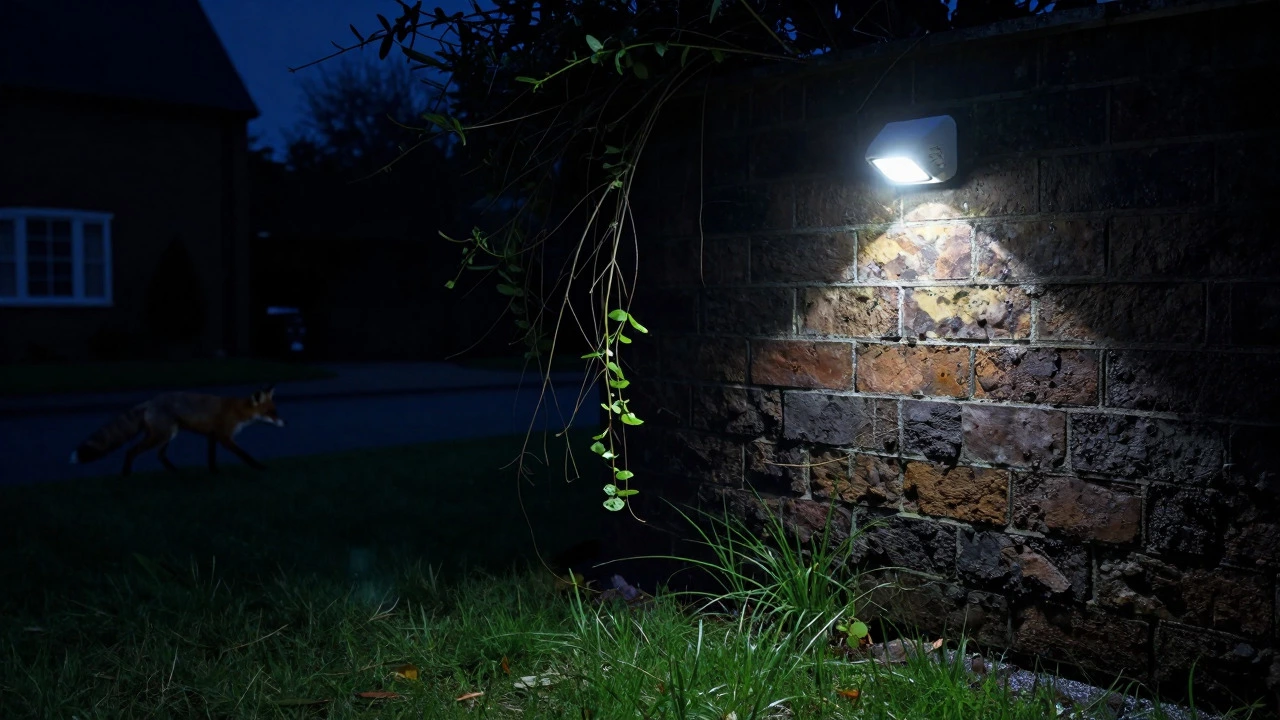
Imagine this: it’s 2 AM in Bristol. You’re asleep, and suddenly your garden light snaps on. No one is there. Just a branch swaying in the wind or a fox trotting across the lawn. Then, ten minutes later, you get up to check the window, and the light stays off because you moved too slowly. This isn’t a glitch; it’s the reality for many homeowners who installed motion sensor lights expecting seamless security and convenience. While these fixtures promise energy savings and automatic illumination, they come with a list of practical headaches that often go unmentioned in product descriptions.
The core issue lies in how these devices detect movement. Most standard units rely on Passive Infrared (PIR) technology, which senses heat changes rather than visual images. This creates a fundamental mismatch between what the sensor expects and what actually happens in a real-world environment. Understanding these specific failures helps you decide if the convenience is worth the frustration in your particular space.
The Problem of False Triggers
The most common complaint about motion-activated lighting is that they turn on when no human is present. This phenomenon, known as nuisance switching, wastes electricity and can disturb neighbors in quiet residential areas. A gust of wind moving heavy tree branches, a cat sprinting across the driveway, or even the headlights of a passing car can trigger the sensor. For those living near busy streets, this means the light might flicker on every few minutes throughout the night, creating a strobe-like effect that defeats the purpose of having a calm, dark exterior.
Environmental factors make this worse. Heavy rain, snow, or rapid temperature drops can confuse the sensor’s infrared lens. If the air temperature changes quickly within the detection zone, the sensor may interpret this thermal shift as a moving object. Furthermore, electrical interference from nearby motors, transformers, or faulty wiring can cause erratic behavior, leading to lights that cycle on and off unpredictably. These false alarms don’t just waste power; they shorten the lifespan of the bulb and the sensor itself due to constant mechanical stress.
Blind Spots and Limited Coverage
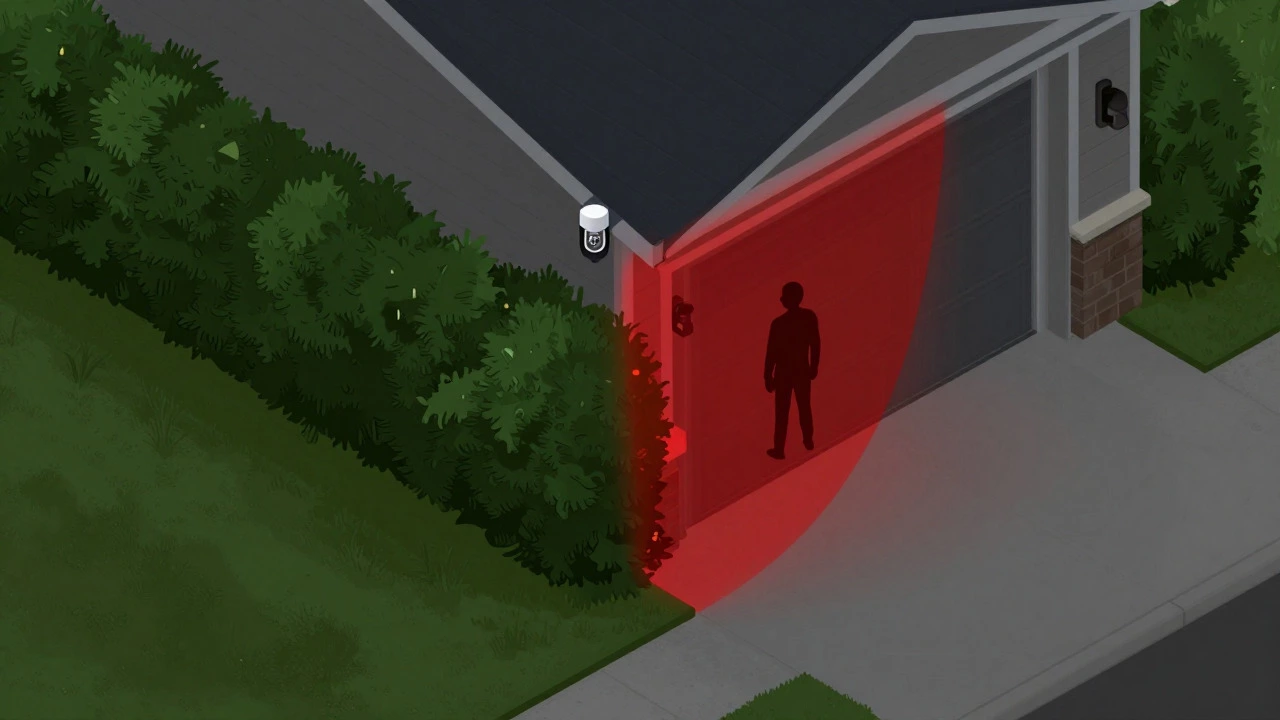
Another significant drawback is the limited field of view. Standard PIR sensors typically have a detection radius of about 10 meters, but this range is only effective if there is a clear line of sight. Walls, fences, large potted plants, and structural corners create blind spots where motion goes undetected. Many homeowners install a single unit expecting it to cover an entire yard, only to find that the corner behind a hedge remains pitch black.
Achieving full coverage often requires installing multiple fixtures, which increases both the upfront cost and the complexity of the system. Even with multiple units, overlapping detection zones can be tricky to calibrate. If two sensors face each other, they might trigger each other, causing the lights to stay on indefinitely. Conversely, if they are angled poorly, gaps remain. This trial-and-error process of aiming sensors is time-consuming and rarely results in perfect coverage without professional help.
Poor Fit for Sedentary Activities
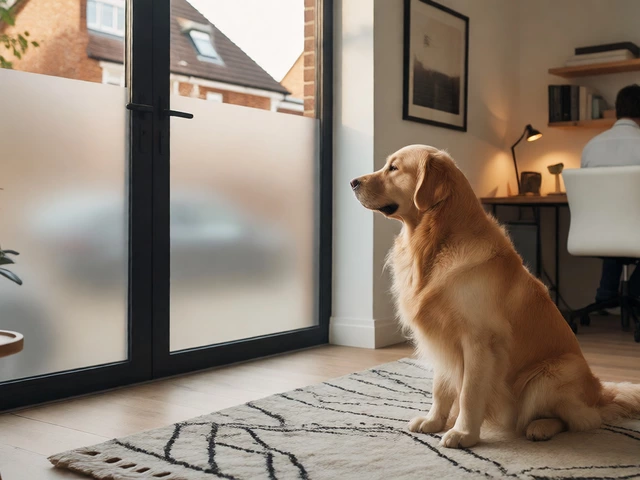
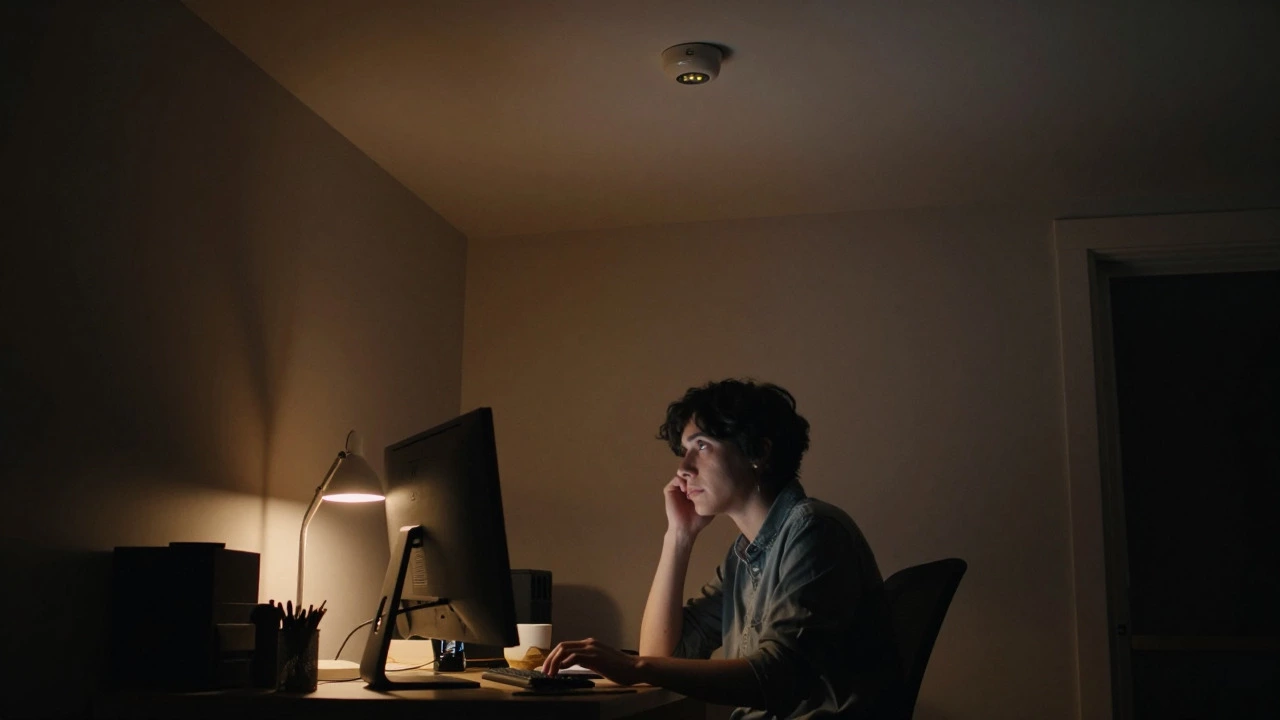
Motion sensor lights are excellent for hallways and driveways, but they can be disastrous in rooms where people stay still for long periods. Think about a home office, a reading nook, or a bathroom. If you sit at a desk working on a laptop for an hour, making only minor movements, a basic PIR sensor may not register enough activity to keep the light on. After the preset time delay-often just a few minutes-the light will cut out, leaving you in the dark while you are still actively using the space.
This is a critical flaw for anyone who uses these lights for productivity or relaxation rather than just security. To fix this, you would need to adjust the sensitivity settings, which often leads back to the problem of false triggers. Alternatively, you might need to upgrade to more expensive presence sensors that detect micro-movements, but these are less common and significantly pricier than standard motion detectors.
Reliability and Maintenance Headaches
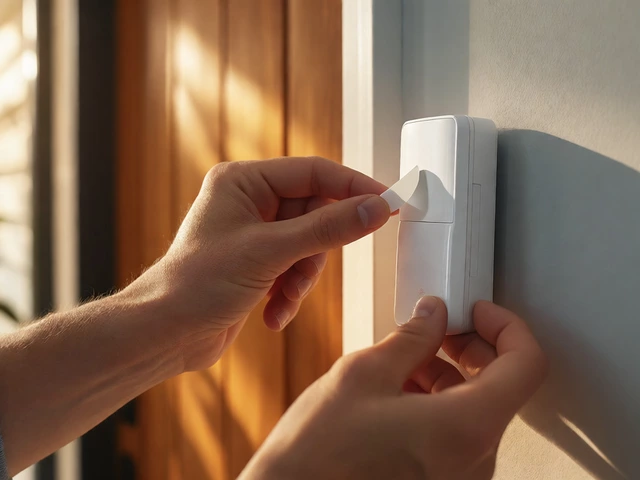
Unlike a simple light switch, motion sensor lights have moving parts (in some models) and complex electronic circuits that can fail. Common issues include lights that won’t turn on at all, lights that stay on permanently, or units that become completely unresponsive after a storm. Battery-powered models add another layer of maintenance: you must remember to replace or recharge batteries regularly. If the battery dies unnoticed, you lose security and visibility exactly when you need it most, such as during a power outage or a late-night arrival.
Wired models avoid battery replacement but introduce wiring complexity. Miswiring the "line" and "load" terminals is a frequent mistake among DIY installers, leading to non-functioning units. Troubleshooting these issues often requires understanding electrical concepts like voltage stability and load capacity. If the sensor fails, replacing it can be difficult, especially for integrated outdoor fixtures where the sensor is built into the housing. In many cases, the entire fixture needs to be replaced, adding to long-term costs.
Cost vs. Energy Savings Reality Check
Sales pitches often highlight energy savings as the primary benefit of motion sensor lights. While true that lights consume less energy when they are off, the savings can be offset by several factors. First, the upfront cost of a quality motion sensor fixture is higher than a standard equivalent. Second, the standby power consumption of the sensor electronics, though small, adds up over years if you have multiple units installed around your property.
| Feature | Motion Sensor Lights | Standard Switched Lights |
|---|---|---|
| Upfront Cost | Higher (sensor hardware) | Lower |
| Installation Complexity | High (wiring, calibration) | Low (simple swap) |
| Reliability | Variable (prone to faults) | High (mechanical simplicity) |
| User Control | Automatic (limited override) | Full manual control |
| Energy Usage | Lower active use, standby draw | Constant if left on |
Additionally, if false triggers cause the lights to run frequently, the energy savings diminish significantly. In extreme cases, a malfunctioning sensor that keeps the light on 24/7 negates any efficiency benefits entirely. When calculating the return on investment, you must factor in the potential cost of repairs, replacements, and the hassle of troubleshooting.
Privacy and Neighborhood Impact
Installing motion sensor lights near property boundaries can inadvertently invade the privacy of neighbors. If your sensor faces a shared fence or a neighbor’s window, their movement might trigger your light, shining bright beams into their yard or house. This can lead to disputes, especially if the light is bright and directed awkwardly. Conversely, if your light is triggered by cars on a nearby street, it creates excessive illumination that disrupts the natural darkness of the area, potentially affecting sleep patterns for residents nearby.
In urban or semi-urban settings, this is a common source of friction. Planning permissions in some local councils may also restrict the direction and brightness of outdoor lighting to prevent light pollution, meaning you might need to carefully aim your sensors to comply with regulations. This adds another layer of complexity to the installation process.
Frequently Asked Questions
Why do my motion sensor lights turn on randomly?
Random activation is usually caused by environmental factors like wind moving trees, animals crossing the path, or temperature changes. Electrical interference from nearby appliances or faulty wiring can also trigger false signals. Adjusting the sensitivity setting or repositioning the sensor away from these sources often resolves the issue.
Are motion sensor lights bad for energy bills?
Generally, they save energy compared to lights left on all day. However, if false triggers are frequent, the savings decrease. Additionally, the standby power used by the sensor circuit is a minor continuous cost. Proper calibration is key to maximizing energy efficiency.
Can I use motion sensor lights in a room where I sit still?
It is not recommended for sedentary spaces like offices or reading rooms unless you choose a high-sensitivity model or a presence detector. Standard PIR sensors may turn off the light if you move very little, leaving you in the dark. Manual switches or dimmers are better suited for these environments.
How long do motion sensor lights last?
The LED bulbs themselves can last 50,000 hours or more. However, the sensor mechanism has a shorter lifespan, typically 5 to 10 years, depending on usage and weather exposure. Outdoor units are more prone to failure due to moisture and temperature fluctuations.
Do I need a professional to install them?
For battery-powered units, DIY installation is straightforward. For wired models, especially if replacing an existing hardwired light, basic electrical knowledge is required. If you are unsure about wiring connections or want to ensure optimal placement and angle, hiring an electrician is advisable to avoid safety risks and performance issues.