Electronic Monitoring Cost & Risk Calculator
Monitoring Parameters
Financial Burden
Often unaffordable for low-income individuals
Technical Reliability Risk
Select parameters to see risk assessment.
Enter your details to calculate the potential financial and legal risks associated with electronic monitoring.
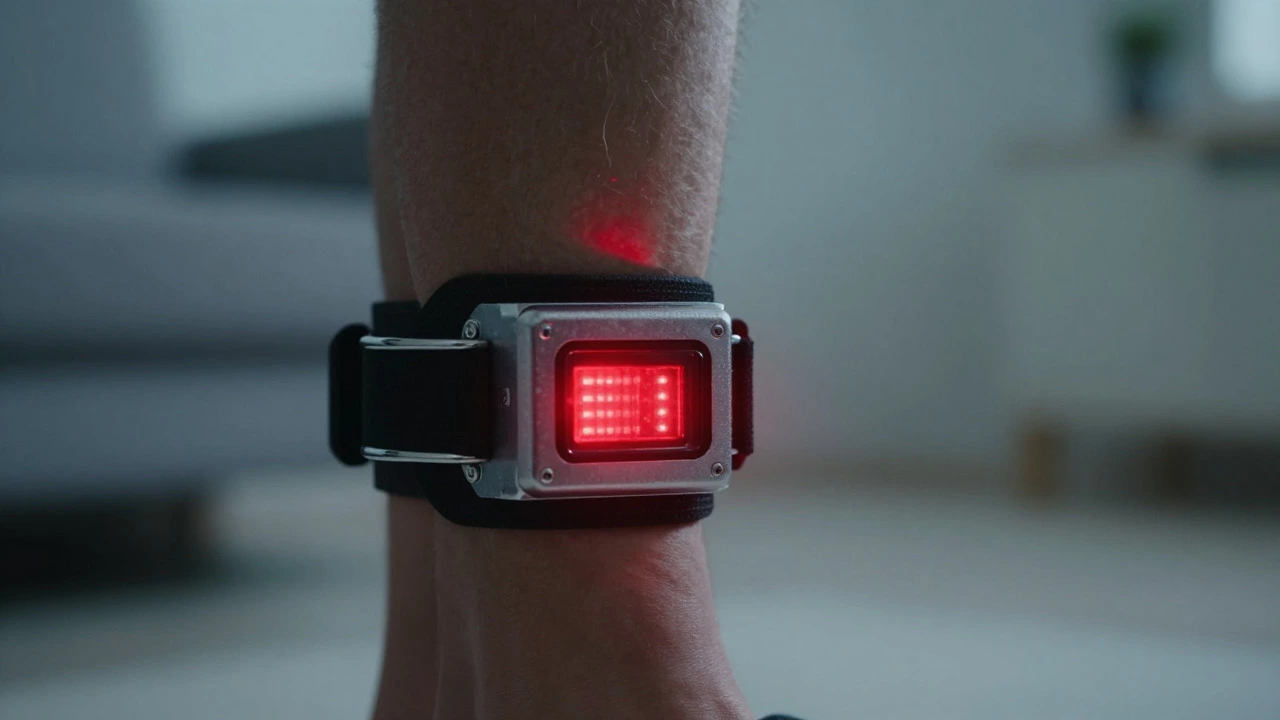
Imagine being told you are free to go home, only to have your freedom strictly defined by a blinking light on your ankle. For hundreds of thousands of people in the United States, electronic monitoring (EM) is not just a security feature; it is their daily reality. Marketed as a humane, cost-effective alternative to jail, these devices promise public safety without the expense of incarceration. But does the technology actually deliver on that promise?
The short answer is often no. While electronic monitoring seems like a smart solution for both taxpayers and defendants, it suffers from a critical flaw that undermines its entire purpose: technical unreliability. This isn't just about occasional glitches. It is a systemic failure where broken technology leads directly to lost liberty, massive debt, and unnecessary prison time. If you are looking at how surveillance tech works in the real world, understanding these weaknesses is essential.
The Myth of Perfect Tracking
We tend to trust GPS technology implicitly. We use it to navigate traffic, order food, and track our fitness steps. So, why would we doubt it when it comes to tracking someone’s location for legal purposes? The problem lies in the difference between consumer-grade convenience and forensic-grade accuracy. Consumer apps might show you slightly off the road, but no one goes to jail for it. In the criminal justice system, however, a few meters of error can mean everything.
Technical unreliability is the most documented weakness of these systems. According to a 2023 analysis by the Prison Policy Initiative, EM devices produce alarmingly high rates of false violations. Let’s look at the numbers. In May 2017 alone, Wisconsin’s Department of Corrections lost GPS signals for 864 monitored individuals approximately 57,000 times. That breaks down to more than two false alarms per person, every single day.
Why does this happen? It usually comes down to three factors:
- Signal Drift: GPS satellites aren’t perfect. In dense urban environments with tall buildings, signals bounce around (a phenomenon known as multipath interference), causing the device to place a person in a location they never visited.
- Architectural Interference: Thick concrete walls or metal structures can block or distort signals, leading to gaps in data that the system interprets as a violation.
- Battery Defects: Cheap hardware often fails. A dying battery doesn’t just stop working; it sends erratic signals before shutting down completely.
The Electronic Frontier Foundation confirmed in 2025 that these devices frequently produce false alerts, especially in cities. When the machine says you broke the rules, the default assumption by many agencies is that you did-until proven otherwise. And proving innocence against a black-box algorithm is incredibly difficult.
When Glitches Lead to Jail Cells
If technical errors were just annoying notifications, they would be a minor inconvenience. But in the context of pretrial release or probation, a "false positive" can land you back behind bars. This creates a paradoxical situation where the tool meant to keep you out of jail becomes the very thing that puts you back inside.
Consider the case of Nakiea Theus in Indianapolis. In the summer of 2016, she was jailed for five weeks. Why? Her ankle monitor malfunctioned during dialysis treatment due to a defective charging cord. She hadn’t committed a new crime. She hadn’t even left her designated area intentionally. Yet, the system flagged her for a violation, and the bureaucratic machinery ground into motion. As reported by Prison Legal News, this wasn’t an isolated incident but a symptom of a larger issue.
Data from Los Angeles County between 2015 and 2021 reveals a staggering statistic: 94% of people on electronic monitoring who failed to complete the program were sent back to jail for technical violations, not for new criminal arrests. Essentially, the system sets people up to fail. By adding strict EM requirements to already complex probation rules, authorities create a minefield where a dead battery or a signal drop carries the same penalty as breaking the law.
The Financial Trap of Surveillance
There is another major weakness that hits hard: the cost. Electronic monitoring is rarely free for the person wearing the device. Jurisdictions across the U.S. charge daily fees ranging from $5 to $35. For someone who is unemployed, underemployed, or struggling to make ends meet, this adds up fast.
Let’s do the math. At $20 a day, you are paying $600 a month just to stay out of jail. Over six months, that’s $3,600. Leppard Law’s 2023 analysis highlights that these costs add immense financial pressure on probationers. In La Crosse County, records showed that the county collected only 44% of monitoring fees because offenders simply couldn’t pay. This resulted in a $171,000 loss for taxpayers while individuals faced impossible choices.
This dynamic creates what critics call a modern-day debtor’s prison. In some cases, it becomes more economical for a poor defendant to stay in jail-where room and board are provided-than to run up an unpayable monitoring bill. The ACLU notes that this disproportionately affects low-income individuals and communities of color, exacerbating racial inequities within the justice system.
| Issue Area | Common Perception | Documented Reality |
|---|---|---|
| Accuracy | Precise GPS tracking | High rate of false alarms due to signal drift and battery issues |
| Cost | Cheaper than jail for taxpayers | Creates debt traps for individuals; low collection rates |
| Recidivism | Reduces reoffending | No significant reduction; increases technical violations |
| Mental Health | Less stressful than incarceration | Causes chronic anxiety and feeling of constant surveillance |

The Psychological Toll of Constant Watchfulness
We often overlook the mental health impact of being watched 24/7. Home security cameras give us peace of mind because we control them. Ankle monitors strip away that control. You are always the subject, never the observer.
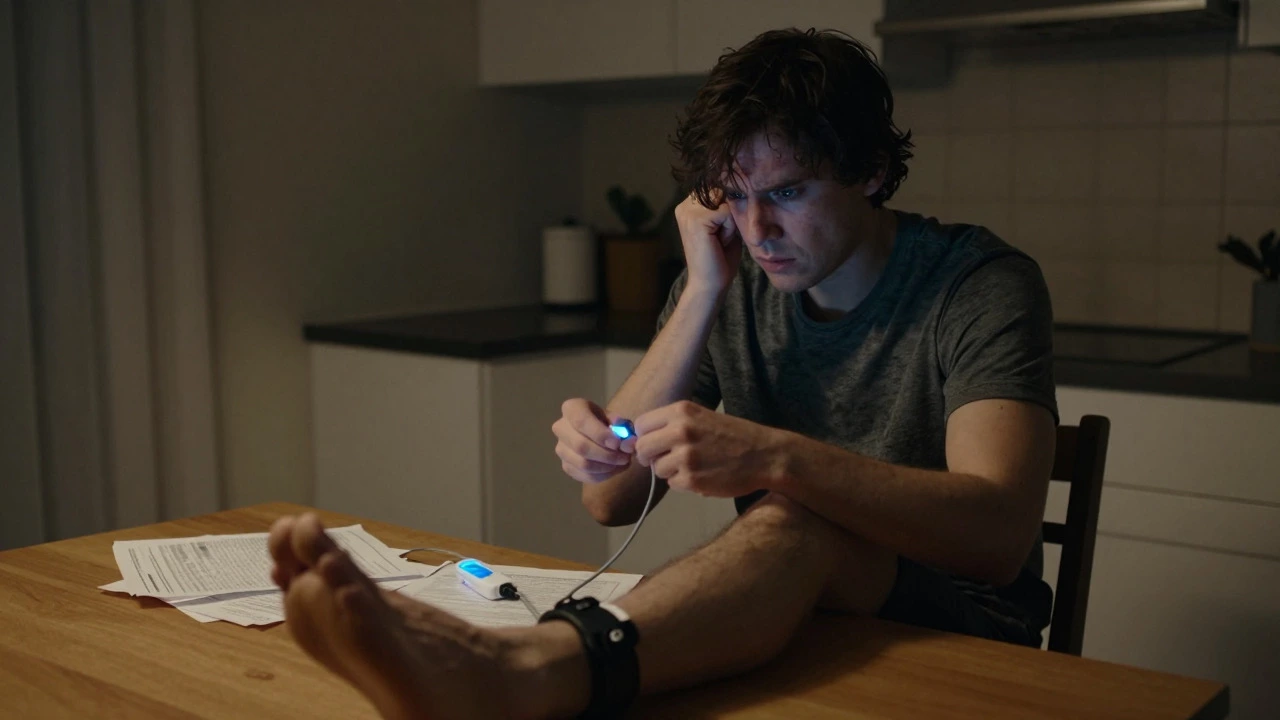
Leppard Law and the Prison Policy Institute note that EM can lead to severe stress, anxiety, and a constant feeling of paranoia. Defense attorneys report clients describing the psychological impact as "more punishing than jail." Why? Because in jail, there is structure and a clear end to the day. With EM, you are at home, surrounded by family, but you cannot relax. Every beep, every light change, triggers fear. Did I step outside the boundary? Is the charger plugged in correctly? Will this glitch send me back?
This perpetual state of alertness exacerbates existing mental health issues and limits access to healthcare. If you are too anxious to leave the house to see a doctor, or if the device malfunctions during a medical appointment, the system penalizes you further. It is a cycle that hinders rehabilitation rather than promoting it.
Inconsistent Rules Across Borders
If you move counties, the rules might change entirely. One of the structural weaknesses of EM is the lack of standardization. The Justice Policy Institute’s 2025 report on Maryland describes a "patchwork system" where neighboring counties implement monitoring with wildly different policies. Prince George’s County might use heavy monitoring, while Montgomery County uses it sparingly.
This inconsistency creates real inequalities. Two people committing similar offenses in nearby towns face vastly different levels of scrutiny and risk. Without standardized protocols, agencies struggle to respond judiciously to technical issues. One officer might dismiss a signal loss as a glitch; another might file a violation warrant immediately. This arbitrariness undermines the fairness of the justice system.
Security Breaches and Privacy Loss
Finally, consider the data itself. Electronic monitoring generates vast amounts of sensitive location data. Who owns this data? How secure is it? In 2021, a security breach with EM company Protocol exposed the private data of thousands of people under Chicago’s program online.
This isn’t just a privacy nuisance; it’s a safety risk. Exposed data includes precise movements, routines, and vulnerabilities of individuals, many of whom are from marginalized communities. The ACLU emphasizes that these security flaws perpetuate systemic issues by leaving vulnerable populations exposed to digital predators or misuse of their information. When the lock on your digital cage is flimsy, your safety is compromised twice over.
Is There a Better Way?
So, what is the takeaway? Electronic monitoring, as currently implemented, has a major weakness: it prioritizes technological surveillance over human reliability and equity. It promises freedom but delivers constraint through error-prone gadgets, financial burdens, and psychological stress.
To fix this, we need more than better batteries. We need policy reforms that protect individuals from technical failures. This includes:
- Eliminating user fees for monitoring devices.
- Creating automatic grace periods for technical violations.
- Standardizing protocols across jurisdictions.
- Investing in independent audits of EM vendors.
Until then, the ankle bracelet remains a symbol of a system that is watching closely, but not seeing clearly.
What causes false alarms in electronic monitoring devices?
False alarms are primarily caused by GPS signal drift, architectural interference in urban areas (like tall buildings blocking signals), and hardware defects such as failing batteries. These technical issues can make it appear as though a monitored individual has left their designated area when they have not.
How much does electronic monitoring cost the individual?
Individuals typically pay daily fees ranging from $5 to $35. Over several months, this can amount to thousands of dollars, creating a significant financial burden that often leads to debt or inability to pay, which can result in further legal penalties.
Can technical violations lead to jail time?
Yes. Data shows that a vast majority of people who fail electronic monitoring programs are returned to jail for technical violations (like device malfunctions) rather than for committing new crimes. This contradicts the goal of EM as an alternative to incarceration.
Does electronic monitoring reduce recidivism?
Evidence suggests that electronic monitoring has little to no effect on reducing recidivism. Reports indicate it hasn't been effective at getting people to court or stopping them from reoffending, while simultaneously increasing stress and financial strain.
Are electronic monitoring systems secure from data breaches?
No, they are vulnerable. There have been documented security breaches, such as the 2021 incident with the company Protocol, where private location data of thousands of monitored individuals was exposed online, raising serious privacy and safety concerns.