CCTV System Cost Calculator
Calculate your personalized CCTV system cost for 2025. Input your requirements and see a breakdown of costs for cameras, recording, storage, and installation.
Your System Requirements
Thinking about putting up a CCTV system but not sure what it’ll actually cost? You’re not alone. In 2025, a basic CCTV setup can run anywhere from $125 to over $3,500, and that wide range trips up most first-time buyers. The key isn’t just finding the cheapest option-it’s figuring out what actually gives you real security without wasting money on features you don’t need.
What’s Included in a Basic CCTV System?
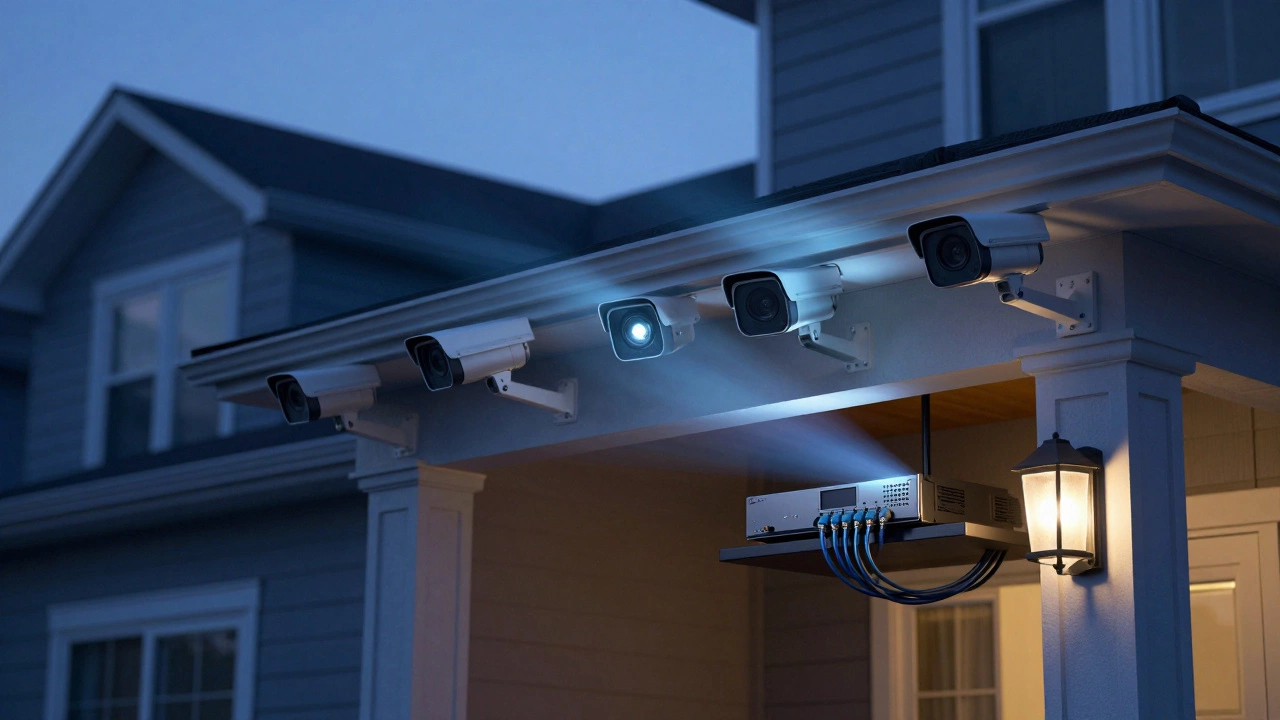
A basic system isn’t just a camera or two. It’s a package: cameras, a recorder (usually an NVR), cables, power supplies, and mounting hardware. For most homes, that means 2 to 4 cameras covering front and back doors, driveways, and side entries. You’ll also need a way to store footage-either on a local hard drive inside the NVR or through a cloud subscription.Don’t be fooled by ads for $50 cameras. Those often lack night vision, weatherproofing, or reliable storage. A true basic system starts with cameras that can clearly see faces in low light, survive rain and snow, and connect securely to your network. That’s where the real cost begins.
Camera Costs: What You’re Really Paying For
Not all cameras are created equal. Here’s what you can expect in 2025:- Basic indoor dome camera: $50-$120. Fine for a hallway or living room, but useless outside.
- Outdoor night vision camera: $150-$300. This is the sweet spot for most homes. Look for 1080p or 2K resolution, infrared LEDs that reach 30+ feet, and an IP66 weather rating.
- PoE (Power over Ethernet) camera: $100-$250. These use one cable for power and video, which makes installation cleaner and cheaper long-term.
- 4K (8MP) camera: $90-$180. Higher resolution means you can zoom in on license plates or faces from farther away-but you’ll need a stronger NVR and more storage.
For example, the SC4KBL 8MP camera from CCTV Camera World sells for $99.99. That’s a solid entry point. But if you’re buying four of them, you’re already at $400 before anything else.
The NVR: The Brain of Your System
The Network Video Recorder (NVR) is what stores your footage. Without it, your cameras just stream video into thin air. A basic 4-channel NVR costs $250-$500. An 8-channel model runs $400-$800. Most homeowners stick with 4-channel systems-they handle 4 cameras, and you can upgrade later if needed.Storage matters too. Most NVRs come with a 1TB hard drive included, which holds about 2-4 weeks of continuous recording from four 1080p cameras. If you want longer storage, you’ll need to upgrade the drive. A 2TB drive adds $80-$120. Cloud storage is optional but popular. Ring and Arlo charge $3-$10 per month per camera for 24/7 recording. That adds up fast: $48-$120 a year for four cameras.
Installation: DIY or Professional?
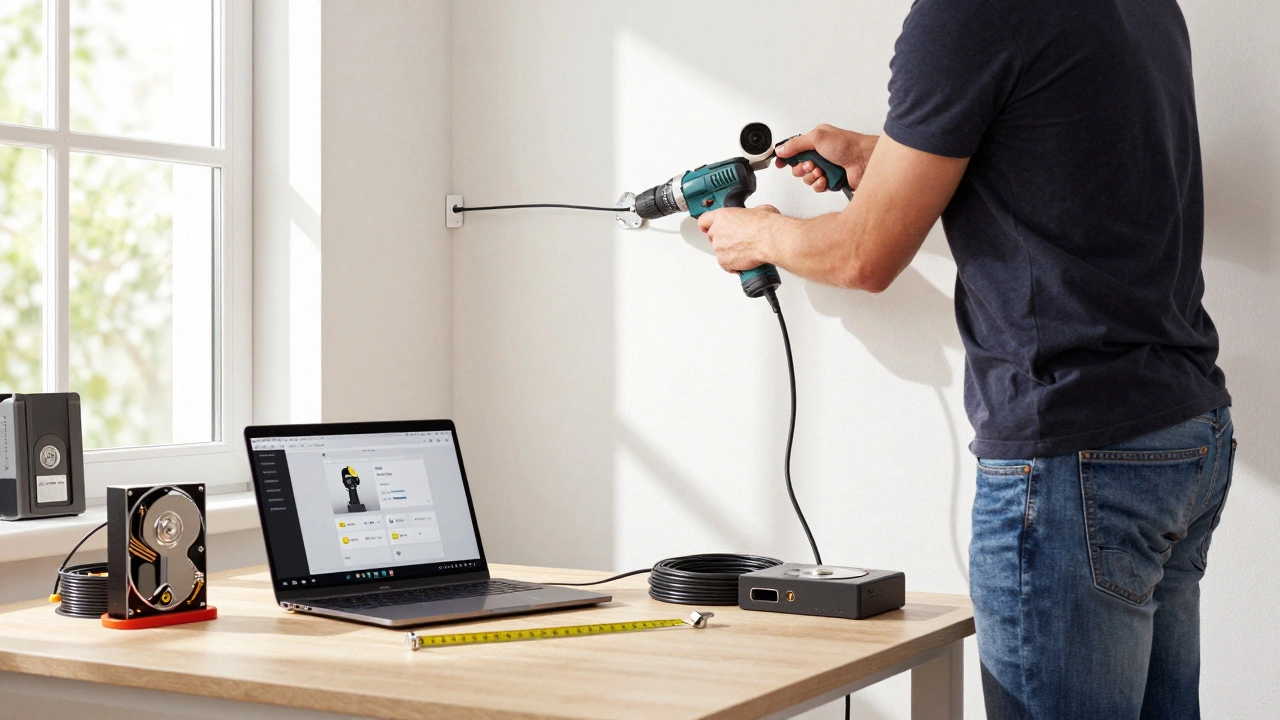
This is where costs split wide open.If you’re handy with tools and have basic networking skills, you can install a 4-camera system yourself for under $500. You’ll need a drill, ladder, Ethernet cable (Cat5e or Cat6), and maybe a PoE injector if your NVR doesn’t have built-in PoE. The average DIYer spends 4-8 hours on setup, and many run into trouble with NVR configuration or Wi-Fi dropouts. Reddit user u/SecurityNewbie installed a Reolink 4-camera system for $520 total-but spent 8 hours wrestling with the app and ended up saying they’d pay $200 for professional help next time.
Professional installation? That’s $100-$200 per camera. For four cameras, that’s $400-$800 in labor alone. But here’s why it’s worth it: experts know where to place cameras to avoid blind spots, how to run wires through walls without damaging insulation, and how to configure remote access securely. Trustpilot reviews show that 68% of people who paid for pros said the main benefit was “expert placement maximizing coverage.”
Hidden Costs You Can’t Ignore
Most quotes don’t tell you the full truth. Watch out for these:- Wi-Fi boosters: If your cameras are more than 30 feet from the router, you’ll need a mesh extender-$80-$150.
- Electrical upgrades: Older homes sometimes lack grounded outlets near mounting spots. Running new circuits can cost $150-$300.
- Cloud storage subscriptions: Free cloud plans usually only save clips when motion is detected. For continuous recording, you’re paying monthly.
- Legal compliance: In 17 U.S. states, there are restrictions on where you can point cameras (e.g., not toward neighbors’ windows). Getting legal advice can cost $75-$200.
One user on Trustpilot paid $850 for a “basic package” from a local installer-only to get a $210 surprise bill for extra cables and mounting brackets they didn’t ask for. Always get a written quote that lists every item and labor cost.
Real-World Examples: What People Are Actually Paying
Here’s what actual 2025 installations look like:- DYI 2-camera system: 2 x $150 outdoor cameras + $200 NVR + $50 cables = $550 total. Took 6 hours. No cloud storage.
- Professional 4-camera system: 4 x $220 PoE cameras + $450 NVR + $800 labor + $100 mounts = $1,730 total. Includes 1-year warranty and remote setup.
- Mid-tier 4-camera system (Arlo Pro 4): 4 x $200 cameras + $300 base station + $120/year cloud = $1,120 first year.
Consumer Reports found that users with systems between $600-$1,000 were 83% satisfied. Those under $600? Only 62%. The biggest difference? Night vision performance beyond 100 feet. Cheap cameras often fail here-blurring faces or cutting out in darkness.
What You Should Spend
Here’s the truth: you don’t need a $3,000 system to feel safe. But you also shouldn’t go below $500.The sweet spot for most homes is a 4-camera PoE system with local storage. That means:
- 4 x $200 outdoor PoE cameras = $800
- 1 x $400 4-channel NVR with 2TB drive = $400
- 100 feet of Cat6 cable + mounts = $100
- Professional installation = $600
Total: Around $1,900.
But if you’re on a tighter budget? Go DIY with 2-3 cameras, skip the NVR, and use cloud storage. You can get a solid 3-camera setup for $450-$600. Just accept that you’ll spend time learning the app and dealing with occasional glitches.
What’s Changing in 2025
Prices are dropping, but features are rising. AI-powered motion detection (which ignores animals and leaves and only alerts on people) is now standard in mid-range cameras. It cuts false alerts by 73%, according to MIT’s 2025 study. That’s worth $50-$100 extra per camera.Also, new FCC rules require all new CCTV systems to have end-to-end encryption by January 2026. That means no more hacking through weak passwords. Good news-most new systems already include it.
DIY sales are booming. Gartner predicts 65% of residential systems will be self-installed by 2027. Brands like eufy and Reolink are making apps so simple that even non-techies can set them up. But don’t confuse easy setup with reliable performance.
Final Advice: Don’t Just Buy Low-Buy Smart
A $300 system might seem like a steal. But if the cameras die in 12 months, you’re paying $300 a year to stay protected. A $1,000 system with 4-year lifespan? That’s $250 a year. You’re better off.Ask yourself:
- Do I need night vision that works at 100+ feet?
- Will I actually check footage every day-or do I need motion alerts?
- Am I okay with monthly fees, or do I want local storage?
- Do I have the time to fix this myself if it breaks?
Most people who regret their purchase didn’t spend too much-they spent too little. Focus on reliability, not just price. A system that works when you need it is worth every penny.