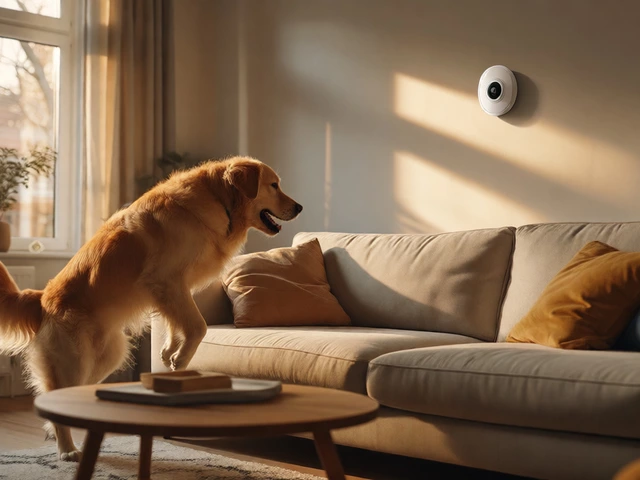

Dog Barking Complaint Action Plan
Follow this structured approach to resolve the issue effectively without burning bridges.
Action Plan Complete!
You have reviewed all necessary steps to handle a barking dog situation. Remember, patience and documentation are your best tools.
If you need to start over, click "Previous" to return to the beginning.
There is nothing quite as frustrating as trying to fall asleep only to be woken up by the relentless sound of a neighbor’s dog. It happens more often than you might think, and it can quickly turn a peaceful evening into a sleepless nightmare. If you are dealing with this issue, you are not alone. In fact, excessive barking is one of the most common reasons people file noise complaints in residential areas. But before you grab your phone to call the police or start yelling through the walls, there is a smarter way to handle it.
The key to solving this problem lies in a gradual approach that balances empathy with firm action. Most of the time, a simple conversation can resolve the issue. However, if the barking continues, you will need to document the noise and know your local laws. This guide walks you through exactly what steps to take, from talking to your neighbor to filing formal complaints, ensuring you get the quiet you deserve without burning bridges.
Start with a Calm Conversation
Your first move should always be direct communication. Many dog owners have no idea their pet is disturbing others, especially if they live in a house with thick walls or if the dog is outside at night. Approach your neighbor when you are both calm, not in the middle of a barking fit. Choose a neutral time, like late afternoon, to chat.
Be specific about the problem. Instead of saying, "Your dog is annoying," try something like, "I’ve noticed Buster barks a lot between 10 PM and 2 AM, and it’s been hard for me to sleep." Giving concrete details helps the owner understand the severity of the situation. Often, once they realize the impact on their neighbors, they will take immediate steps to correct the behavior, such as bringing the dog inside or using training aids.
- Stay polite: Keep the tone friendly and solution-oriented.
- Offer help: Suggest ideas like white noise machines or calming treats for the dog.
- Set expectations: Clearly state when the barking needs to stop.
Document the Noise Evidence
If talking doesn’t work, you need proof. Memory is unreliable, but a logbook is not. Start keeping a detailed record of every incident. Note the date, the exact start and end times of the barking, and how long it lasted. For example, "July 15, 2026: Barking started at 11:15 PM and continued until 1:30 AM with brief pauses."
In addition to a written log, audio or video recordings can be powerful evidence. Use your smartphone to record the noise. Make sure the recording captures the time and date, either through the metadata or by speaking the current time into the microphone at the start. Some humane societies and animal control agencies require specific thresholds for what constitutes a nuisance, such as continuous barking for 30 minutes or intermittent barking totaling an hour within a 24-hour period. Your documentation helps prove that the noise meets these legal standards.
Know Your Local Noise Ordinances
Laws regarding noisy pets vary significantly depending on where you live. In many places, excessive barking is classified as a statutory nuisance or a public nuisance. For instance, in parts of the United Kingdom, local councils can issue abatement notices, leading to fines of up to £5,000 if ignored. In the US, cities like Austin, Texas, have ordinances prohibiting animals that make "frequent or long, continued noise" that disturbs a person of normal sensibilities.
To find out what applies to you, check your city or county website. Look for sections on "noise control," "animal control," or "nuisance laws." Understanding these rules empowers you to speak confidently with authorities later on. If you are unsure, a quick call to your local non-emergency police line or animal control office can clarify the specific thresholds in your area.
| Jurisdiction Example | Definition of Nuisance | Potential Consequence |
|---|---|---|
| United Kingdom (General) | Significant disruption to use/enjoyment of home | Fines up to £5,000 |
| Austin, Texas | Frequent or long, continued noise disturbing normal sensibilities | City enforcement, warnings, fines |
| Idaho Humane Society Criteria | Continuous for 30 mins or 1 hour total in 24 hours | Animal control investigation |
| Kaua'i, Hawaii | Intermittently for 30 mins in 45 mins or continuously for 15 mins | Violation of local ordinance |

Contact Animal Control or Local Authorities
When conversation and documentation fail, it is time to involve the professionals. File a formal complaint with your local animal control agency or humane society. Submit your log and recordings as evidence. These organizations are trained to handle nuisance cases and can issue official warnings to the dog owner.
In some cases, you may also contact your local police non-emergency line, especially if the barking occurs during strict quiet hours. Police officers can visit the property and remind the owner of local noise ordinances. While they rarely arrest someone for a barking dog on the first call, repeated visits create a paper trail that strengthens your case if further action is needed.
Consider Mediation Services
If tensions are high and direct talks have broken down, community mediation can be a game-changer. Many neighborhoods offer free or low-cost mediation services through local courts or community centers. A neutral third party facilitates the discussion, helping both sides reach a mutually agreeable solution. This approach preserves neighborly relations while addressing the core issue. It is often faster and less stressful than going to court.

Explore Technological Solutions
Sometimes, the best defense is a good offense-or rather, a good distraction. While you wait for external solutions to take effect, you can mitigate the noise yourself. White noise machines, fans, or even specialized apps can mask the sound of barking, helping you sleep better in the short term.
Interestingly, the rise of pet-friendly alarms and smart home security systems offers new ways to manage neighborhood noise. Some modern alarm systems allow homeowners to customize alerts so that they do not trigger false alarms due to nearby pets. While these don't stop the neighbor's dog, understanding how technology interacts with noise can help you avoid escalating conflicts unnecessarily. For example, knowing that your own motion sensors are calibrated to ignore small animals can prevent you from accidentally calling the police on your own system during a barking episode.
Legal Action as a Last Resort
If all else fails, you may consider legal action. Filing a civil lawsuit for nuisance or seeking an injunction is expensive and time-consuming, so it should be your absolute last resort. However, in severe cases where sleep deprivation affects your health or work, a lawyer might advise you to pursue damages. Consult with a local attorney who specializes in landlord-tenant or property law to understand your options.
How long does a dog have to bark to be considered a nuisance?
Definitions vary by location, but many jurisdictions consider barking a nuisance if it is continuous for 15-30 minutes or totals over an hour within a 24-hour period. Check your local ordinances for specific time thresholds.
Can I call the police for a barking dog at night?
Yes, you can call the non-emergency police line, especially if the barking violates local quiet hours. Officers may issue a warning to the owner. Repeated calls can lead to fines or other penalties depending on local laws.
What evidence do I need to file a noise complaint?
You should keep a detailed log of dates, times, and duration of barking episodes. Audio or video recordings are also highly effective. Ensure your recordings clearly show the time and date to meet legal standards for evidence.
Will my neighbor lose their dog if they ignore complaints?
It is rare for a dog to be taken away immediately. Usually, authorities issue warnings and fines first. Removal typically only happens in extreme cases where the owner repeatedly ignores multiple citations and orders to abate the nuisance.
Is mediation a good option for neighbor disputes?
Yes, mediation is often very effective. It provides a neutral space for both parties to discuss the issue and agree on a solution without the cost and stress of legal proceedings. Many communities offer this service for free or at a low cost.