UK Ring Doorbell Evidence & Privacy Checker
Answer the questions below to determine if your footage is likely admissible as evidence and check your compliance with UK data protection laws.
Privacy Compliance Check
You’re sitting in your kitchen in Bristol when you hear a loud bang at the front. You check your Ring doorbell app and see a stranger smashing your letterbox. Your heart races. You want to call the police, but then a doubt creeps in: will they actually accept this grainy, digital clip as proof? Or is it just "home movie" material that gets tossed aside?
The short answer is yes, absolutely. But there is a massive "but." Using your doorbell footage as evidence isn’t just about hitting "download" and emailing it to a constable. In the UK, your Ring device sits on a tightrope between being a private security tool and a public surveillance system. If you cross the invisible line of data protection laws, you could find yourself facing a complaint from the Information Commissioner’s Office (ICO) or even a civil claim from an annoyed neighbour, all while trying to prosecute someone for vandalism.
The Short Version: What You Need to Know
- Yes, it works: Police and courts in the UK routinely accept Ring footage as evidence for crimes like burglary, assault, and anti-social behaviour.
- Privacy matters: If your camera films public streets or neighbours' gardens, you are legally responsible for how that data is handled under UK GDPR.
- Don't post it online: Sharing footage on social media can weaken its legal standing and expose you to defamation risks. Stick to sharing with authorities.
- Preserve the original: Do not edit, trim, or enhance the video before sending it to the police. The raw file is the best evidence.
Why Your Doorbell Counts as CCTV (And Why That Matters)
Most people think of their Ring as a gadget, not a security system. Legally, however, if it records video and audio, it functions as domestic CCTV. This distinction triggers specific rules under the Data Protection Act 2018 and UK GDPR.
Here is the critical test: Does your camera only film your own property? If the lens is angled strictly at your front door, your doorstep, or your private driveway, you generally fall under the "domestic purposes exemption." You can record what happens on your land without worrying too much about bureaucracy.
But flip the angle slightly. If your view captures the pavement, the road, or your neighbour’s front garden, the exemption vanishes. Suddenly, you are a "data controller." You are processing personal data of people who haven’t consented to be filmed. This doesn’t make your recording illegal, but it imposes duties. You must ensure the footage is stored securely, kept only as long as necessary, and shared only for legitimate reasons-like giving it to the police.
When Is Footage Admissible in Court?
Courts don’t automatically reject home videos. In fact, magistrates and judges often welcome them because they provide objective context to witness statements. However, admissibility hinges on two things: relevance and proportionality.
If you are reporting a crime that happened right in front of your house, the footage is highly relevant. It shows who was there, what they did, and when. This is straightforward. The complexity arises in civil disputes or cases involving anti-social behaviour (ASB). Local Government Lawyer analysis suggests that courts look at whether the surveillance was excessive. Were you filming your neighbour’s every move for weeks just to catch them dropping a wrapper? Or were you recording a genuine incident of harassment?
For serious incidents, the probative value (how useful the video is to proving the case) usually outweighs minor privacy concerns. If the behaviour was severe-like repeated vandalism or threats-the court is likely to admit the footage, even if your camera technically captured a bit more of the street than ideal.
The Golden Rules for Preserving Digital Evidence
So, you’ve got the clip. Now, how do you handle it so it holds up in court? Here is where many homeowners slip up.
1. Don't Edit the Video
It’s tempting to trim the boring parts or zoom in on a face using your phone editor. Don’t do it. Courts prefer the original, unaltered file. If you send a cropped version, the defence lawyer can argue that you removed context. Send the full download provided by the Ring app.
2. Secure Storage is Non-Negotiable
Under UK GDPR, you have a duty to keep personal data safe. If you leave your downloaded MP4 file on a shared family laptop or a cloud drive accessible by everyone, you might be breaching data security principles. Keep evidential clips in a secure folder, preferably password-protected, until the matter is resolved.
3. Share Only with Authorities
This is the big one. You might feel righteous anger after seeing someone key your car. You might want to post the video on Nextdoor or Facebook to warn others. Resist the urge. Once you publish that face on social media, you lose control over the data. Worse, if the person sues you for defamation or misuse of private information, your "warning" becomes a liability. Police and lawyers are the only ones who need to see it.
Neighbour Disputes: The Tricky Middle Ground
Not every incident ends up in a criminal court. Many Ring recordings end up in neighbour disputes, mediation sessions, or local council ASB investigations. These are less formal but still legally sensitive.
If you are trying to prove a neighbour is parking illegally or blocking your access, your footage is useful. But remember, if your camera films their front door, they have rights. They can ask you to adjust the angle or delete footage of their comings and goings. If you refuse and continue to monitor them excessively, you risk a complaint to the ICO. In these cases, communication is key. Show them the clip privately to resolve the issue before escalating to formal legal channels.
| Factor | Sharing with Police/Court | Posting on Social Media |
|---|---|---|
| Legal Status | Legitimate purpose; protected by law. | Potentially unlawful if it breaches privacy or causes distress. |
| Data Control | Controlled distribution to authorised personnel. | Uncontrolled; anyone can share, remix, or comment. |
| Risk Level | Low (if handled correctly). | High (risk of defamation or ICO complaints). |
| Evidential Value | High; treated as primary source material. | Low; often seen as subjective or edited. |
What If the Police Ask for Footage?
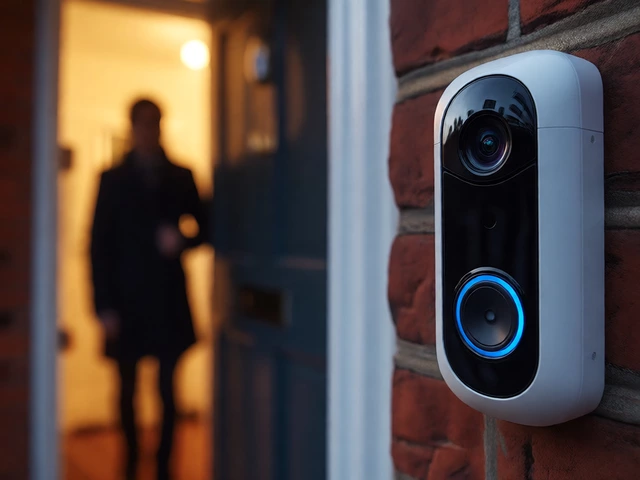
Police officers often spot the small blue light of a Ring camera during an investigation. They may ask, "Do you have any footage?" Technically, you are not always compelled to hand it over unless they produce a warrant or a specific disclosure order. However, cooperation is almost always beneficial.
By providing the footage voluntarily, you help build the case against the suspect. Plus, it demonstrates that you are acting responsibly. If you refuse without good reason, you might raise suspicions or simply delay justice. Just ensure you get a reference number or confirmation that they received the file, so you know it’s part of the official record.
Troubleshooting Common Issues
My video is blurry. Night vision on older models can be grainy. Enhance it only for your own viewing. For the police, send the raw file. They have software tools to analyse pixels better than Instagram filters.
The audio didn't record. Check your settings. Some users disable audio to avoid capturing private conversations on the street. If audio is off, the visual evidence stands alone, which is often enough for identifying actions like kicking a door or throwing objects.
I deleted the clip by accident. Ring stores cloud backups for a set period (usually 30-180 days depending on your subscription). Log in immediately via the web portal, not just the app, to retrieve deleted items if they are still within the retention window.
Frequently Asked Questions
Is it illegal to point my Ring doorbell at my neighbour's house?
It is not strictly illegal, but it places you under data protection obligations. If you capture images of their property or people entering/exiting their home, you are processing personal data. You should try to adjust the motion zones or camera angle to minimise this. If they complain, you may need to reposition the device or provide a sign indicating you are recording.
Do I need a sign saying 'CCTV in operation'?
If your camera films beyond your boundary (e.g., the street), yes, transparency is required. While not always enforced for domestic setups, displaying a small notice helps comply with UK GDPR transparency principles and reduces neighbour friction. It informs passers-by that they are being recorded.
Can I use Ring footage for a civil lawsuit against my landlord?
Yes, if the footage is relevant to the dispute (e.g., showing damage caused by maintenance workers or lack of repairs). Ensure you preserve the original files and disclose them properly through your solicitor. Do not withhold evidence that could contradict your claim.
How long does Ring store my videos?
With a Ring Protect Plan, videos are stored in the cloud for 30 to 180 days, depending on your subscription tier. Without a plan, you only get live view and cannot save events. Always download important clips locally to your computer or hard drive if you intend to use them as evidence, as cloud storage is temporary.
Can my neighbour force me to turn off my Ring doorbell?
They can complain to the ICO if they believe you are breaching data protection laws. The ICO can investigate and potentially order changes, such as adjusting the camera angle or limiting recording times. They rarely order a complete shutdown unless the intrusion is severe and disproportionate.
Final Thoughts: Be Smart, Not Just Reactive
Your Ring doorbell is a powerful ally in protecting your home and holding wrongdoers accountable. It turns anonymous acts into documented facts. But power comes with responsibility. Treat your footage with the same care you would treat physical evidence at a crime scene. Keep it secure, share it wisely, and respect the privacy boundaries of those around you. Done right, that little blue light isn’t just watching your door-it’s backing up your story in the eyes of the law.