CCTV Installer Recommendation Tool
You’ve bought a brand-new set of security cameras. The box is open, the cables are coiled, and you’re staring at your exterior wall wondering who to call. Do you hire an electrician? Or do you need a specialist security company? It’s a common dilemma for homeowners and small business owners alike.
The short answer is yes, electricians can and often do fit CCTV systems. But it’s not that simple. While they are experts in power and safety, modern surveillance involves networking, data privacy, and video analytics-areas where a standard sparky might lack specific training. Choosing the wrong person could leave you with a system that works electrically but fails digitally.
What Electricians Bring to the Table
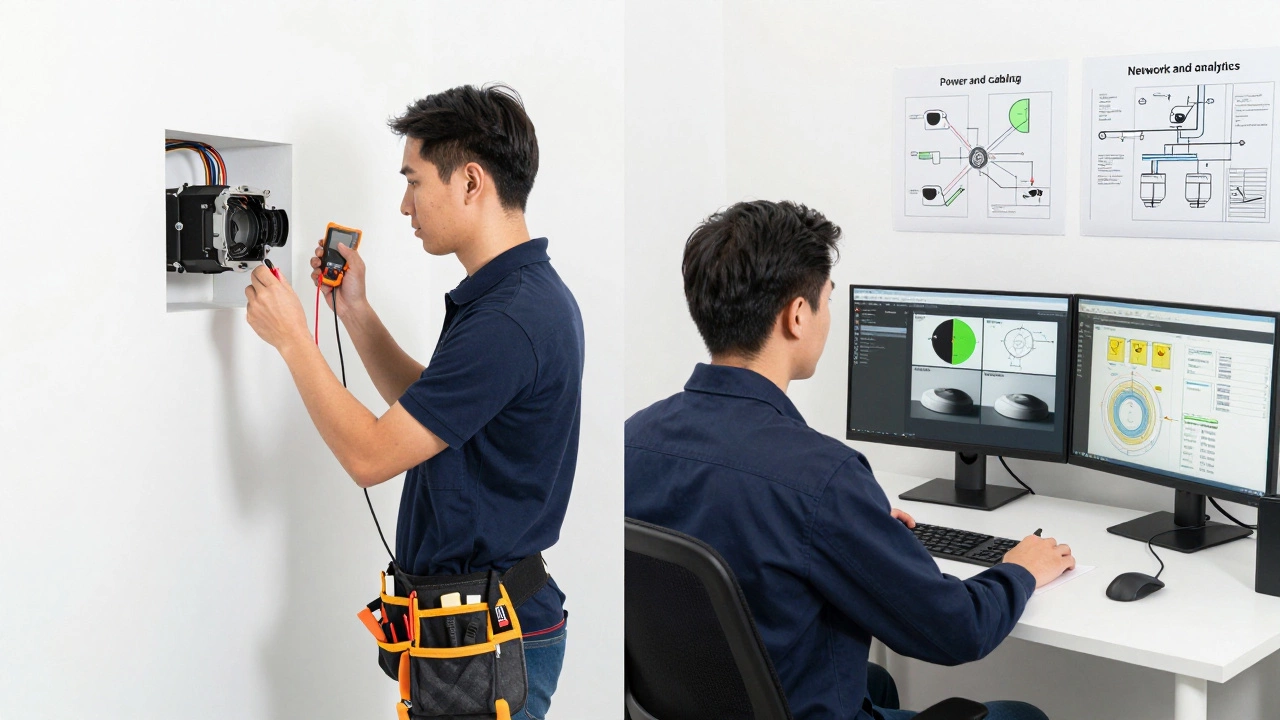
Let’s look at why an electrician is often a solid choice for this job. Their primary strength lies in infrastructure. Installing cameras isn’t just about sticking boxes on walls; it’s about running power and data lines safely through your building.
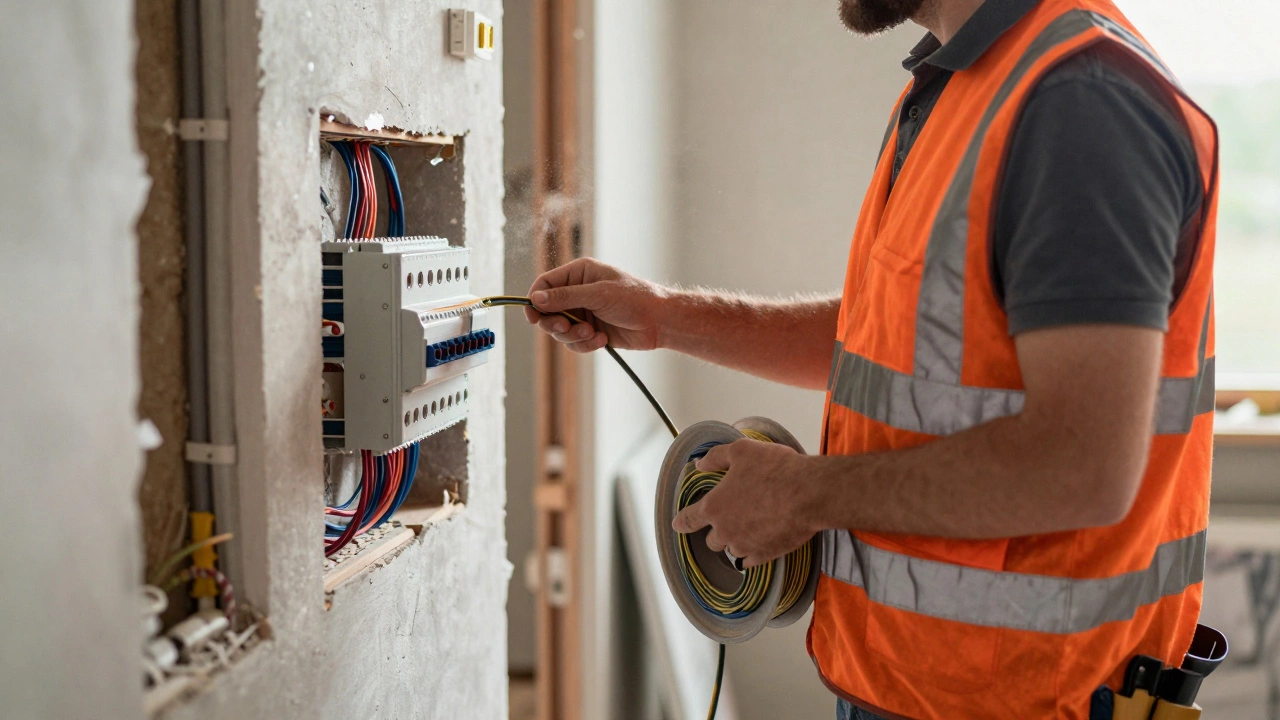
Electricians are trained to work with mains voltage and low-voltage circuits. For traditional analog or HD-over-coax cameras, they handle the 12V DC or 24V AC power supplies. For modern IP cameras, they manage Power over Ethernet (PoE) setups, which run on 48V DC following IEEE standards like 802.3af or 802.3at. They know how to calculate load, install fused spurs from your consumer unit, and ensure every connection complies with national wiring regulations, such as BS 7671 in the UK or the NEC in the US.
They also excel at physical routing. An electrician knows how to fish Cat6 or coaxial cable through attic spaces, inside walls, and through conduits without causing structural damage or creating fire hazards. If you need outdoor surge protection or bonding for metal components, that’s their wheelhouse. In many cases, especially for new builds or renovations, the electrical contractor is already on-site pre-wiring the house, making them the logical choice to terminate those cables into camera mounts.
Where Electricians Might Fall Short
However, electricity is only half the battle. Modern CCTV is essentially a mini IT network. This is where general electricians sometimes hit a wall unless they have specialized additional training.
Consider the network side of things. IP cameras require proper IP addressing, VLAN configuration to separate traffic from your main Wi-Fi, and Quality of Service (QoS) settings to prevent video lag. A standard electrician’s apprenticeship rarely covers subnetting or firewall rules. Without this knowledge, your Network Video Recorder (NVR) might be left exposed to the internet via port forwarding, a major cybersecurity risk that hackers love to exploit.
Then there’s the optical design. Placing a camera isn’t just about pointing it at a door. You need to consider field of view, lens selection, and lighting conditions. An electrician might mount a camera perfectly straight, but if they don’t understand how infrared illumination works at night or how to avoid backlighting issues, your footage might be useless when you actually need it. They might treat the camera like a light fixture, focusing on power rather than performance.
Legal Rules: Can They Legally Do It?
Whether an electrician is legally allowed to install your CCTV depends heavily on where you live. There is no global rulebook here.
In the United Kingdom, there is no specific statutory license required just to install CCTV in a private home. However, if the work involves adding new circuits or modifying your consumer unit, it must comply with Part P of the Building Regulations. Electricians registered with schemes like NICEIC or ECA can self-certify this work. While you don’t strictly need a security license for domestic installs, bodies like the National Security Inspectorate (NSI) offer voluntary accreditation. Many insurance companies prefer-or even require-installers to hold NSI Gold or Silver status to validate claims related to security failures.
The rules get tighter in other regions. In several US states, such as Texas, California, and Florida, installing security systems for hire requires a separate alarm or security contractor license from the state police or public safety department. A licensed journeyman electrician cannot legally install commercial CCTV in these areas without also holding that specific security credential. Similarly, in Australian states like New South Wales, security technicians need a license under the Security Industry Act. Always check local regulations before signing a contract.
Electrician vs. Specialist Security Installer
To help you decide, let’s compare the two main options against each other.
| Feature | Licensed Electrician | Specialist CCTV Integrator |
|---|---|---|
| Primary Focus | Power safety, cabling, compliance | System design, coverage, analytics |
| Network Knowledge | Basic to moderate (varies by individual) | Advanced (VLANs, encryption, remote access) |
| Best For | New builds, rough-ins, simple residential kits | Commercial sites, complex networks, high-risk areas |
| Cybersecurity | Often overlooked unless trained | Core part of the service |
| Cost | Competitive, especially if bundling with electrical work | Premium pricing for expertise and design |
Specialist security installers bring deep knowledge of crime patterns, blind spots, and vendor-specific software. They are likely certified by manufacturers like Hikvision or Axis and understand how to configure motion detection zones and AI object classification. They often subcontract electricians for the heavy lifting on power, ensuring both sides of the equation are handled by experts.
When to Choose Which Professional
So, who should you hire? It depends on the complexity of your project.
If you are building a new home or doing a major renovation, hire an electrician early. Let them run the Cat6 cabling and install back boxes while the walls are open. This "rough-in" phase is purely electrical and mechanical. Later, you can either ask them to terminate the system if they have the skills, or hand the keys to a security integrator for the final programming.
For a small residential setup-say, four cameras covering a driveway and front door-a skilled electrician with some experience in low-voltage data is usually sufficient. Look for one who mentions PoE switches and NVRs in their portfolio. Ask them specifically about how they secure the network. If they talk about default passwords and leaving ports open, keep looking.
However, for a commercial property, a retail store, or a large estate with dozens of cameras, go with a dedicated security integrator. These projects involve video management servers, RAID storage arrays for retention compliance, and integration with access control systems. The risk of downtime or hacking is too high to gamble on a generalist. In these scenarios, the ideal team often includes both: an electrician handling the power pathways and a security engineer designing the intelligence.
DIY: Is It an Option?
Many people opt for DIY using wireless kits from brands like Ring, Arlo, or Eufy. These plug into existing outlets and connect via Wi-Fi, bypassing the need for professional wiring entirely. This is a valid option for renters or those with very basic needs. But remember: once you start drilling holes, running permanent cables, or modifying your electrical panel, you cross the line into territory that requires a professional. Never attempt mains wiring yourself. It’s dangerous and illegal in many jurisdictions.
Tips for Hiring the Right Person
Before you sign any contract, ask these three questions:
- "Do you have experience with IP networking and PoE switches?" If they hesitate, they might only know analog systems.
- "How will you secure the NVR from external hacking?" You want to hear about VPNs, strong unique passwords, and firmware updates, not just "it comes with an app."
- "Are you accredited?" Check for NICEIC/ECA registration for electrical work and NSI/SSAIB for security work in the UK, or relevant state licenses in the US.
Don’t be afraid to ask for references. A good installer will be proud to show you previous jobs where the cabling is neat, labeled, and the video feed is crystal clear day and night.
Can a qualified electrician install CCTV in the UK?
Yes. In the UK, there is no specific legal requirement for a separate license to install domestic CCTV. However, the electrician must be competent in low-voltage wiring and comply with BS 7671 regulations. For commercial work or insurance purposes, accreditation from bodies like NSI or SSAIB is highly recommended.
Is it cheaper to have an electrician install CCTV?
It can be. Electricians often charge standard hourly rates, whereas specialist security firms may include higher margins for system design and proprietary software support. If you are already hiring an electrician for other work, bundling the CCTV installation can save on call-out fees and scheduling.
Do I need a security license to install my own CCTV?
No. You do not need a license to install CCTV in your own private home for personal use. Licenses are only required if you are installing systems for others as a business, and even then, requirements vary by country and state. In the UK, domestic users must still follow ICO guidelines regarding data privacy and signage.
What is the difference between an electrician and a security integrator?
An electrician focuses on safe power distribution, cabling, and compliance with electrical codes. A security integrator specializes in camera placement, network security, video analytics, and system configuration. The best installations often combine both skill sets.
Can an electrician set up IP cameras and NVRs?
Many can, but not all. Setting up IP cameras requires knowledge of networking concepts like IP addresses, subnets, and VLANs. Before hiring, confirm that the electrician has specific experience with PoE switches and Network Video Recorders, as this is outside the scope of traditional electrical training.