Wireless CCTV Power & Connectivity Calculator
Estimate battery life and determine the best connectivity option for your off-grid camera setup based on activity levels and sunlight exposure.
Here is the hard truth: no camera in the world works without electricity. Not even a "wireless" one. If you see a product advertised as needing "no power supply," it doesn't mean it runs on magic or ambient light alone. It means it doesn't need to be plugged into a wall outlet.
The confusion usually comes from mixing up two different things: data transmission and electrical power. When we say a wireless CCTV kit is a video surveillance system that transmits footage via Wi-Fi or cellular signals instead of physical cables, we are talking about how the video gets to your phone. We aren't talking about what makes the sensor click.
Your camera needs energy to capture an image, process that image with a chip, and send it out through a radio signal. That requires volts and amps. So, can wireless CCTV work without a mains electrical connection? Absolutely. Can it work without any electricity? No. Let's break down how these systems actually stay alive when the grid goes dark or isn't available at all.
How Off-Grid Power Actually Works
If you are setting up cameras at a remote cabin, a construction site, or just hate drilling holes for wires, you have three main ways to keep them running without touching the house wiring. Each has its own strengths and weaknesses.
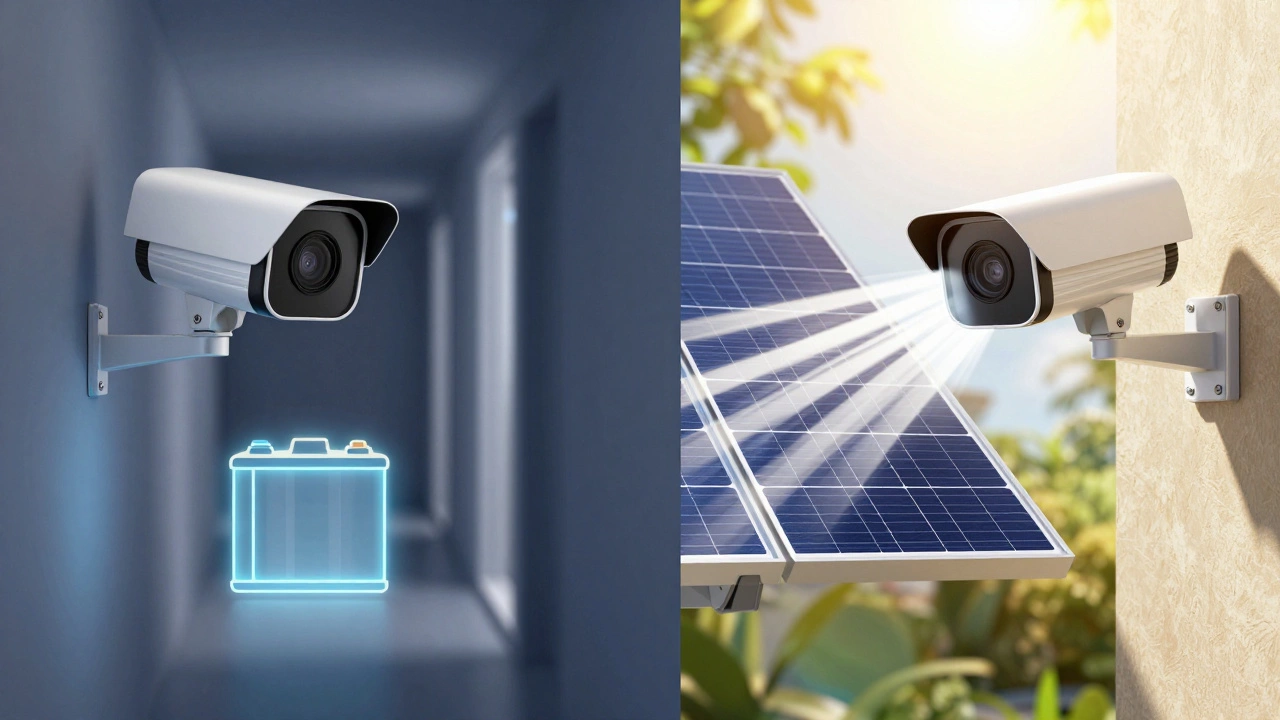
- Battery-Powered Cameras: These use internal lithium-ion or lithium-polymer packs. They are great for temporary setups or low-traffic areas because they sleep most of the time and only wake up when motion is detected.
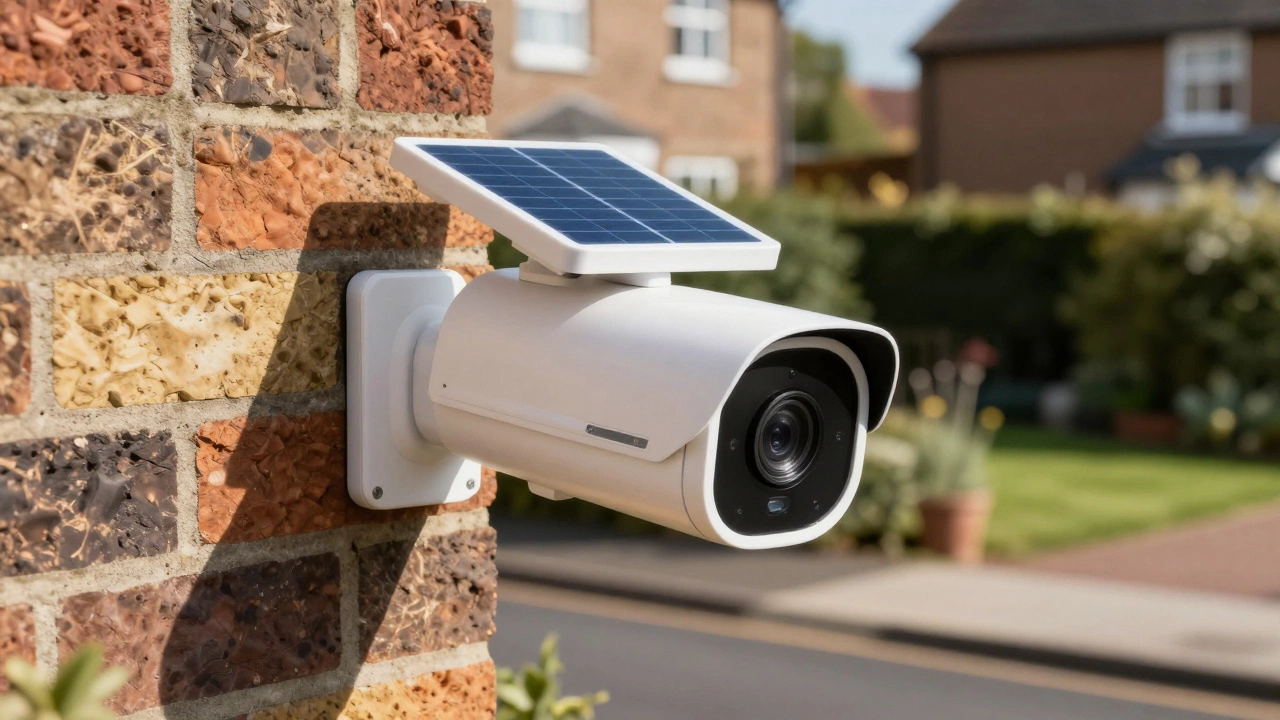
- Solar-Powered Cameras: These pair a battery with a photovoltaic panel. The panel charges the battery during the day, allowing the camera to run 24/7 if the sunlight is sufficient.
- Hybrid Systems (Battery + Solar): This is the gold standard for reliability. You get the buffer of the battery and the continuous charging of the solar panel.
Think of a battery-powered camera like a smartphone. It lasts a few days or weeks depending on usage. A solar-powered camera is more like a calculator with a tiny solar strip-it keeps going as long as there is light. For a permanent installation where you want constant recording, solar is usually the better bet, provided you have sun exposure.
The Connectivity Trap: Wi-Fi vs. Cellular
Powering the camera is only half the battle. You also need to get the video somewhere. Most people assume "wireless" means Wi-Fi, but Wi-Fi requires a router, which requires electricity. If your whole house loses power, your Wi-Fi router dies, and your "wireless" cameras go blind to your phone.
This is where cellular security cameras are surveillance devices that use 4G LTE or 5G mobile networks to transmit data independently of home internet come in handy. Brands like Reolink, Arlo, and Lorex offer models with SIM card slots. These cameras connect directly to cell towers. As long as there is cell service, you can view live footage and get alerts, even if your home internet and Wi-Fi are down.
However, cellular plans cost money. You'll pay a monthly fee for data, similar to a phone plan. If you don't want ongoing costs, look for cameras that support local storage. Many modern units allow you to insert a microSD card. The camera records locally to the card and only uses data (Wi-Fi or cellular) to send short clips when motion is detected. This saves both battery life and data fees.
| Feature | Battery Only | Solar Powered | Cellular (4G/LTE) |
|---|---|---|---|
| Installation Effort | Very Low (Stick & Go) | Low (Needs Sunlight) | Medium (SIM Setup) |
| Maintenance | High (Recharge Often) | Low (Self-Charging) | Medium (Data Plans) |
| Best For | Temporary/Indoor Use | Outdoor/Remote Areas | No Wi-Fi Zones |
| Cost Over Time | Low (No Subscriptions) | Medium (Higher Upfront) | High (Monthly Fees) |
Real-World Performance: What to Expect
You might wonder if cutting the cord means sacrificing quality. In 2026, the answer is mostly no. Modern off-grid cameras can shoot in 2K or even 4K resolution. However, high resolution eats battery power fast. To manage this, manufacturers use smart software.
Most battery cameras don't record continuously. They sit in a low-power "sleep" mode and wake up only when their sensors detect movement. This preserves battery life but means you might miss events that happen slowly or without triggering the motion sensor. If you need true 24/7 recording, you almost certainly need a solar setup with a large enough panel to recharge daily. Even then, heavy rain or snow for several days can drain the battery faster than the sun can replenish it.
Night vision is another power hog. Infrared LEDs require significant energy. Some newer models switch to color night vision using starlight sensors, which can be more efficient, but generally, expect battery life to drop significantly in winter months when days are shorter and nights are longer.
Choosing the Right System for Your Needs
Before you buy, ask yourself three questions:
- Is there direct sunlight? If your camera spot is shaded by trees or overhangs, skip the solar option unless you can mount the panel separately in a sunny area. Otherwise, stick to high-capacity batteries and plan to swap them every few weeks.
- Do I have reliable Wi-Fi? If yes, a standard Wi-Fi battery camera is cheapest and easiest. If no, or if you have dead zones, look for a model with a built-in Wi-Fi extender or go cellular.
- How much do I value privacy? Cloud storage is convenient but often requires a subscription. Local storage via SD cards or a dedicated NVR (Network Video Recorder) base station keeps footage on-site. Some kits, like those from Camius or Eufy, allow fully offline operation where the camera talks to a local hub, not the internet.
For commercial sites or farms, companies like Clearway Services recommend solar CCTV towers. These are robust, tamper-resistant units designed to last years with minimal maintenance. For homeowners, brands like Ring, ADT, and Swann offer plug-and-play kits that balance ease of use with decent autonomy.
Troubleshooting Common Issues
If your wireless camera suddenly stops working, check these common culprits before assuming the unit is broken:
- Dirty Solar Panels: Dust, bird droppings, or snow can block up to 80% of sunlight. Wipe them clean monthly.
- Weak Signal: Move the camera closer to your router or cell tower. If using Wi-Fi, consider adding a mesh node to extend the range.
- Battery Degradation: Lithium batteries lose capacity over time. If a camera that used to last a month now lasts a week, the battery may be dying and needs replacement.
- Firmware Updates: Manufacturers release updates to improve power efficiency. Ensure your app is updated to benefit from these optimizations.
Can I use a regular wired camera with a battery pack?
Technically yes, but it's complicated. Most standard IP cameras draw more power than typical portable power banks can safely deliver continuously. You would need a specialized DC-to-DC converter and a high-capacity deep-cycle battery. It is usually easier and cheaper to buy a camera designed specifically for battery operation.
How long do battery-powered cameras last on a single charge?
It varies wildly based on activity. In a low-traffic area, some cameras claim 6-12 months. In a busy driveway, they might last only 2-4 weeks. Motion detection settings play a huge role; higher sensitivity drains the battery faster.
Do solar cameras work in winter?
Yes, but performance drops. Shorter days mean less charging time. Snow covering the panel stops charging entirely. Look for cameras with large battery buffers (high mAh capacity) to survive cloudy spells and winter conditions.
Is cellular surveillance expensive?
The hardware is often pricier than Wi-Fi models, and you must pay for a data plan. Costs range from $5 to $20 per month per camera depending on the carrier and data allowance. Calculate this long-term cost against the convenience of having coverage anywhere.
Can I view my wireless cameras if the internet goes down?
If you use Wi-Fi cameras, no-you lose remote access. However, if the camera has local storage (SD card), the footage is still saved. You can retrieve it later once internet is restored. Cellular cameras will continue to work remotely as long as the cell network is up.