Night Vision Range & Clarity Estimator
Configuration
Select your camera specs and goals to calculate realistic visibility limits.
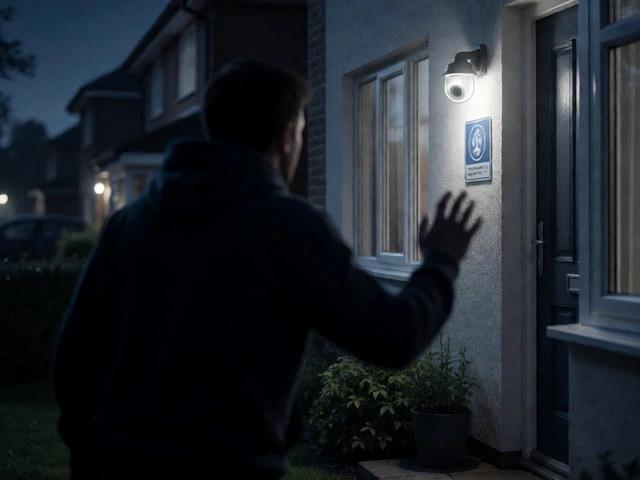
You buy a security camera because you want to know what’s happening in your yard at 2 AM. The box says it has "100-foot night vision." You install it, check the app, and see nothing but grainy gray blobs at the edge of your driveway. What gives?
The short answer is that advertised numbers are often misleading. While a camera might emit infrared light out to 100 feet, it rarely captures identifiable details-like a face or a license plate-at that distance. For most homeowners, the realistic range for clear identification sits between 30 and 60 feet. If you need to see further, you’re stepping into professional-grade territory where lenses, lasers, and thermal sensors change the game entirely.
The Difference Between Seeing and Identifying
To understand how far your camera can actually see, you have to stop looking at just one number. Manufacturers love to advertise "IR Range" (Infrared Range). This tells you how far the invisible light beams travel. But there is a huge gap between detecting movement and identifying who made it.
| Goal | What You See | Typical Distance (Consumer) |
|---|---|---|
| Detection | A blob moving in the dark | Up to 100-200 feet |
| Recognition | A human shape, maybe gender/height | 30-50 feet |
| Identification | Facial features, license plates | 10-30 feet |
If you need to read a license plate, you likely need the subject to be within 15 to 20 feet of the lens. If you just need to know someone walked onto your property, detection at 100 feet is fine. Most consumer cameras fail to clarify this distinction, leading to frustration when the footage isn't crisp enough for court evidence.
Standard Infrared (IR) Cameras: The Home Standard
The vast majority of home security systems use active infrared illumination. These cameras have small LEDs around the lens that glow red (or remain invisible if using 940nm wavelengths) to light up the scene. They produce black-and-white images.
For these devices, the effective range depends heavily on the power of those LEDs and the quality of the sensor.
- Entry-Level Models: Typically cover 10 to 30 feet. Good for doorways or small patios, but useless for monitoring a large backyard.
- Mid-Range Consumer Units: Offer 30 to 100 feet of coverage. This is the sweet spot for most suburban homes. Brands like Eufy or Ring often fall here.
- High-End Consumer/Prosumer: Can push to 150 or 200 feet. These usually feature larger sensors and more powerful IR arrays.
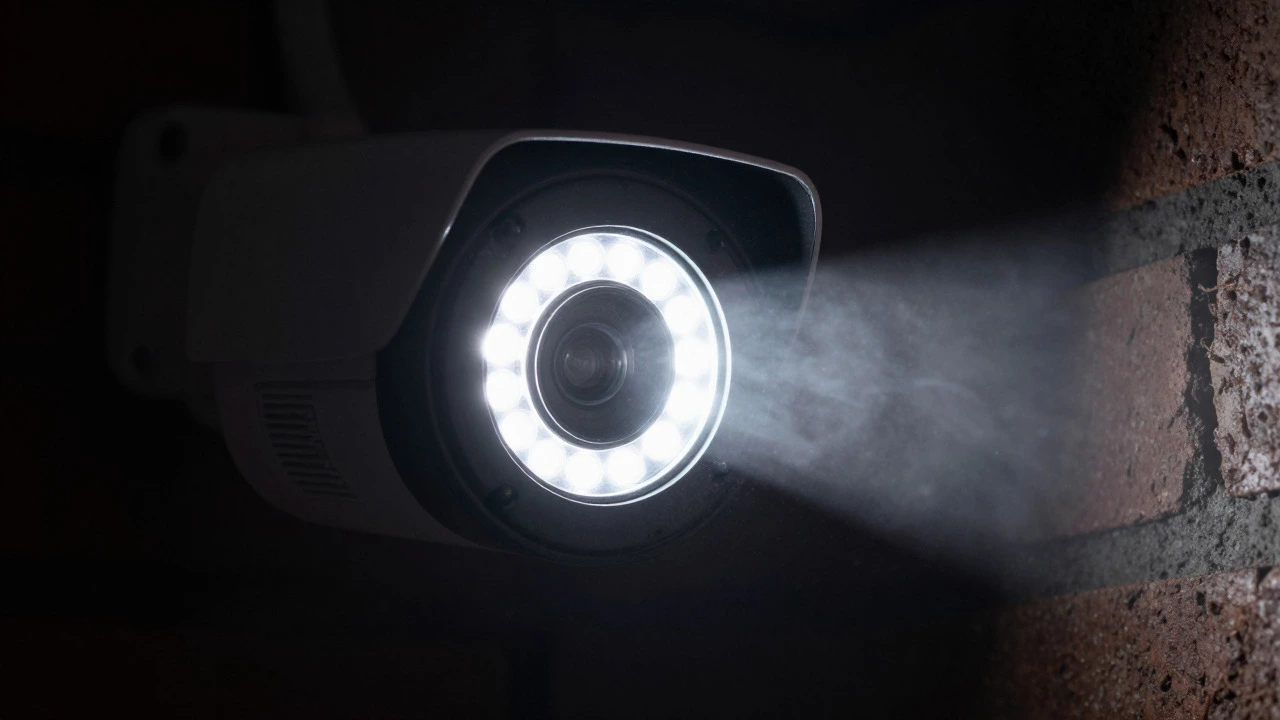
However, IR light scatters easily. Fog, rain, or even dust in the air can reflect the light back to the camera, creating a white haze that blinds the sensor. If you live in a coastal area with frequent mist, your effective range will drop significantly compared to dry climates.
Color Night Vision and Starlight Sensors
In recent years, technology has shifted toward color night vision. Instead of relying solely on harsh infrared lights, these cameras use highly sensitive sensors and bright visible-light spotlights.
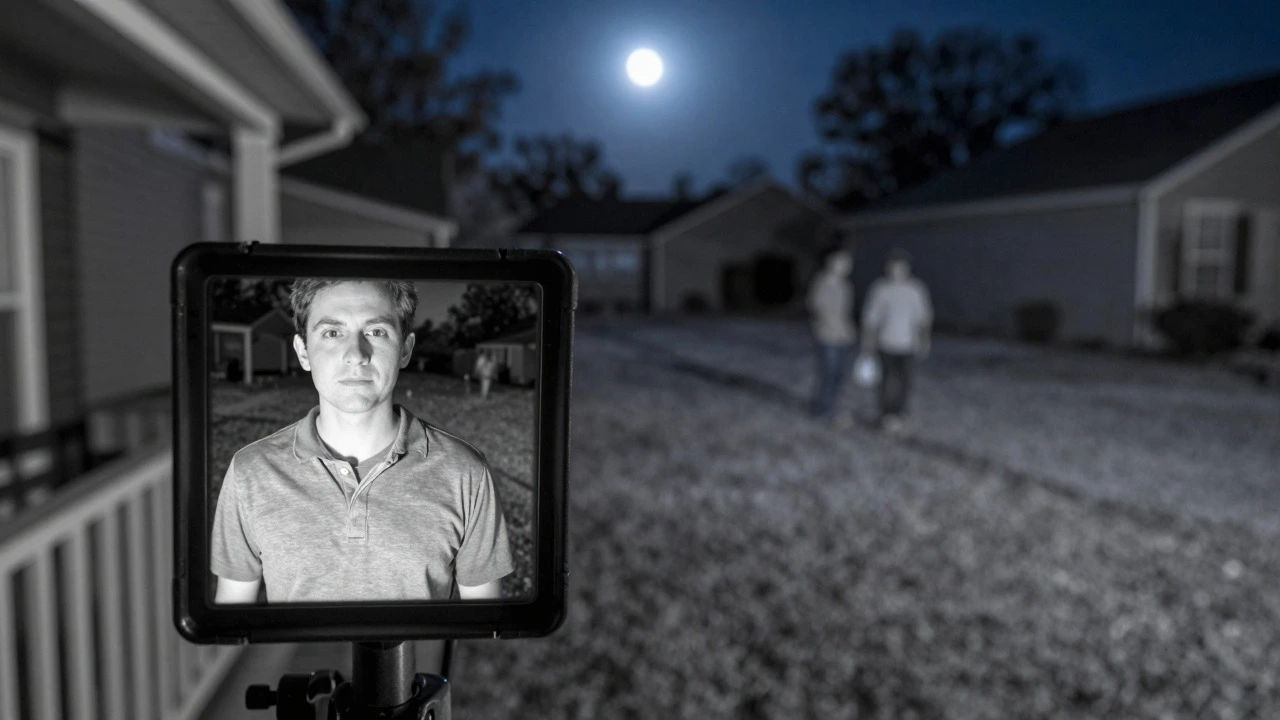
Starlight Sensors are image sensors capable of capturing usable video with extremely low levels of ambient light, such as moonlight or streetlamps. They allow cameras to maintain color imagery rather than switching to grainy black-and-white mode.Cameras marketed with terms like "ColorVu" or "Full Color" typically offer ranges between 30 and 130 feet. The benefit here is detail. A colored image helps you distinguish between a dog and a deer, or a blue shirt and a black jacket. However, these spotlights act like a beacon. If privacy is a concern, or if you don’t want to alert an intruder that they’ve been spotted, pure IR remains the better choice because it’s invisible to the naked eye.
Thermal Imaging: Seeing Heat, Not Light
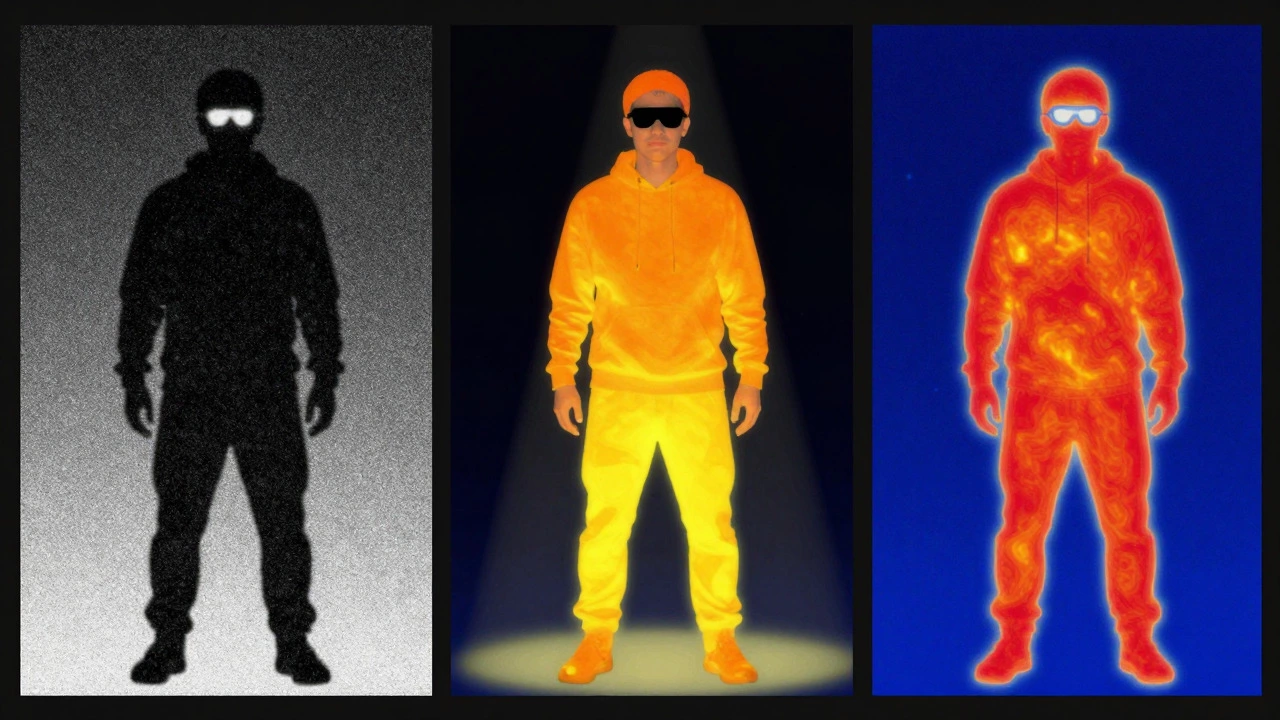
If you need to monitor a large perimeter, thermal cameras are a different beast entirely. They do not rely on light-infrared or otherwise. Instead, they detect heat signatures emitted by objects.
Because they ignore visible light pollution and work through smoke, fog, and darkness, their range is vastly superior for detection purposes.
- Consumer Thermal Add-ons: Devices like FLIR overlays on standard cameras can detect humans at 100 to 500 feet.
- Professional Thermal Systems: Used in industrial settings, these can identify heat sources several kilometers away.
The catch? Resolution. A thermal camera might tell you "a person is standing 400 feet away," but it won’t show you their face. It shows a glowing silhouette. For most homeowners, thermal is overkill unless you have acres of land to protect from trespassers.
Laser Illumination for Extreme Distances
When standard IR LEDs aren't enough, professionals turn to laser illuminators. Unlike the scattered light from LED rings, laser diodes project a focused beam of infrared light much farther.
Systems using laser IR (sometimes called EXIR) can project light 300 to 500 feet into total darkness. Some specialized setups reach up to 1,000 feet. You’ll find these on PTZ (Pan-Tilt-Zoom) cameras used for parking lots, airports, or large estates. The downside is cost and complexity. Aligning a laser illuminator requires precision, and the equipment is significantly more expensive than a plug-and-play home camera.
Factors That Kill Your Range
Even with a high-end camera, your real-world performance will vary based on installation choices. Here is what reduces your effective night vision distance:
- Obstructions: Leaves, branches, or fences between the camera and the target block IR light. IR cannot pass through glass effectively either, so mounting a camera inside a window looking out will ruin performance.
- Mounting Height: Placing a camera too high creates a steep downward angle. This distorts faces and makes identification harder. Aim for a height that keeps the target within the central part of the lens's field of view.
- Reflections: Pointing a camera directly at a reflective surface (like a garage door or a wall) causes IR glare. The light bounces back immediately, washing out the image.
- Resolution vs. Zoom: Digital zoom crops the image; it doesn’t add detail. If you digital-zoom into a distant figure, you just get a bigger pixelated mess. Optical zoom is required for long-range clarity.
Choosing the Right Range for Your Property
Don’t buy a camera based on its maximum advertised IR distance alone. Match the technology to your actual needs.
If you have a small front porch, a 30-foot IR camera is plenty. You want to identify faces, which happens best at close range. If you have a long driveway, consider a PTZ camera with optical zoom and laser IR. For large rural properties, look into hybrid systems that combine wide-angle detection with thermal spotting.
Remember, the goal isn't just to see something moving in the dark. It's to capture evidence that is useful. Always test your camera in the exact conditions it will operate in before finalizing your setup.
What is the average night vision range for a home security camera?
Most residential security cameras have an effective night vision range of 30 to 100 feet. Entry-level models may only cover 10 to 30 feet, while higher-end consumer units can reach up to 150 feet under ideal conditions.
Can night vision cameras see through glass?
No. Infrared light reflects off glass surfaces. If you mount a camera inside a window looking out, the IR light will bounce back, creating a white glare that blinds the sensor. Cameras should always be mounted outdoors or in open areas.
Is thermal imaging better than infrared for night vision?
It depends on your goal. Thermal imaging is superior for long-range detection (hundreds of feet) and works in total darkness or bad weather. However, it provides poor detail for facial recognition. Infrared is better for identifying specific features at closer ranges (under 100 feet).
Why does my camera say 100ft but I can't see anything clearly?
The "100ft" rating usually refers to the IR illumination range, not the identification range. At 100 feet, you might detect motion, but the image will likely be too grainy to identify a person. Clear identification typically occurs at half or less of the advertised IR distance.
Do color night vision cameras work in complete darkness?
Only if they have built-in spotlights. "Starlight" sensors need some ambient light (moonlight, streetlights). Cameras with integrated white-light spotlights (like ColorVu) can provide color video in pitch black, but they act like a flashlight, which may deter or alert intruders.