Home Security Effectiveness Checker
According to research, an alarm alone may not be enough—and can even increase risk if locks are weak. Use this tool to evaluate your current setup and find out where you should invest first.
Your Security Profile
0%Priority Actions
Why This Matters
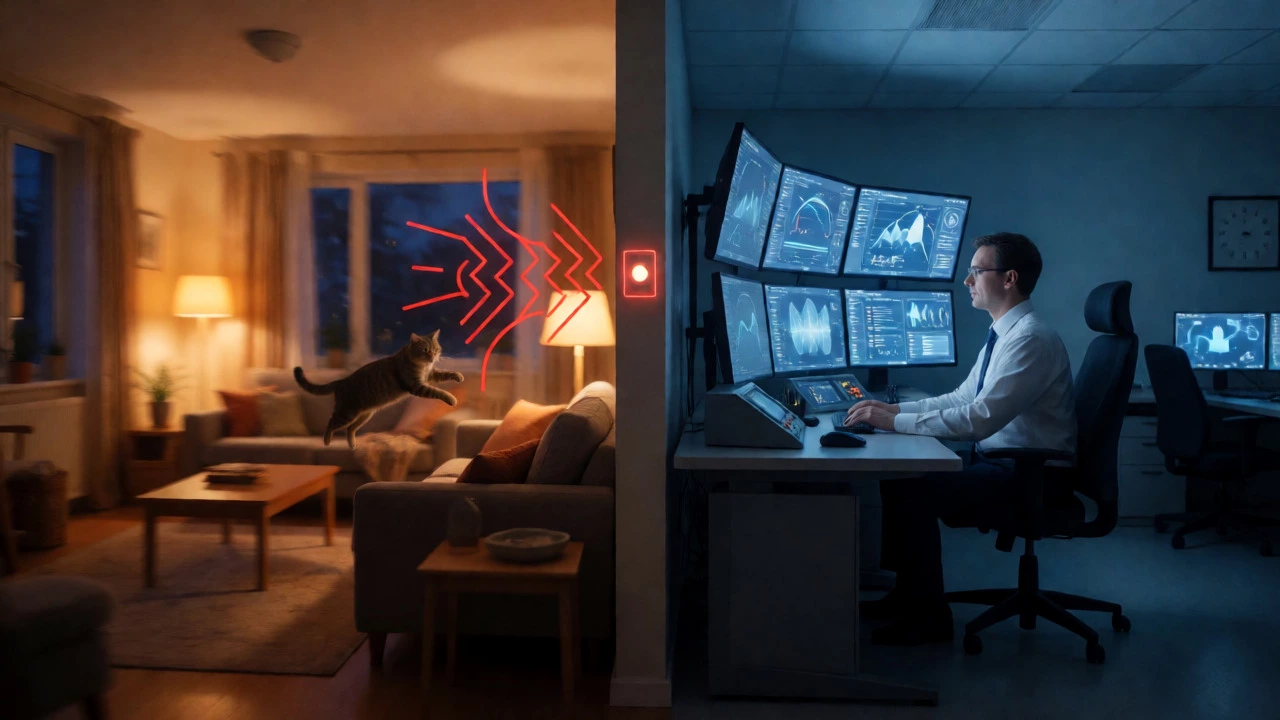
Here is a number that might make you hesitate before buying a security system: 94 to 98%. That is the percentage of residential alarm activations in the UK and US that are false alarms. So, if your siren screams at 3 AM because a moth flew past a sensor or your cat jumped on the sofa, is the system actually working? Or are you just annoying your neighbours?
The short answer is yes, it works-but not for the reason most people think. A burglar alarm isn’t primarily there to catch the thief in the act. It’s there to stop them from trying in the first place. But here is the twist: recent research suggests that an alarm alone might not be enough. In fact, relying solely on an alarm without upgrading your locks could even increase your risk. Confusing? Let’s break down what the data actually says about whether you need one.
The Offender’s Perspective: Why Alarms Deter
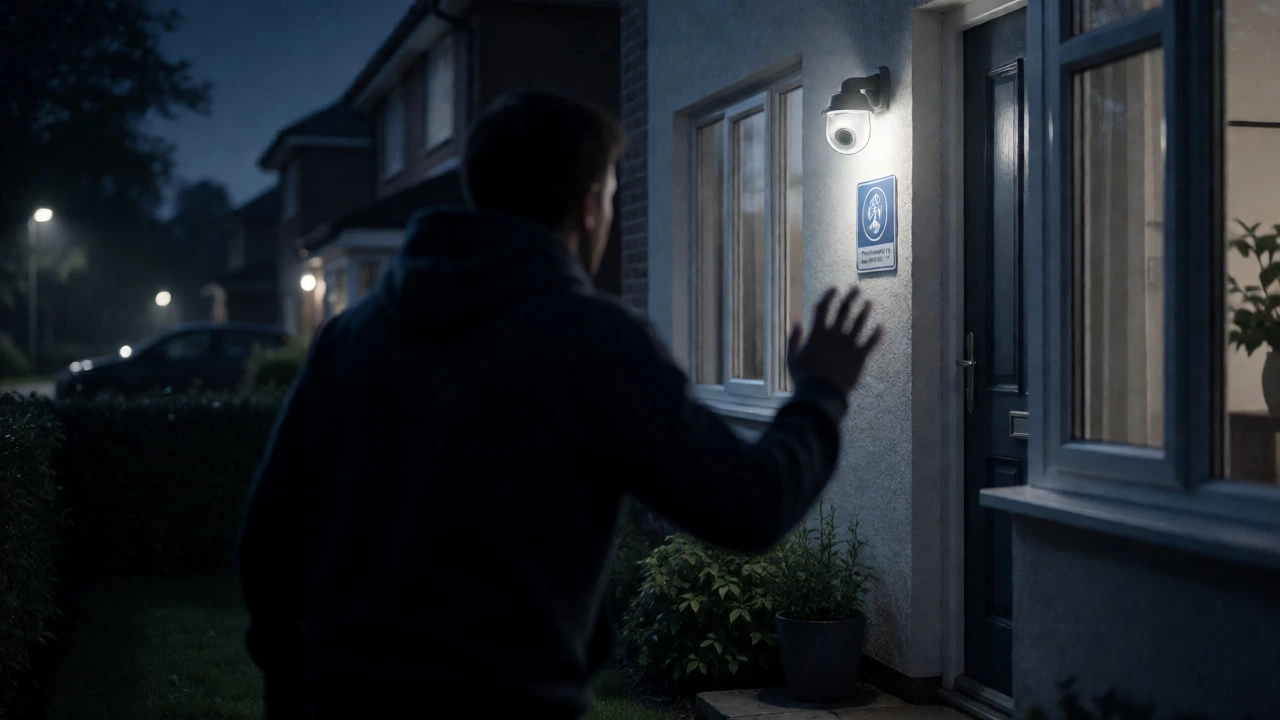
To understand if an alarm is worth it, you have to look through the eyes of the person breaking in. Researchers at UNC Charlotte interviewed 422 incarcerated burglars to find out how they choose targets. The results were clear: about 83% of them actively check for security systems before attempting a burglary. If they see a sign, a camera, or a control panel, roughly 60% will walk away and pick an easier house.
This is the core value of a burglar alarm: an electronic system designed to detect unauthorized entry and trigger a response, functioning largely as a psychological deterrent rather than just a detection tool. It changes the calculation. Burglars want speed and low risk. An alarm introduces noise, attention, and the threat of police response. Even if the police take ten minutes to arrive, that delay is often enough for a thief to flee empty-handed.
A study in Newark, New Jersey, backed this up by looking at crime rates across neighbourhoods. They found that areas with high densities of installed alarms had fewer burglaries overall. Crucially, the crime didn’t just move next door; it dropped. This suggests that when everyone has an alarm, the whole street becomes less attractive to criminals.
The UK Data Paradox: When Alarms Fail
If alarms are so great, why do some studies show mixed results? A major review using the Crime Survey for England and Wales (CSEW) found something surprising. Homes that relied *only* on a burglar alarm-without upgraded deadbolts or window locks-actually had higher burglary rates than homes with no security devices at all.
Why would that happen? Two reasons. First, visible alarms can signal wealth. Thieves might assume that if you spent money on an alarm, you also have expensive electronics inside. Second, if your physical barriers (locks and doors) are weak, the alarm is just a backup. If a thief can kick in your door in five seconds, the alarm might go off too late to matter.
The same CSEW study showed that simple measures like double-deadlock locks and external motion-sensor lights provided up to three times greater protection than having nothing. The lesson? An alarm is a layer, not a fortress. It works best when combined with strong physical security.
Monitored vs. Unmonitored: What Actually Stops a Break-In?
Not all alarms are created equal. There is a big difference between a local siren that just makes noise and a monitored system that calls a central station.
| Feature | Local Siren Only | Monitored System |
|---|---|---|
| Deterrent Value | Moderate. Relies on neighbours hearing it. | High. Signage implies professional response. |
| Response Time | Variable. Depends on who hears it. | Rapid. Central station contacts owner/police. |
| Cost | Low upfront, no monthly fees. | Higher upfront, monthly subscription fees. |
| Effectiveness | Good for scaring off opportunists. | Best for ensuring police dispatch and keyholder notification. |
Research from the Office of Justice Programs indicates that silent alarms and combination systems (intrusion plus hold-up features) are often more effective than loud sirens alone. Why? Because a loud siren can sometimes annoy neighbours into ignoring it, especially in dense urban areas. A monitored system ensures that someone is actually paying attention. If the alarm triggers, a human operator checks it and decides whether to send police or call you. This reduces the "cry wolf" effect where constant false alarms lead to slower police responses.
The False Alarm Problem: Cost and Credibility
We mentioned that 94-98% of activations are false. This isn’t just a statistic; it’s a real operational problem. In Portland, Oregon, a project tracking low-cost alarms found six false alarms for every one actual burglary. While the one burglary was prevented, those six nuisance calls wasted police resources.
In many UK councils, repeated false alarms can result in fines. Police forces are increasingly reluctant to respond immediately to unverified alarms. Some now require a "two-event rule," meaning two separate sensors must trigger within a specific time frame before they dispatch officers. This makes proper installation critical. Poorly placed motion detectors that catch sunlight or drafts will get you fined and ignored.
How do you fix this?
- Pet Immunity: Ensure your motion sensors are rated for pets if you have cats or dogs.
- Sensor Placement: Avoid pointing sensors at heat sources like radiators or windows with direct sun exposure.
- User Training: Make sure everyone in the household knows how to arm and disarm the system correctly. User error is the top cause of false alarms.

When Should You Buy One? A Decision Framework
So, should you install a burglar alarm? Here is a practical checklist based on your situation.
You likely NEED one if:
- You live in an area with above-average burglary rates.
- You have significant valuables (art, jewellery, cash) stored at home.
- Your property has large blind spots or easy access points (e.g., ground-floor windows).
- You travel frequently and leave the house empty for days.
You might SKIP it (or delay it) if:
- Your current locks are old single-cylinder models. Upgrade these first-they offer better ROI.
- You live in a well-lit, densely populated urban area with active neighbours.
- You are unwilling to maintain the system or pay monitoring fees.
Remember, the goal is "target hardening." Start with the basics: solid doors, multi-point locking systems, and good lighting. Add an alarm once those foundations are secure. This layered approach gives you the best protection per pound spent.
Final Verdict
A burglar alarm is a valuable tool, but it is not magic. It works by changing the mind of the criminal, not by physically stopping them. Studies confirm that visible security deters the majority of opportunistic thieves. However, the data warns against treating it as a standalone solution. Combine your alarm with robust locks and smart usage habits to avoid the pitfalls of false alarms and misplaced confidence.
If you decide to proceed, choose a monitored system for better response reliability, ensure professional installation to minimize false triggers, and keep your physical security tight. That is how you turn a noisy box on the wall into a genuine asset for your home safety.
Do burglar alarms actually prevent burglaries?
Yes, primarily through deterrence. Surveys of convicted burglars show that over 60% will abandon a target if they see evidence of an alarm. However, alarms are most effective when combined with strong physical security like deadbolt locks and exterior lighting.
Is a monitored alarm better than a local siren?
Generally, yes. Monitored systems provide a verified response chain, contacting keyholders and police. Local sirens rely on neighbours or passersby to react, which can be unreliable. Monitored systems also help mitigate issues with false alarms by verifying events before dispatching emergency services.
Why do so many alarms go off falsely?
The vast majority (94-98%) of activations are false, caused by user error, pets triggering motion sensors, environmental factors like wind or light changes, or poor sensor placement. Proper installation and user training significantly reduce this rate.
Can I get fined for false alarms?
In many UK councils and US cities, yes. Repeated false alarms that waste police resources can lead to fines. Some police forces only respond after multiple confirmed triggers or if the alarm is registered with a certified monitoring company.
Does an alarm increase insurance premiums?
Typically, a professionally installed and monitored alarm can lower your home insurance premium because it reduces the insurer's risk. However, this depends on your provider and the specific type of system installed. Always check with your insurer before purchasing.