
Shadow Visibility Simulator
Select Scenario
Choose a lighting condition and viewing method to see if a shadow can be detected.
Select a scenario to begin
Picture this: you are standing in a room with the lights off. Not just dim-pitch black. No moonlight filtering through the blinds, no streetlamp glow, not even the faint red standby LED on your TV. In that void, can you see a shadow cast by an object passing in front of you? The short answer is no. But the real answer is far more fascinating, and it explains exactly why modern night vision cameras work so well when your own eyes fail.
To understand why we can't see shadows in true darkness, we have to look at how vision actually works. It isn't magic; it's physics and biology colliding. Light travels as particles called photons. For you to see anything-including a shadow-photons must hit your eye. A shadow is simply an area where fewer photons arrive because something blocked them. If there are zero photons to begin with, there is nothing to block. Therefore, in absolute darkness, shadows do not exist for your eyes to detect.
The Biology of Seeing in the Dark
Your eyes are equipped with two main types of light-sensitive cells: cones and rods. Cones handle color and fine detail but need plenty of light to function. When the sun goes down, cones shut down. That’s why everything looks grayish or monochrome at dusk. Rods, however, are the workhorses of low-light vision. They are incredibly sensitive and can react to a single photon.
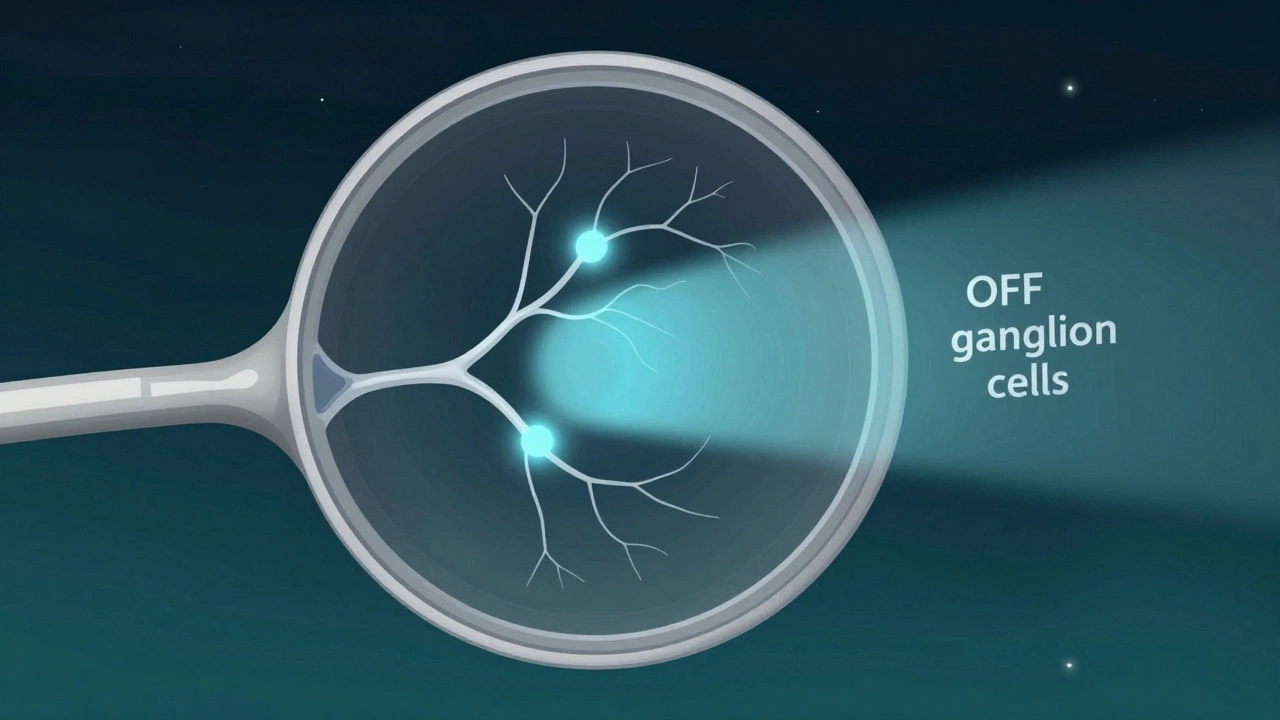
Even with rods working overtime, there is a hard limit. Recent research from Aalto University and the University of Helsinki, published in *Current Biology* in 2022, shed new light on this limit. Scientists discovered that a specific type of nerve cell in the retina, called OFF ganglion cells, is specialized to detect shadows. These cells don't just look for light; they look for the *absence* of light.
In experiments with mice, researchers found that these OFF ganglion cells could detect a shadow created by blocking just a few photons out of thousands hitting the retina. This suggests that mammals evolved a highly efficient system to spot predators moving against a faint background, like starlight. Humans share this same neural circuitry. So, if there is even a tiny amount of ambient light-like starlight-you might technically be able to perceive a shadow, provided your brain processes the signal fast enough.
Absolute Darkness vs. Near-Darkness
Here is where the distinction matters. "Absolute darkness" means zero photons. In a perfect vacuum with no light sources, your rods receive no input. Your brain fills in the blanks with visual noise (those random specks you sometimes see when you close your eyes), but you cannot distinguish a shape or a shadow. There is no contrast to analyze.
However, "near-darkness" is different. Most places we call "dark" still have some light. Starlight, distant city glow, or even bioluminescence provides enough photons for rod cells to activate. In these conditions, the human eye operates near its physical limits. The study showed that detecting a shadow requires a dip in light intensity. If the baseline light is too low, the "dip" caused by a shadow is indistinguishable from natural fluctuations in photon arrival. Essentially, the signal gets lost in the noise.
How Night Vision Cameras Bridge the Gap
This biological limitation is precisely why we rely on technology. Night vision cameras are electronic devices designed to capture images in low-light or no-light conditions using image intensification or infrared illumination. Unlike your eyes, which passively wait for photons, many security cameras actively create their own light source.
There are two primary ways these cameras overcome the problem of darkness:
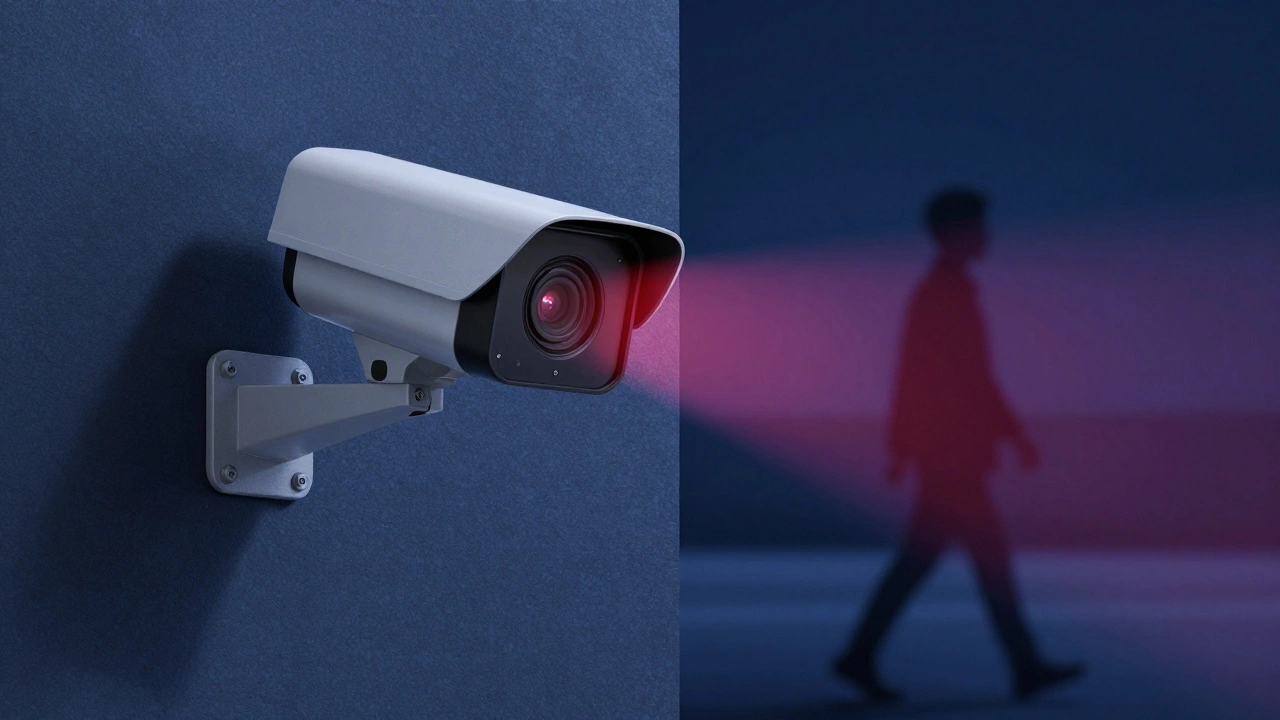
- Infrared (IR) Illumination: Most modern security cameras use IR LEDs that emit light invisible to the human eye. To the camera sensor, the scene is brightly lit. An object passing in front of the lens blocks this IR light, creating a clear shadow or silhouette. Since the camera controls the light source, it ensures there is always enough "background" light to define a shadow.
- Image Intensification: Older or military-grade night vision devices amplify whatever tiny amount of ambient light exists. They take those few stray photons from stars or the moon and multiply their energy, making the image bright enough for a screen or eyepiece. This allows the camera to detect the subtle contrast differences that define a shadow, much like the OFF ganglion cells in our retinas, but with electronic amplification.
For home security, this means that while you sit in the dark unable to see a burglar approaching, your camera sees them clearly because it has turned "invisible" light into visible data.
Why Shadows Matter in Security
You might wonder why seeing a shadow is such a big deal for security systems. In computer vision, shadows are critical cues for depth perception and motion detection. Without shadows, objects can look flat and blend into the background. By ensuring a strong contrast between the subject and the background, night vision cameras make it easier for both human reviewers and AI algorithms to identify threats.
If a camera relies solely on available light without IR, it struggles in total darkness. The image becomes grainy and noisy, similar to what your eyes experience. Shadows disappear into the static. This is why choosing a camera with good IR range is vital for outdoor monitoring where streetlights might not reach.
| Feature | Human Eye (Rods) | Standard Night Vision Camera |
|---|---|---|
| Light Source Dependency | Passive (needs ambient light) | Active (can emit IR light) |
| Shadow Detection Limit | Fails in absolute darkness | Works in absolute darkness (with IR) |
| Sensitivity Mechanism | Biological (OFF ganglion cells) | Electronic (CMOS/CCD sensors + Amplification) |
| Color Perception | None in low light | Usually monochrome (black/white/green) |
Pitfalls to Avoid in Low-Light Monitoring
Not all night vision setups are created equal. One common mistake is relying on "starlight" sensors without supplemental lighting in areas that are truly dark. While high-end sensors are impressive, they still need *some* photons. If you install a camera in a basement with no windows and no IR cut-off filter issues, you might get a black screen.
Another issue is IR reflection. If an object is very close to the camera, the IR light reflects directly back, washing out the image. This creates a "glare" effect that eliminates shadows entirely, making the object look like a bright blob rather than a defined shape. Proper placement and angled IR emitters help mitigate this.
Conclusion: The Role of Technology
So, can you see a shadow in absolute darkness? Biologically, no. Your eyes require photons to create the contrast necessary for shadow perception. However, technology has evolved to bypass this biological constraint. By generating our own light sources in the infrared spectrum, night vision cameras allow us to see shadows-and thus objects-in environments where human vision fails completely. Understanding this difference helps you choose the right equipment for your security needs, ensuring you aren't left guessing in the dark.
Can humans see in complete darkness?
No, humans cannot see in complete darkness. Vision requires light photons to stimulate the rod and cone cells in the retina. In absolute darkness with zero photons, the eyes receive no visual information, resulting in total blindness until light is introduced.
What are OFF ganglion cells?
OFF ganglion cells are neurons in the retina that respond to decreases in light intensity. Research shows they are specialized to detect shadows, allowing mammals to perceive shapes and movements even in very low-light conditions like starlight.
Do night vision cameras need any light to work?
It depends on the type. Digital night vision cameras with infrared (IR) LEDs generate their own light and can work in total darkness. Analog image intensifier tubes (like green-glow goggles) require some minimal ambient light, such as starlight, to amplify.
Why do shadows disappear in grainy low-light photos?
In low light, camera sensors increase ISO sensitivity, which introduces digital noise. This noise obscures subtle contrast differences. If the shadow's contrast is lower than the noise level, the shadow becomes indistinguishable from the background texture.
Is infrared light safe for humans?
Yes, the near-infrared light used in standard security cameras is non-ionizing and generally considered safe for humans and pets. It is invisible to the naked eye and does not carry enough energy to cause thermal damage at typical exposure levels.