Home Security Monitoring Cost Calculator
How Much Will Your Home Monitoring Cost?
Estimate your monthly cost based on your specific security needs and monitoring preferences.
Your Security Setup
Cost Breakdown
Monthly base cost: $0.00
Camera charges: $0.00
Sensor charges: $0.00
Total before insurance discount: $0.00
Estimated savings with insurance: $0.00
Optimal value range: $25-$35/month for most homeowners
When you think about home security, the equipment often gets all the attention-cameras, door sensors, motion detectors. But here’s the truth: home monitoring is what turns those devices into real protection. Without it, your alarm just makes noise. Your camera just records. And if you’re not home, no one’s watching. So how much does it actually cost to keep your house monitored day and night? The answer isn’t simple. It depends on how much help you want, how much control you’re willing to give up, and whether you’re okay paying extra for peace of mind.
Free Self-Monitoring: You Do All the Work
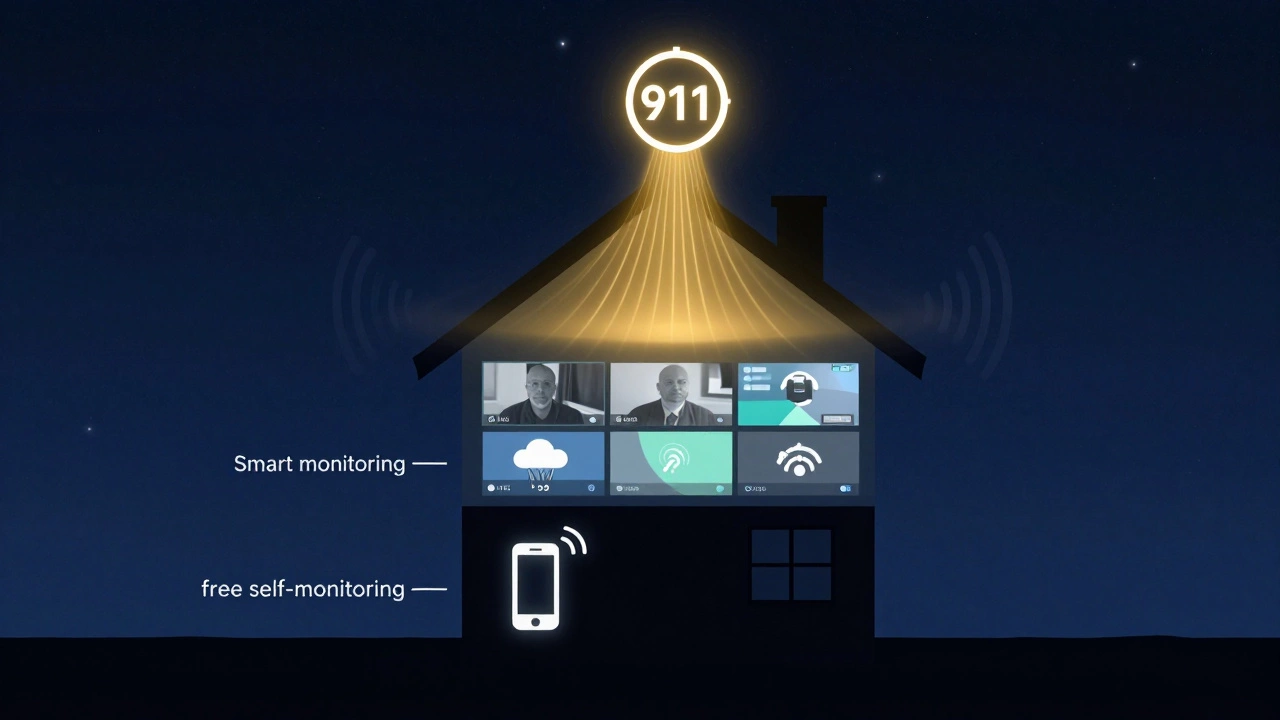
Some systems let you monitor your home for free. No monthly fees. Just your phone, an app, and your attention. Brands like Ring, Eufy, and Wyze offer this option. You get push notifications when a door opens, motion is detected, or a camera sees something unusual. But here’s the catch-you have to respond. Every time.
Imagine you’re at work, and your front door sensor triggers. You get a notification. You open the app. You see a person standing on your porch. Do you call 911? Do you call a neighbor? Do you ignore it because you’re in a meeting? That’s the gamble with self-monitoring. It’s free, but it’s also unreliable if you’re not always available.
People who choose this route are usually tech-savvy, home-based, or have family nearby who can check in. Reddit user u/SecureHomeOwner said in October 2025: "Frontpoint’s $14.99 plan works perfectly for me-I get alerts on my phone and call police myself, saving $200/year versus professional monitoring." But that’s only true if you’re always alert, always responsive. Miss one alert during vacation, sick day, or power outage, and your home is unprotected.
Smart Monitoring: $4 to $20 a Month
This is the middle ground. You pay a small monthly fee-usually between $4 and $20-for cloud storage, smarter alerts, and basic automation. Think of it as "smart home monitoring" without the human backup. Services like SimpliSafe’s "Basic" plan, Cove’s entry tier, and Arlo’s $3/month video plan fall here.
What you get:
- Video footage saved to the cloud (7-30 days)
- Custom motion zones (so you don’t get alerts every time a tree moves)
- Smart alerts that distinguish people from pets or cars
- Remote arming/disarming via app
You still don’t get emergency dispatch. If your alarm goes off, you’re on your own. But you do get better tools to decide what’s real and what’s not. This tier is popular with renters, second homes, or people who travel often but still want some automation. NerdWallet’s January 2025 analysis found that 32% of new home security users now pick smart monitoring over professional-up from 22% in 2022.
But here’s a hidden cost: video storage adds $3-$10 per camera per month. If you have five cameras, that’s $15-$50 extra. So a "$10 plan" can quickly become $60 if you’re not careful.
Professional Monitoring: $20 to $80 a Month
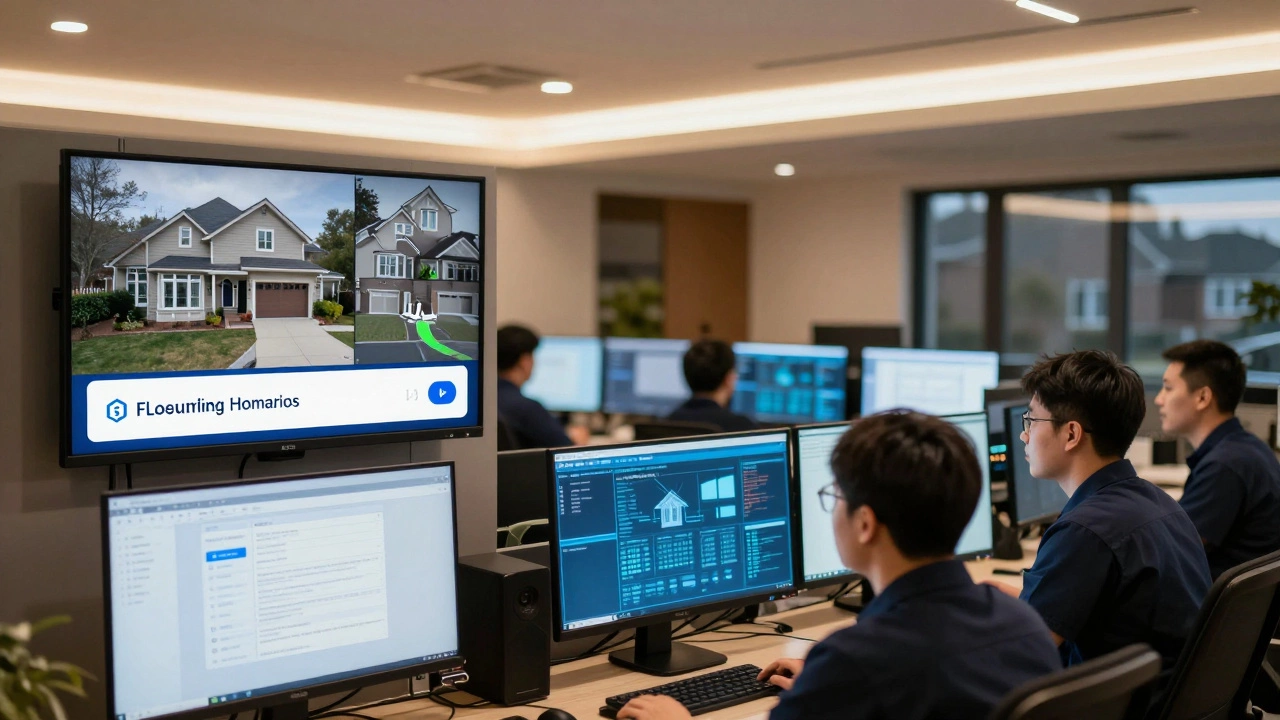
This is where your system connects to a real monitoring center-staffed 24/7 by trained professionals who will call police, fire, or EMS if something serious happens. These centers are UL-certified, meaning they meet strict standards for response speed and reliability. This isn’t just an app notification. It’s a human calling 911 on your behalf.
Prices vary widely:
- Entry-level: $20-$25/month (SimpliSafe, Cove, Frontpoint)
- Mid-tier: $25-$40/month (ADT, Vivint, Brinks)
- Premium: $40-$80/month (Vivint’s top plans, Alder with full environmental sensors)
Why the big range? It’s not just about the service-it’s about what’s included.
Cellular backup is standard in professional plans (92% of them, according to SafeHome.org). It costs $5-$7 extra on older systems, but most providers now include it. Without it, your system goes dead if your internet fails-which happens more often than you think during storms or outages.
Police dispatch is the biggest value. The Central Station Alarm Association found that professional monitoring reduces false alarm police responses by 78%. That means when they call, police take it seriously. Self-monitored alarms? Many cities ignore them.
Consumer Reports’ May 2025 study showed that homes with professional monitoring saw 31% fewer burglary-related losses. That’s not just peace of mind-it’s money saved.
Provider Breakdown: Who Charges What in 2025?
Here’s what you’ll actually pay in Q4 2025, based on verified provider plans:
| Provider | Plan Name | Monthly Cost | Includes Police Dispatch? | Cellular Backup? | Contract? |
|---|---|---|---|---|---|
| Frontpoint | Standard | $14.99 | Yes | Yes | Month-to-month |
| SimpliSafe | Interactive-1 | $21.99 | Yes | Yes | Month-to-month |
| Cove Security | Basic | $19.99 | Yes | Yes | Month-to-month |
| ADT | Remote Monitoring | $24.99 | Yes | No (add $10) | 36-month |
| Vivint | Smart Monitoring | $29.99 | Yes | Yes | 60-month |
| Alder Security | Entry Plan | $40.00 | Yes | Yes | 36-month |
| Brinks | Basic | $39.99 | Yes | Yes | 36-month |
Notice the pattern? Month-to-month providers like SimpliSafe and Cove offer the best value for flexibility. ADT and Vivint look cheaper at first glance, but their contracts lock you in-and they often charge extra for cellular backup or premium features.
Hidden Costs: What No One Tells You
Most people focus on the monthly fee. But the real cost comes from what’s buried in the fine print.
- Installation fees: $99-$199 if you don’t install it yourself. Alder and SimpliSafe waive this if you sign up for monitoring.
- Early termination fees: Vivint and ADT charge $350-$500 if you cancel before your contract ends. That’s more than a year’s monitoring fee.
- Rate hikes: 28% of Vivint users reported unexpected price increases after the first year. Some jumped from $29.99 to $49.99.
- Insurance discounts: State Farm, Allstate, and USAA give 5-20% off home insurance for monitored systems. That can save you $100-$300 a year-offsetting most of the monthly cost.
And then there’s the new trend: Pay-Per-Alert. Brinks launched it in October 2025-$0.99 per verified alarm. No monthly fee. You only pay when something happens. It’s great for vacation homes or people who rarely get alerts. But if you have a dog that triggers motion sensors, or live near a busy street, you could end up paying $30 a month anyway.
What’s the Sweet Spot?
Security analyst Dr. Robert Siciliano said it best: "The $25-$35/month range represents optimal value for most homeowners." That’s where you get professional dispatch, cellular backup, smart alerts, and no contract.
For most people in the UK or US, this means:
- Choose SimpliSafe or Cove for $20-$22/month
- Get 2-3 cameras with cloud storage ($5-$10 extra)
- Skip the premium sensors (flood, CO, glass break) unless you have specific risks
- Use your insurance discount to cut the net cost by $10-$20/month
That’s $30-$40 total. For less than the price of a weekly coffee delivery, you get 24/7 emergency response, police dispatch, and peace of mind while you’re away.
What’s Changing in 2026?
The FCC is requiring all professionally monitored systems to include two-way voice communication by January 2026. That means the monitoring center can talk to you-or an intruder-through your system’s speaker. It’s a good safety feature, but it’ll add $2-$4 to monthly fees.
Meanwhile, 5G is lowering cellular backup costs. Providers who used to charge $10 for it are now charging $5-or giving it free. And AI is getting smarter. Ring’s false alarm reduction tech cut unnecessary police calls by 37% in 2024. That means fewer fines, fewer wasted responses, and better service.
But here’s the bottom line: the core value hasn’t changed. Professional monitoring gets help to your door in 45 seconds. You? You’d take 4.7 minutes to even pick up the phone. That’s not just convenience. That’s safety.
Should You Skip Monitoring Altogether?
Only if you’re home 24/7, have neighbors who check in, or live in a very low-crime area. For most people-especially those who travel, work long hours, or have kids or elderly family at home-the risk isn’t worth it.
Self-monitoring feels like a savings. But when you miss an alert, when your internet goes down, when your phone dies-you realize the cost isn’t the monthly fee. It’s the moment you realize your home was unprotected when you needed it most.