Security Light Savings Calculator
Find out how much you could save by switching from all-night security lights to motion-activated LEDs. Input your current setup to see your potential savings.
Your Current Setup
Motion-Activated Setup
Your Savings
Annual Cost
Current Lights
$0.00
Annual Cost
LED Lights
$0.00
Total Savings
$0.00
Switching to motion-activated LED lights could save you $0 annually. This equals 0 hours of wasted energy each year.
Leaving your security lights on all night might feel like the safest move, but it’s not the smartest. In fact, running them nonstop wastes energy, drives up your electricity bill, and can actually make your home less secure. The real answer isn’t yes or no-it’s motion-activated. For most homes, turning lights on only when someone’s near is the better way to protect your property without paying the price.
Why All-Night Lights Are a Waste
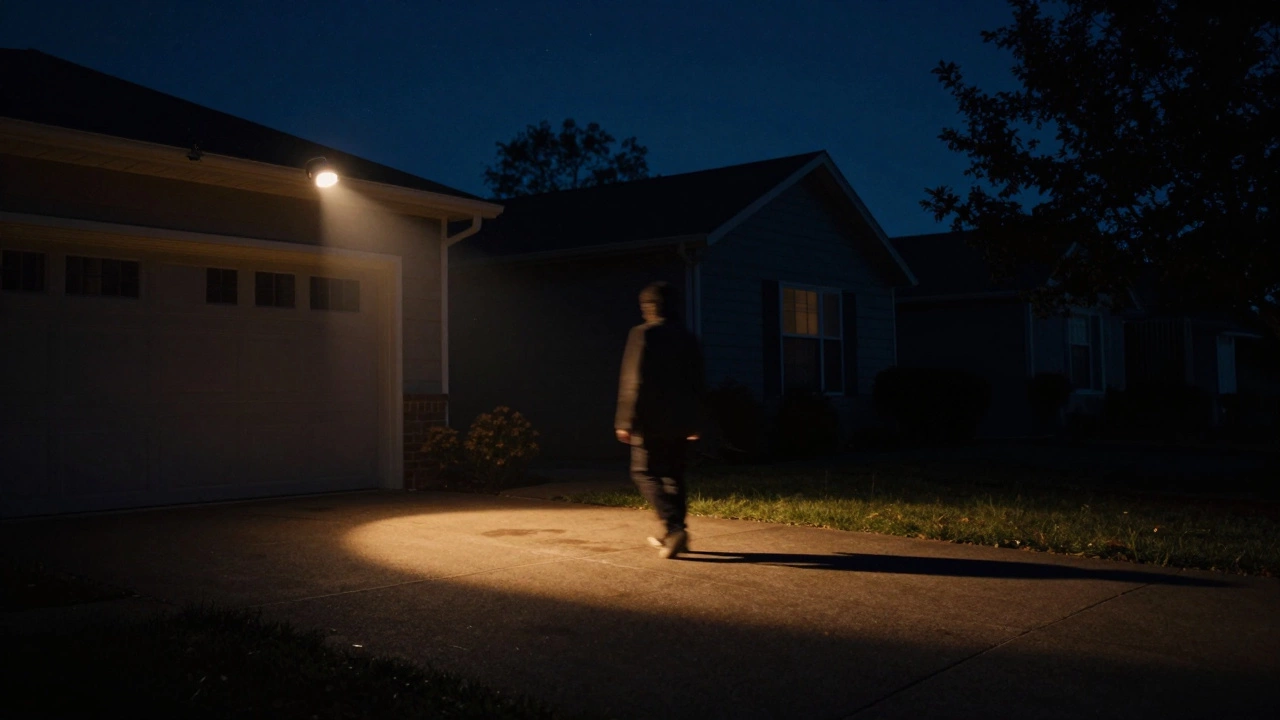
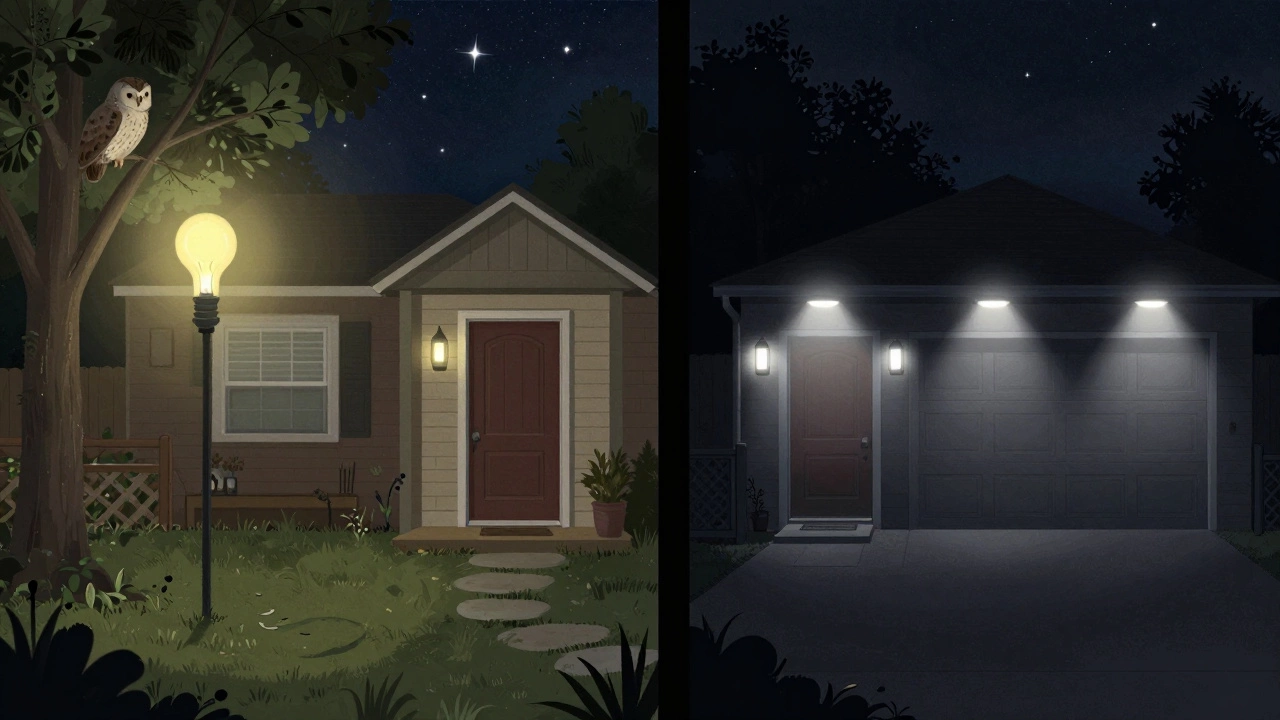
Think about it: if no one’s moving around your yard at 2 a.m., why is your driveway glowing like it’s noon? Continuous lighting doesn’t scare off intruders-it just burns electricity. A typical outdoor security light left on all night uses about 100 watts. That’s 2.4 kilowatt-hours per day. Over a year? That’s nearly 900 kWh. In New Zealand, where electricity costs around 28 cents per kWh, that’s over $250 a year just for one light. Multiply that by three or four lights around your house, and you’re spending more than a phone bill on light no one sees. And it’s not just money. Constant brightness creates light pollution. It washes out the stars, disturbs wildlife, and can even mess with your sleep. If your bedroom window faces the backyard, a 24/7 floodlight is like having a mini-sun in your room. People who live near busy roads know this well-cars, dogs, even wind-blown branches keep triggering lights that never turn off. Over time, you stop noticing them. And that’s dangerous. If a real intruder shows up, your brain won’t react because you’ve tuned out the noise.How Motion-Activated Lights Actually Work Better
Motion-activated lights change the game. They stay dark until something moves within range-then they blast on for 30 seconds to 5 minutes, depending on how you set them. That’s enough time to scare off someone sneaking around, give you a chance to check your phone, or let your dog know someone’s near the fence. Modern LED motion sensors use far less power than old-school bulbs. A typical LED motion light draws 15-20 watts when on. Even if it activates 10 times a night, that’s still only 0.2-0.3 kWh per day. That’s less than 10% of what a constant light uses. Over a year, you save hundreds of dollars. Plus, LED bulbs last 10 to 15 years. Compare that to traditional bulbs, which burn out every 6 to 12 months under constant use. Replacing bulbs on a 10-foot pole? It’s a ladder job. With motion-activated LEDs, you might never need to climb up at all.What About False Alarms? Pets, Wind, and Bugs
You’ve probably heard the complaints: “My dog set off the light,” or “The tree kept making it flash.” Yes, motion sensors can be finicky. But modern ones aren’t the cheap, outdated models from 10 years ago. Today’s best sensors let you adjust:- Sensitivity-set it to ignore small animals under 30 pounds
- Range-limit detection to your driveway, not the street
- Duration-set it to turn off after 30 seconds if you don’t need it longer
Blind Spots? Coverage Isn’t the Problem
One common excuse for leaving lights on all night is that motion sensors leave blind spots. True-a single sensor sees about 180 degrees. But that’s not a reason to flood your whole yard. It’s a reason to use more lights. Place motion lights at key entry points: front door, back gate, garage, side alley. Use two or three instead of one. That gives you overlapping coverage. A burglar can’t sneak in from three angles at once. And if they try to avoid one light, they’ll hit another. That’s smarter than one big light that shines everywhere and tells everyone exactly where your weak spots are.Cost Comparison: Upfront vs. Long-Term
Yes, a good motion-activated LED light costs more upfront-$60 to $120 vs. $20 for a basic floodlight. But here’s the real math:| Factor | Motion-Activated LED | Continuous Incandescent |
|---|---|---|
| Initial Cost | $80 | $25 |
| Annual Electricity (100W x 10h/night) | $15 | $250 |
| Bulb Replacements (5 years) | 0 | 5 ($15 each) |
| Installation Cost (hardwired) | $100 (one-time) | $100 (one-time) |
| Total 5-Year Cost | $195 | $1,000+ |
When Continuous Lighting Makes Sense
There are exceptions. If you live in a high-crime area, have a home-based business with late-night deliveries, or manage a large property with multiple access points, you might need some lights on all night. But even then, don’t go all-in. Use continuous lighting only in critical spots: the main entrance, a dark corner near a window, or a gate that’s hard to monitor. Keep everything else on motion. That way, you get the safety boost without the waste. And if you’re still unsure? Try a hybrid. Install motion lights first. Live with them for a month. See if they give you enough peace of mind. If you still feel exposed, add one or two always-on lights-not ten.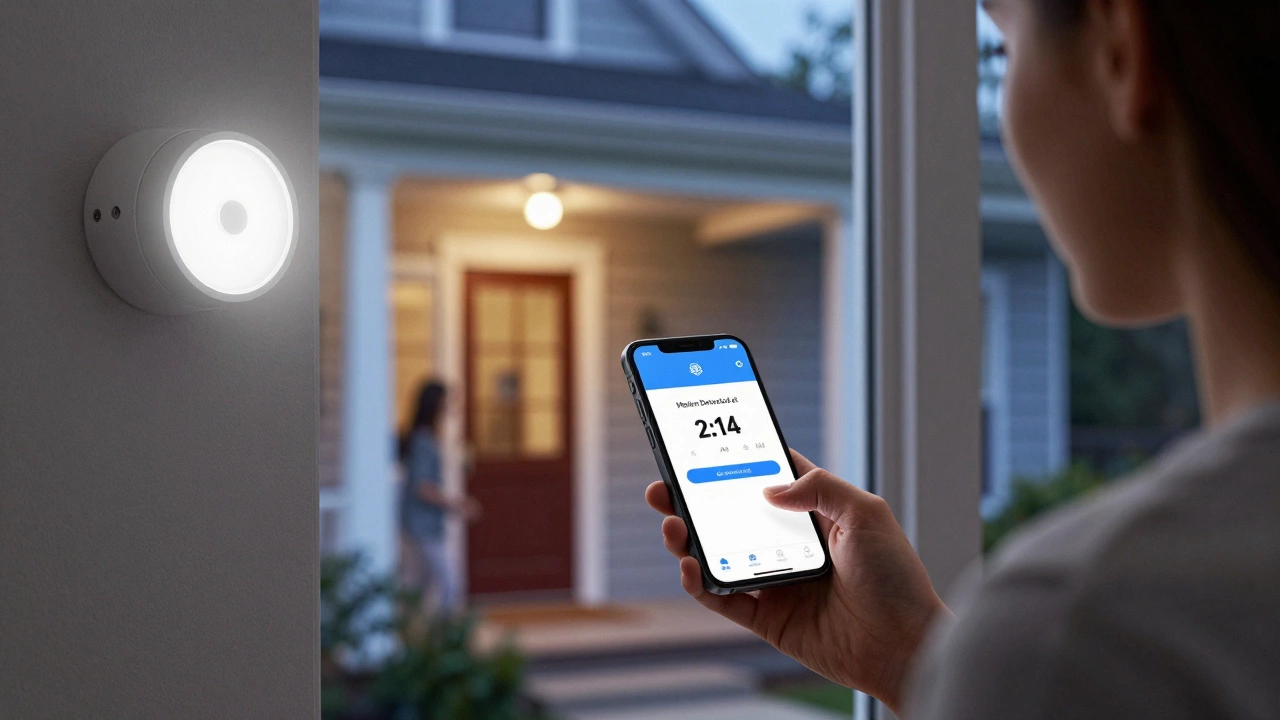
Smart Features You Didn’t Know You Needed
The best motion-activated lights today aren’t just smart-they’re connected. Many work with apps like Google Home or Apple HomeKit. You can:- Get a push notification when motion is detected
- Check how often lights turned on (useful for spotting unusual activity)
- Turn lights on manually from your phone if you’re walking home late
- Sync them with your security camera so lights turn on only when the camera records
Easy Maintenance Tips
Motion lights need less care than constant ones, but they still need attention:- Wipe the sensor lens every 3 months-dust and spiderwebs block detection
- Check for moss or dirt buildup on the fixture-especially after rainy seasons
- Test the sensitivity every few months by walking in front of it
- Replace batteries in solar models every 2-4 years (they last longer than you think)
Final Answer: No, Don’t Leave Them On All Night
Security lights don’t need to burn all night to work. In fact, they work better when they’re not. Motion-activated LED lights save money, reduce light pollution, extend equipment life, and still cut crime by up to 39%-just like constant lights do. The difference? You’re not paying for 10 hours of useless brightness every night. For 95% of homes, motion-activated is the right call. Use smart settings to avoid false alarms. Place lights where they matter most. And if you’re still nervous? Add one always-on light near your front door-not your whole backyard. The goal isn’t to light up the neighborhood. It’s to scare off trouble when it shows up. Motion lights do that. Constant lights just make your electricity bill bigger.Do motion-activated security lights really deter burglars?
Yes. Studies show outdoor lighting reduces crime by up to 39%, and motion-activated lights deliver that same deterrent effect without the waste. Burglars look for easy targets-sudden bright lights and movement make them think someone’s home or watching. That’s enough to make them move on.
Can pets trigger motion-activated lights?
Yes, but modern sensors let you avoid it. Most allow you to set a weight limit-like ignoring animals under 30 or 40 pounds. You can also adjust the sensor’s angle or use pet-immune models designed to ignore pets while still detecting humans. If your dog keeps setting it off, reposition the light or upgrade to a model with zoning controls.
Are solar-powered motion lights reliable?
They work well in sunny areas, but performance drops in long winters or shaded spots. Solar lights are great for low-traffic zones like side yards or garden paths. But for critical areas like your front door or garage, hardwired LED lights are more reliable. Solar batteries last 2-4 years, but they can’t match the consistent brightness of a direct power source.
How long do LED motion lights last?
High-quality LED motion lights last 10-15 years. That’s because they’re only on for minutes each night, not hours. Cheap LEDs may fail in 1-3 years, so look for weather-resistant, UL-rated models. Avoid no-name brands-stick to ones with at least a 3-year warranty.
Should I install motion lights myself or hire someone?
If you’re comfortable with basic wiring and using a ladder, DIY works for solar or battery models. For hardwired lights connected to your home’s electrical system, hire an electrician. It’s safer, ensures code compliance, and often comes with a warranty. Most electricians can install a motion light in under an hour.