IP Rating Lights: What They Are and Why They Matter for Outdoor Security
When you buy an IP rating lights, a standardized measure of how well a device is sealed against solids like dust and liquids like water. Also known as Ingress Protection rating, it tells you exactly how tough that outdoor light is when it’s raining, snowing, or covered in dirt. If you’re putting lights around your home for security, you don’t want them to fail after one bad storm. That’s where the IP rating comes in—it’s not marketing fluff, it’s a real-world test.
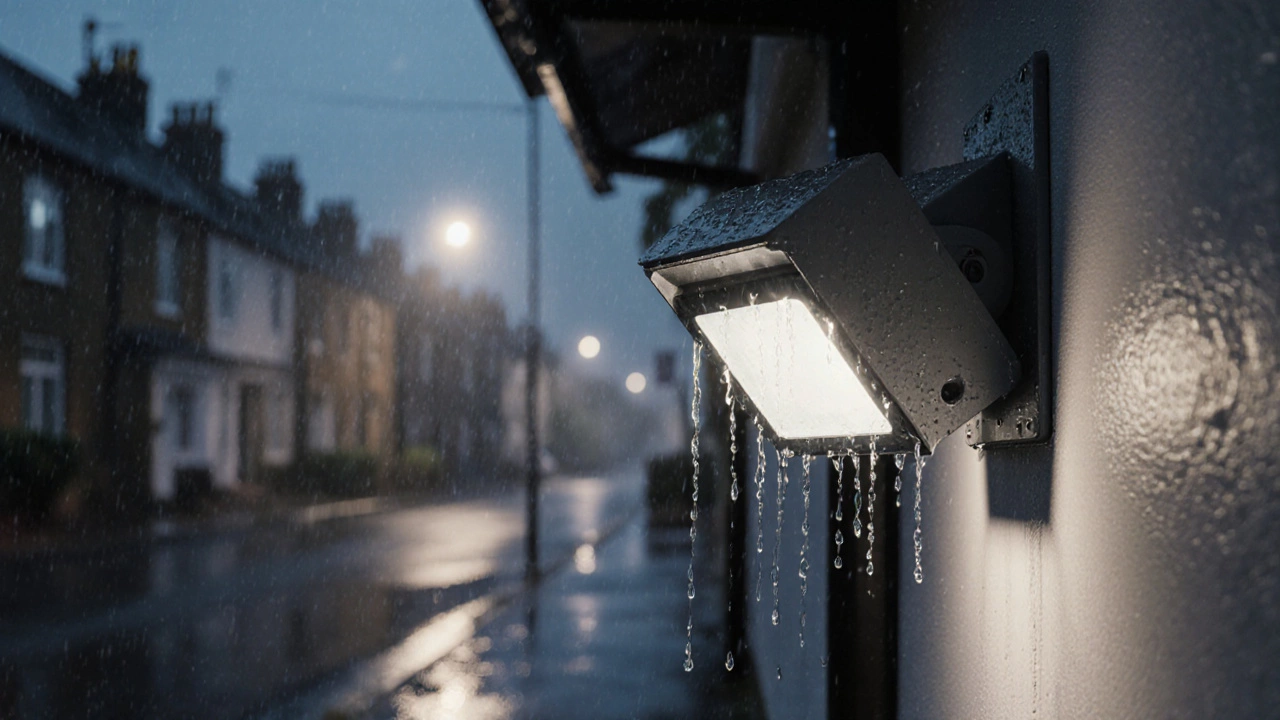
Most outdoor security lights you’ll see in the UK have ratings like IP65, a common standard meaning the device is completely dust-tight and protected against low-pressure water jets from any direction or IP67, a higher level that means the device can survive being submerged in water up to 1 meter deep for 30 minutes. These aren’t just nice-to-haves. A light with an IP44 rating might look fine on a sunny day, but after a few months of British weather, it’ll fog up, rust, or stop working. That’s not just an inconvenience—it’s a security gap. If your motion-activated light dies in the middle of the night, so does your visibility.
IP ratings matter most when you’re linking lights to your security system. A camera with night vision needs consistent illumination to work. If the light beside it fails because it wasn’t rated for outdoor use, your camera sees nothing but shadows. And if you’ve got a smart system that turns lights on automatically when motion is detected, a faulty light means your whole setup is blind. You can’t rely on a cheap bulb with no protection, no matter how bright it claims to be. Real protection means real ratings.
It’s not just about water. Dust, dirt, and even salt spray near coastal areas can clog up electronics. An IP65-rated light blocks all dust, while lower ratings like IP54 let in enough particles to cause overheating or short circuits over time. That’s why professional security installers always check the IP rating before recommending a product. It’s not about cost—it’s about reliability.
Look at the posts below. You’ll find real-world tests on how different lights perform in UK weather, comparisons between IP65 and IP67 models, and tips on where to place them so they actually help your cameras—not hurt them. Some posts even show how poor lighting can trick motion sensors or create blind spots you didn’t know you had. There’s no guesswork here. Just facts, results, and what actually works when it matters most.