CCTV System Cost Calculator
Your Setup
Results
Why This Matters
Based on your setup:
- Wired: Works during power outages, no internet required for recording
- Wireless: May lose function during Wi-Fi outages or dead batteries
- Cloud storage costs can exceed $500 over 3 years for multiple cameras
- Battery replacements add hidden costs to wireless systems
When you're setting up a security system, one of the first decisions you'll face is whether to go with wired or wireless CCTV cameras. It’s not just about convenience - it’s about reliability, cost, and whether your system will actually work when you need it most. There’s no one-size-fits-all answer, but understanding the real differences can save you from a costly mistake.
Wired CCTV: Built to Last
Wired CCTV systems use physical cables to carry both power and video data from the camera to your recorder or NVR. These systems are the backbone of professional security setups - think banks, warehouses, and apartment complexes. They don’t rely on Wi-Fi, batteries, or cloud signals. They just work.
One of the biggest advantages? Stability. A wired camera connected via Ethernet (PoE) or coaxial cable delivers consistent video quality, even in 4K. There’s no buffering, no dropped frames, and no interference from your neighbor’s microwave or Bluetooth speaker. The data travels through a dedicated line, so bandwidth doesn’t get shared with your smart TV or Zoom calls.
Power is another win. Wired cameras draw electricity directly from your home or business’s power grid. No batteries to replace. No charging cycles. No surprise shutdowns during a power outage (unless your whole building loses power). That’s critical if you’re monitoring a driveway, back alley, or storage area where every second counts.
Security-wise, wired systems are harder to hack. Since data doesn’t travel over the air, there’s no open Wi-Fi signal for someone to intercept. You’re not relying on app passwords or cloud encryption that might have a vulnerability. It’s a closed loop - physical, not digital.
But here’s the catch: installation is messy. Running cables through walls, ceilings, or attics requires drilling, fishing wires, and often a professional electrician. If you’re renting or don’t want to damage your walls, this isn’t practical. And if you ever want to move a camera? You’re out of luck unless you want to rewire everything.
Wireless CCTV: Easy Setup, But Trade-Offs
Wireless CCTV cameras get their name because they don’t need video cables. They send footage over Wi-Fi or cellular networks (4G/5G). Many still use a power cord plugged into an outlet - but some run on batteries. That’s where the flexibility kicks in.
Installation is almost effortless. Stick it on a wall, screw it into a ceiling, or just place it on a shelf. No tools needed. No electrician. You can set it up in under 10 minutes using a smartphone app. That’s why renters, small businesses, and people in temporary housing love them.
Placement is a huge plus. Want a camera on a tree? Near a shed? On a fence? With wireless, you’re only limited by Wi-Fi range. If your router’s signal reaches, you can install there. Some models even use cellular networks, so you can put one in a remote barn or cabin where Wi-Fi doesn’t exist.
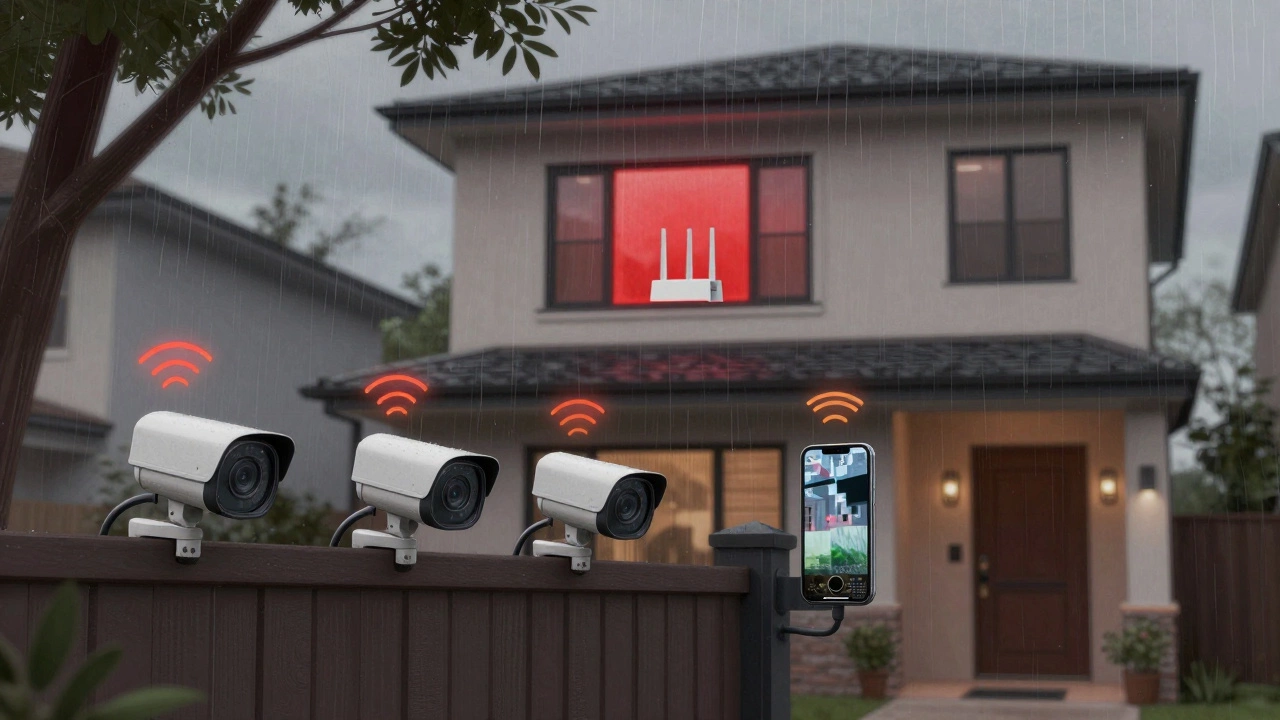
But here’s where things get tricky. Wi-Fi is not reliable. If your internet goes down - which happens more often than you think - your cameras go dark. Rain, thick walls, or even a new smart speaker can weaken your signal. You might see grainy video, laggy live feeds, or complete dropouts during critical moments.
Battery-powered wireless cameras add another layer of hassle. A typical model lasts 2-6 months on a single charge. That means you’re either constantly recharging them (which defeats the purpose of “set and forget”) or buying extra batteries. And if you forget? You miss footage. No warning. No backup.
Cloud storage is another hidden cost. Most wireless systems push footage to the cloud, and that’s not free. You’ll pay $3-$10/month per camera for basic storage. Some companies even lock you into annual contracts. Wired systems store footage locally on an NVR - no monthly fees, no surprises.
And let’s talk security. Wireless cameras are connected to your home network. If your Wi-Fi password is weak or you haven’t updated the camera’s firmware, hackers can access your feed. There have been real cases of people being spied on through hacked baby monitors and outdoor cameras. Wired? Not a chance.
Performance: Speed and Quality
Wired cameras win hands down on video quality and speed. They handle 4K, 5MP, and even higher resolutions without breaking a sweat. Data moves at gigabit speeds through Ethernet. You get smooth, real-time footage with zero compression artifacts.
Wireless cameras, even the expensive ones, often drop to 1080p or 2K to save bandwidth. When your network gets busy - say, during a Zoom meeting or streaming Netflix - the camera’s feed slows down or cuts out. It’s not a bug. It’s how Wi-Fi works.
Think of it like this: wired is a highway with one lane per camera. Wireless is a single road shared by your phone, laptop, smart fridge, and five other cameras. One car slows down, and everyone gets stuck.
Cost: Upfront vs Long-Term
Wireless cameras look cheaper at first. A single unit might cost $50-$100. Wired cameras? $80-$150 each, plus $200-$500 in installation labor if you hire someone.
But over three years? The math flips.
Let’s say you install four wireless cameras:
- Initial cost: $400
- Cloud storage: $40/year × 3 = $120
- Battery replacements: $60 (if you replace them every 6 months)
- Total: $580
Now, four wired cameras:
- Initial cost: $600 (cameras + NVR)
- Installation: $300
- Cloud storage: $0
- Batteries: $0
- Total: $900
Wait - wired is more expensive? Not quite. That $900 is a one-time cost. You own the system. You control the data. No subscriptions. No surprises. The wireless total? $580 and you’re still paying $40/year forever. Plus, if your Wi-Fi router dies, you might need to upgrade everything.
Wired systems last 10+ years. Wireless ones? 3-5, if you’re lucky.
Which One Should You Choose?
Here’s the simple breakdown:
- Choose wired if: You own your home, want 24/7 reliability, plan to stay long-term, need high-resolution footage, hate monthly fees, and don’t mind hiring someone to install it.
- Choose wireless if: You’re renting, want to move cameras around, need quick setup, have great Wi-Fi everywhere, and don’t mind paying $3-$10/month per camera.
There’s also a hybrid option: some cameras support both. You can hardwire them for power and use Wi-Fi for data. That gives you the stability of wired power with the flexibility of wireless placement. But even then, you’re still at the mercy of your network.
For most homeowners in Wellington - where winters are wet, Wi-Fi signals weaken through brick walls, and reliability matters - wired is the smarter play. It’s not flashy. It doesn’t have a sleek app. But when your garage gets broken into at 2 a.m., you’ll be glad your camera didn’t freeze, glitch, or go offline.
Wireless cameras are great for temporary needs - a construction site, a vacation home, or a rental property. But if you’re serious about security, don’t cut corners. Your peace of mind isn’t worth a $50 camera and a $5/month subscription.
Final Thought
The best CCTV system isn’t the one with the most features. It’s the one that works when you need it. Wired cameras deliver that. Wireless cameras deliver convenience - but at the cost of reliability.
Ask yourself: Do you want a camera that’s easy to install… or one you can actually trust?
Can wireless CCTV work without Wi-Fi?
Some wireless cameras use cellular networks (4G/5G) instead of Wi-Fi, so they can work even if your home internet is down. But they require a SIM card and a monthly data plan, which adds ongoing cost. Cameras that rely only on Wi-Fi won’t work at all if your router loses power or connection.
Do wired CCTV cameras need an internet connection?
No. Wired CCTV systems record footage locally on a digital video recorder (DVR or NVR). You only need internet if you want to view footage remotely from your phone. Even then, the system keeps recording without it. Wireless cameras, on the other hand, often require internet just to function at all.
Are wireless CCTV cameras easier to hack?
Yes. Because they connect to your home network, wireless cameras are vulnerable to hacking if your Wi-Fi password is weak, your router is outdated, or the camera’s software hasn’t been updated. Wired cameras transmit data over physical cables, making remote hacking nearly impossible unless someone physically accesses your recorder.
Can I mix wired and wireless cameras in one system?
Yes, if your recorder (NVR) supports both types. Many modern NVRs accept PoE (wired) cameras and can also connect to wireless cameras via Wi-Fi. But mixing them can complicate setup and troubleshooting. It’s usually better to stick with one type for consistency.
How long do wireless CCTV batteries last?
Most battery-powered wireless cameras last 2 to 6 months on a single charge, depending on usage. Motion-triggered recording saves power, but live streaming or recording continuously drains the battery fast. Cold weather, like in Wellington winters, can cut battery life in half. Rechargeable batteries also degrade over time, needing replacement every 1-2 years.
Wired CCTV systems are built for endurance. Wireless systems are built for convenience. Choose based on what you value more: reliability or flexibility.