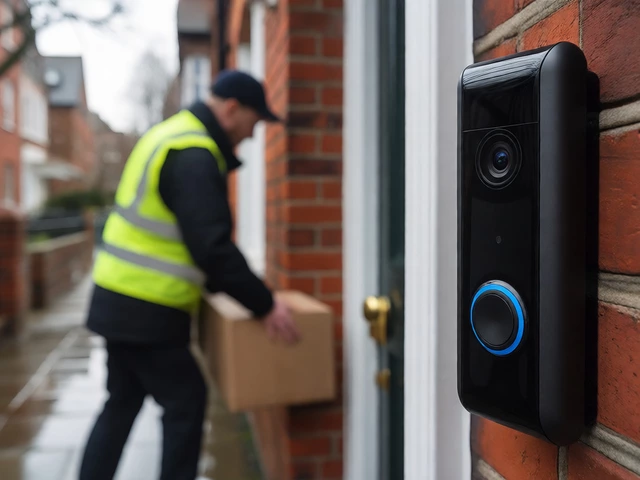
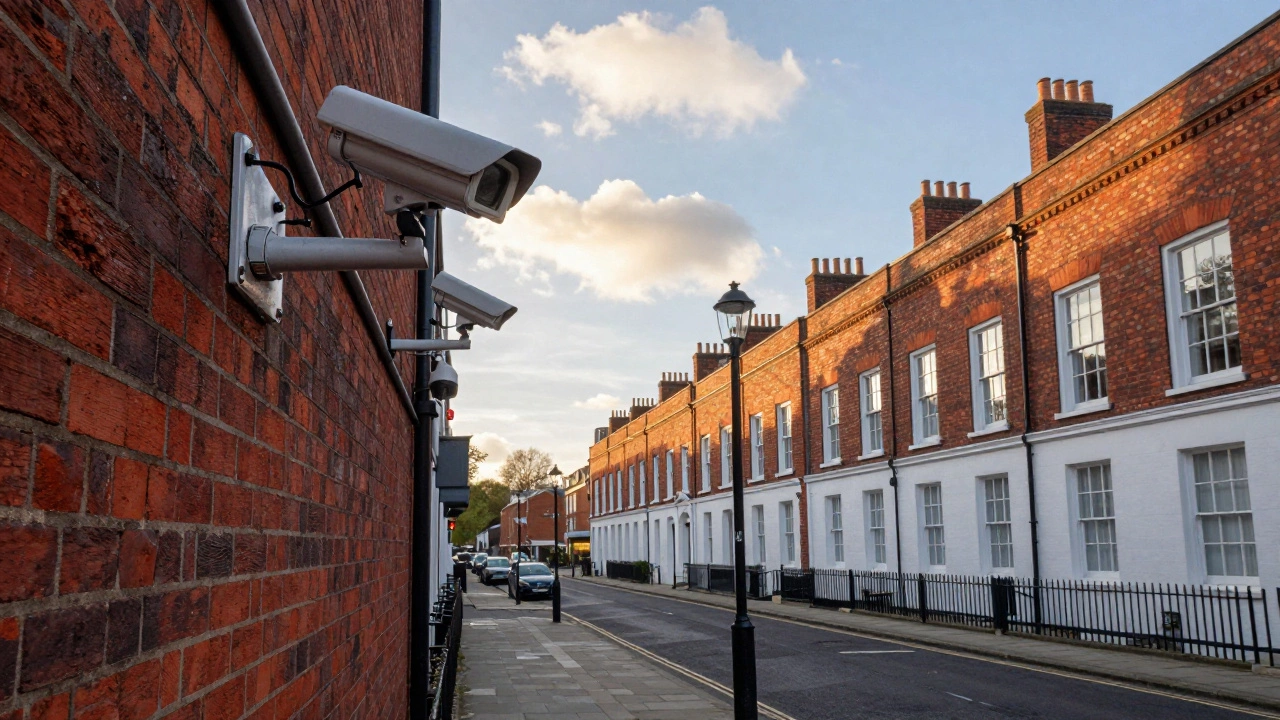
Security System Decision Matrix
1. What is your living situation?
This determines whether installation constraints apply to you.
I Am Renting
I cannot drill holes or run cables through walls.
I Own My Home
I can make structural changes and plan long-term infrastructure.
2. How important is "Set and Forget" reliability?
Do you need continuous recording even during bad weather or power outages?
Critical / Essential
I need professional-grade monitoring without gaps.
Moderate / Occasional
Alerts are great, but occasional buffering isn't a dealbreaker.
3. What matters most regarding costs?
Are you willing to pay upfront for hardware to avoid ongoing bills?
No Monthly Fees
I'd rather pay a higher setup cost once and be done.
Low Upfront Cost
I prefer to pay smaller monthly charges for features/cloud.
4. How would you describe your internet signal?
Specifically, how strong is the Wi-Fi where cameras would be placed?
Spotty / Weak
I often struggle with Wi-Fi dead spots or slow speeds.
Strong / Mesh Network
I have reliable, high-bandwidth coverage everywhere.
Walking through the streets of Bristol right now, you'd see cameras everywhere. From shops to terraced houses, the demand for peace of mind hasn't gone away. But if you are standing in your driveway holding a box of gear, you probably feel stuck. Is it worth spending thousands digging holes and running cables? Or is the wireless route really as simple as sticking cameras anywhere you want?
The truth isn't exactly what the packaging tells you. A system that claims to be totally wireless almost always hides some dependency on electricity or networks. Before you commit to buying, you need to understand how these two technologies actually function in a real-world setting, especially with the kind of internet infrastructure we rely on today.
The Quick Breakdown
- CCTV Systems generally refer to wired setups offering maximum stability and continuous recording.
- Wireless Security Cameras transmit data over Wi-Fi but often still require a wired power source.
- Wired connections beat Wi-Fi for reliability, bandwidth, and resistance to hacking attempts.
- Battery-powered wireless cameras reduce maintenance but risk gaps in footage if power runs out.
- Hybrid approaches are becoming common, blending ease of placement with stable data transmission.
Defining the Terms: What Are We Actually Comparing?
To make a sensible decision, we need to stop using the word "wireless" loosely. When most people ask about wireless cameras, they mean devices that send video data over your home network. Technically, true wirelessness would imply no cables for power or data. In 2026, however, "wireless" almost exclusively refers to Wi-Fi connectivity for video, while power might still come from a wall outlet.
CCTV Systems is a term often misused today. Historically, CCTV stood for Closed-Circuit Television, meaning a physical loop of cables connecting cameras to a recorder. These modern implementations typically utilise coaxial cables or Ethernet cables to move data securely from the lens to the hard drive. They are designed to work independently of your home internet router, creating a closed, private environment that is incredibly hard for external hackers to breach.
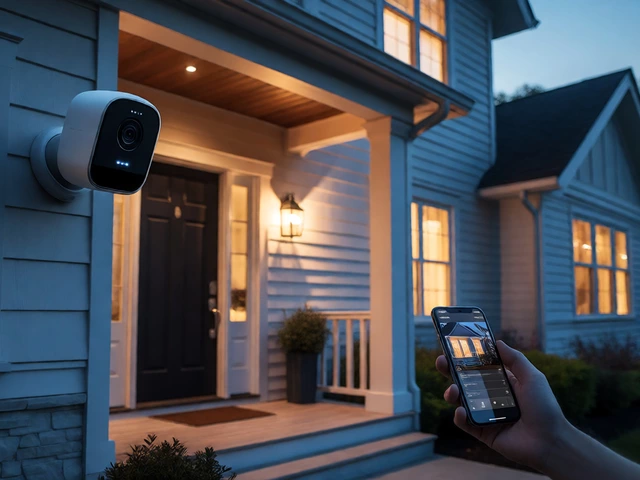
In contrast, Wireless Security Cameras rely on your existing home infrastructure to send data. They connect to your router via radio waves. While this eliminates messy wiring visible on your facade, it ties your security feed directly to the health of your domestic internet connection. If your broadband hiccups during a rainstorm here in the UK, your camera feed might disappear right when you need it most.
The Reliability Factor: Signals vs Physical Lines
You live in a world of constant connectivity, but signals degrade. I see this all the time in older properties around Clifton and Redland. Thick solid walls, which give these houses charm, act as barriers to Wi-Fi signals. A wired connection simply ignores walls. It doesn't care if you have lead-lined insulation or heavy timber framing. The data travels down copper wires with virtually zero loss.
Wireless signals, however, bounce. They suffer from interference caused by microwave ovens, baby monitors, and even neighbours' routers operating on similar frequencies. If your camera is streaming high-definition video, it needs bandwidth. Wi-Fi shares that bandwidth among every device in your house-your laptop, smartphone, smart thermostat. When your son streams a movie upstairs, your front door camera might buffer or drop frames. A wired system creates a dedicated highway for video data, ensuring smooth transmission regardless of what else is happening in your household network.
Latency is another factor people ignore until it's too late. Wired feeds offer near-instant playback. Wireless feeds often struggle with a few seconds of delay, making real-time monitoring frustratingly laggy. For professional-grade monitoring where split-second reactions matter, the physical tether wins hands down.
Power Supply and Maintenance Realities
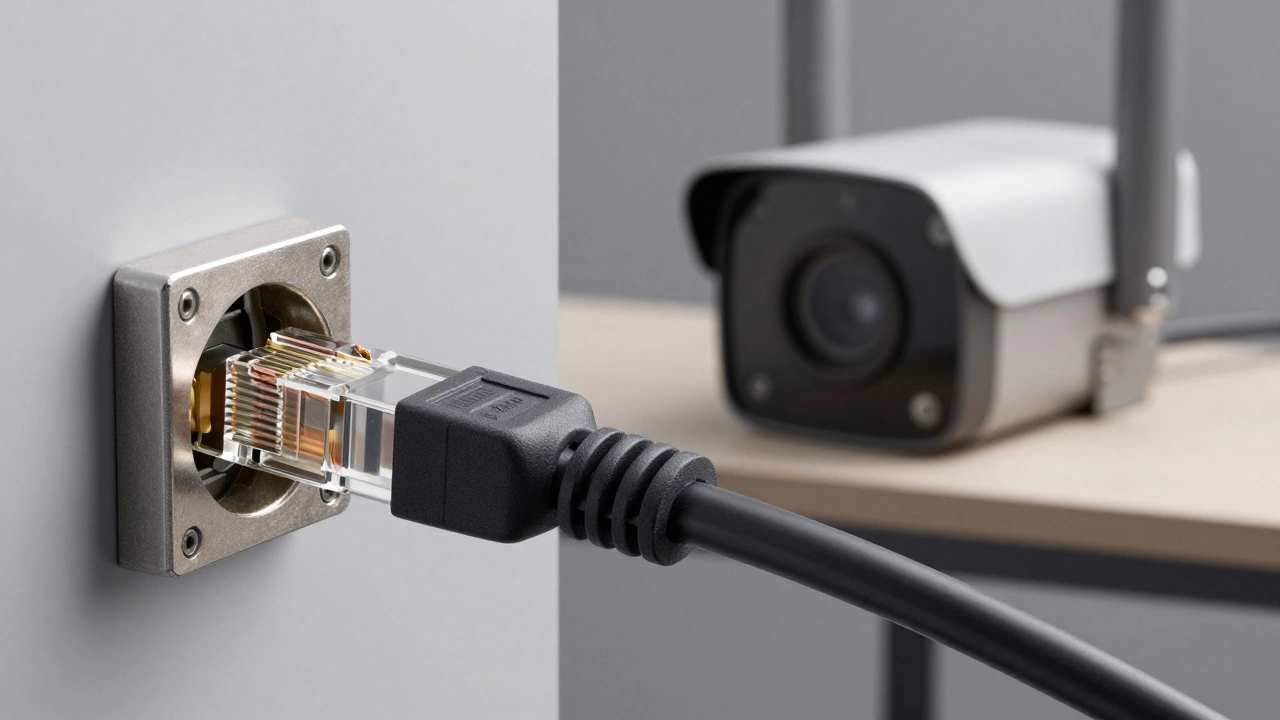
Here is the dirty secret nobody mentions about wireless kits: power. Yes, the data is wireless, but the camera needs juice. Many wireless units plug into mains power, requiring you to run power cables along walls just like a wired system, defeating half the convenience argument.
Power over Ethernet (PoE) is a game-changer in the wired world. It allows you to send both electricity and data through a single network cable. One port on your recorder powers the camera, delivers video, and handles the configuration. This centralised management drastically reduces failure points.
If you opt for battery-operated wireless models, you introduce a new chore cycle. You must check levels monthly. In the British winter, batteries drain faster in the cold. Missing a charge cycle means weeks of unmonitored property. With a wired PoE setup, power is constant. The recorder and cameras are plugged into an Uninterruptible Power Supply (UPS), so even if the grid goes down, the cameras stay on.
Data Integrity and Recording Continuity
We aren't just talking about viewing the footage live; we are talking about storing it. Wired CCTV connects directly to a Network Video Recorder (NVR) or a digital recorder. This device writes video directly to a local hard drive 24 hours a day, seven days a week. The recording is local and offline.
Many wireless setups push you toward Cloud Storage. Instead of saving on a drive you own, they save on servers managed by a third-party company. This introduces a recurring monthly fee that can add up significantly over three years. Furthermore, if the cloud service goes down or your contract lapses, your history vanishes.
Local storage via wired systems ensures you control the archive. There is no upload cap. There is no limit on how many cameras you record. You aren't worried about your upload speed choking when five cameras try to save simultaneously. In my experience, families who switch back from cloud apps to local drives find they save hundreds per year in subscription fees alone.
The Security Dilemma: Who Can Hack Your Feed?
This is where the debate gets heated. Wireless cameras sit on your public-facing Wi-Fi network. If your router isn't secured perfectly, or if the manufacturer uses weak encryption standards, an outsider could theoretically intercept the stream. Even with robust encryption, sending data through the air exposes it to various forms of sniffing attacks compared to a physical line buried in your wall.
A wired camera acts like a landline telephone in the age of smartphones. It is disconnected from the public airwaves. To hack a wired system, an intruder physically needs to access the internal network wiring, which is usually tucked away inside a lockbox or utility cupboard. Wireless cameras rely on the security of your router and the firmware of the manufacturer's app. In 2026, with increasing cyber threats, keeping sensitive video off the public internet whenever possible is the prudent choice for long-term privacy.
Installation Complexity and Cost Analysis
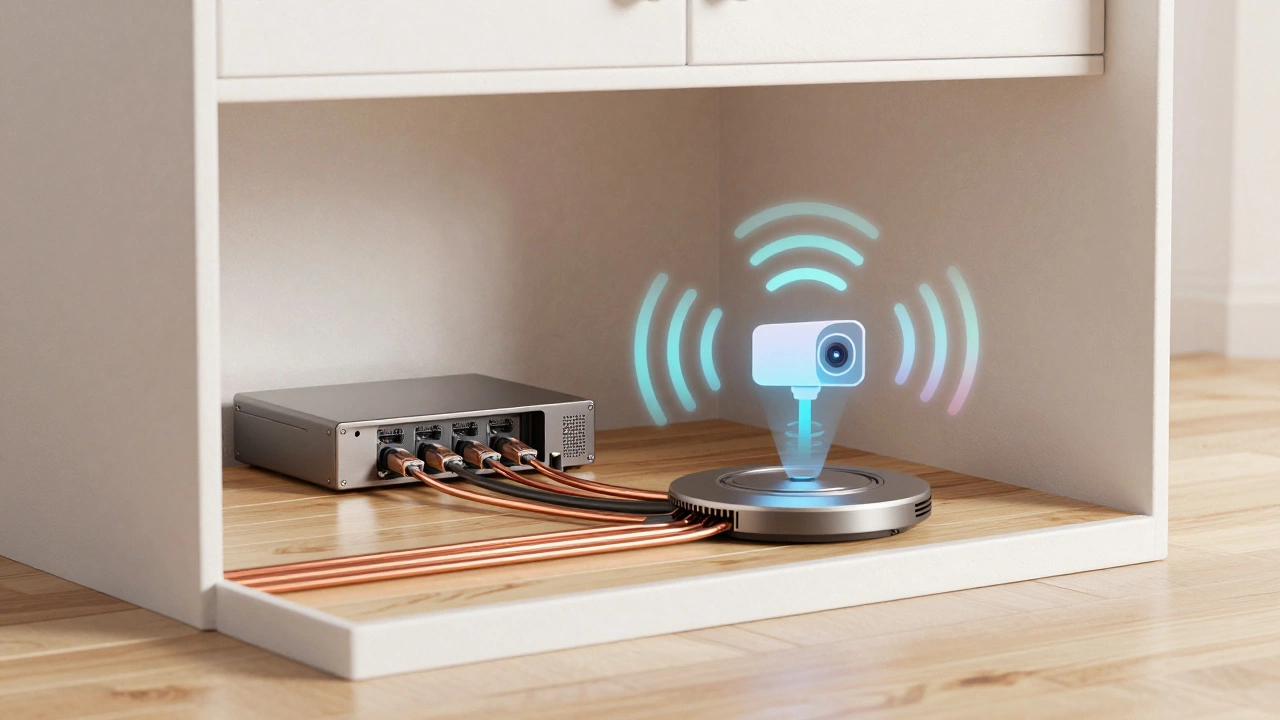
Why do people still choose wireless? The upfront cost. Buying a kit is cheaper initially because you aren't paying a technician £500 to drill holes, lay conduit, and terminate cables. It sounds appealing when you just want protection tomorrow.
However, consider the long-term economics. A professional wired installation is permanent. Once installed, it rarely needs touching. The hardware lasts longer because it doesn't rely on plastic battery enclosures exposed to UV degradation. Wireless cameras, being consumer electronics, often fail after three or four years as sensors age, whereas industrial-grade wired components are built to last a decade.
If you rent a property, wireless makes more sense. You can't bore holes through walls in rental agreements, and moving a hardwired system to a new flat is impossible without rehiring a tech. If you own the home, the permanence of a wired system adds value to the property itself.
Which System Fits Your Lifestyle?
Ultimately, the choice depends on your priority. If you need absolute reliability, maximum resolution, and low maintenance over the next ten years, wired CCTV is the superior tool. It serves as a robust backbone for serious security operations.
If you prioritise aesthetics, quick setup, or mobility above all else, wireless is acceptable. But you must mitigate the risks. Ensure you have a strong mesh Wi-Fi system covering the whole property. Accept that you will pay for subscriptions. Understand that bad weather might interrupt your signal. It is a trade-off, not a free lunch.
Comparative Overview of Systems
| Feature | Wired CCTV Systems | Wireless Security Cameras |
|---|---|---|
| Connection Method | Ethernet/Coaxial Cables (Physical) | Wi-Fi Radio Frequencies (RF) |
| Reliability | High (Immune to interference) | Medium (Susceptible to drops) |
| Video Quality | Consistent High Resolution (Up to 8K) | Variable (Depends on bandwidth) |
| Power Source | Continuous (Grid or PoE) | Battery or AC Plug required |
| Monthly Fees | Typically None (Local Storage) | Often Required (Cloud Plans) |
| Hacking Risk | Low (Hard to access physically) | Higher (Over-air interception) |
Can I mix wired and wireless cameras in one system?
Yes, modern hybrid recorders allow you to connect wired PoE cameras alongside Wi-Fi cameras in the same ecosystem. This gives you the best of both worlds-permanent coverage on entry points with wired gear and flexible monitoring in blind spots using wireless units.
Are wireless cameras safe to leave outside in the rain?
Most outdoor-rated wireless cameras carry an IP65 or IP66 rating, meaning they are dust-tight and protected against water jets. However, Wi-Fi signals can travel less effectively through storm fronts or very heavy precipitation, potentially causing brief disconnections during severe weather events.
How much does professional wired installation cost in the UK?
Professionals usually charge between £200 and £300 per camera installed, excluding equipment costs. This covers labour, drilling, cable concealment, and testing. A standard four-camera system can range from £1,000 to £2,000 fully fitted.
Do wireless cameras work if the internet goes down?
Most standalone wireless cameras will continue recording locally on an SD card if you insert one, but they will lose remote viewing capabilities. Some connect to local hubs, allowing basic operation on a LAN, but relying on Wi-Fi often means losing critical remote alerts if the ISP fails.
Which option is better for renters?
Wireless systems are vastly superior for renters because they do not require drilling into plaster or running cables through walls. You can mount them temporarily and remove them without damage deposits when you move.