Security Camera Electricity Cost Calculator
Calculate Your Security Camera Electricity Costs
Let’s cut through the noise: security cameras don’t meaningfully raise your electric bill. Not even close. If you’re worried that installing a few cameras around your house will send your electricity bill through the roof, you’re not alone-but you’re also wrong. The truth? Most home security cameras use less power than a single LED nightlight.
How Much Power Do Security Cameras Actually Use?
Most standard home security cameras, whether wired or wireless, pull between 4 and 15 watts. That’s it. For comparison, a typical incandescent bulb uses 60 watts. A smart speaker? Around 5 watts. Your Wi-Fi router? About 10 watts. So a camera sitting in your hallway is basically just another small device on your circuit.
Let’s break it down by type:
- Standard IP cameras: 5-10 watts
- Analog cameras: 4-8 watts
- PTZ (pan-tilt-zoom) cameras: 12-15 watts
- Wireless battery-powered: 2-6 watts (and they’re not always on)
- Reolink RLC-810A: under 12 watts
- EZVIZ cameras: average 8 watts
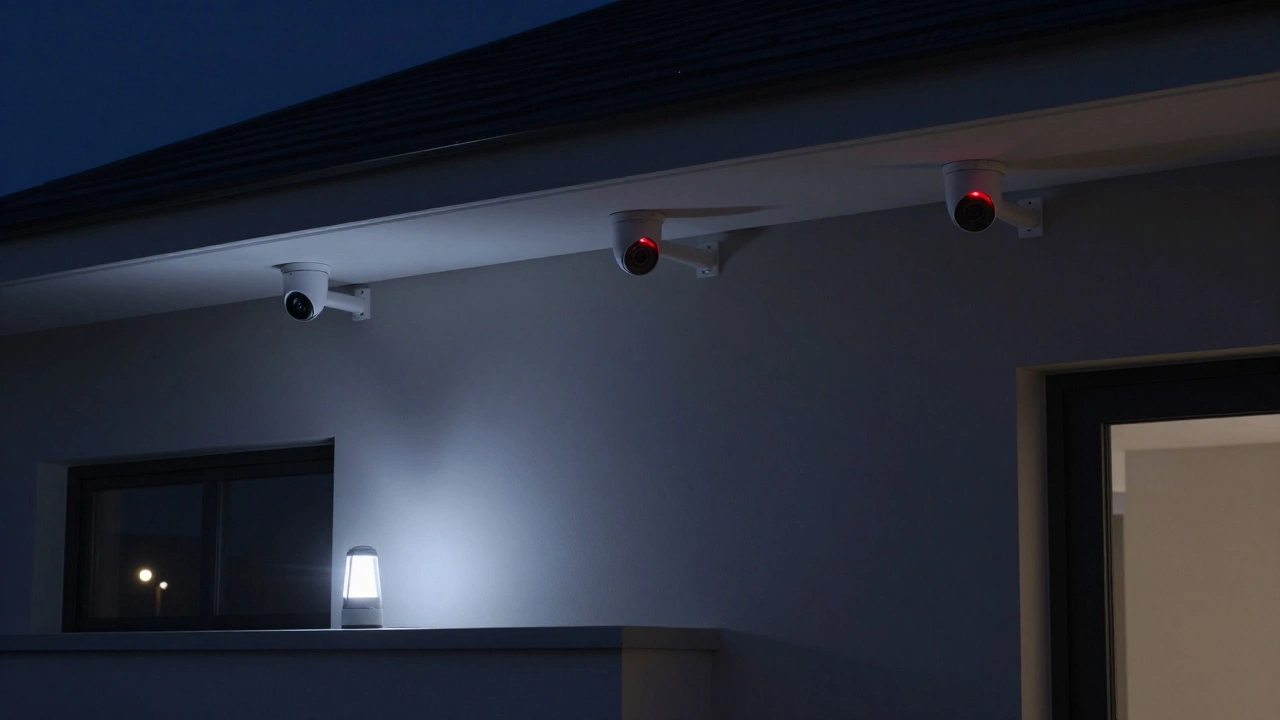
Even the most power-hungry models-like those with night vision, pan-tilt, or high-resolution streaming-rarely exceed 16 watts. That’s because modern cameras are designed to be efficient. They don’t constantly stream video. Most only activate when motion is detected or when you check the feed remotely.
What’s the Real Monthly Cost?
Here’s where most people get surprised. Let’s do the math.
A single 8-watt camera running 24/7 uses 8 watts × 24 hours = 192 watt-hours per day. That’s 0.192 kilowatt-hours (kWh). In the UK, the average electricity rate is about £0.24 per kWh (as of early 2026). So:
0.192 kWh × £0.24 = £0.046 per day
That’s just over £1.40 per month for one camera. If you have five of them? £7.00. Still less than the cost of a single takeaway coffee every week.
Now, let’s look at a common myth: “My camera uses 15 watts.” Even if you had ten 15-watt cameras running nonstop:
10 × 15 watts = 150 watts
150 watts × 24 hours = 3.6 kWh per day
3.6 kWh × £0.24 = £0.86 per day
£0.86 × 30 = £25.80 per month
That’s the absolute maximum for a large system. And even then, most people don’t run cameras 24/7. Motion detection cuts usage by 70-80%. So your real cost? Probably £3-£8 per month for a full setup.
What About the Recorder? That’s Where the Real Cost Hides
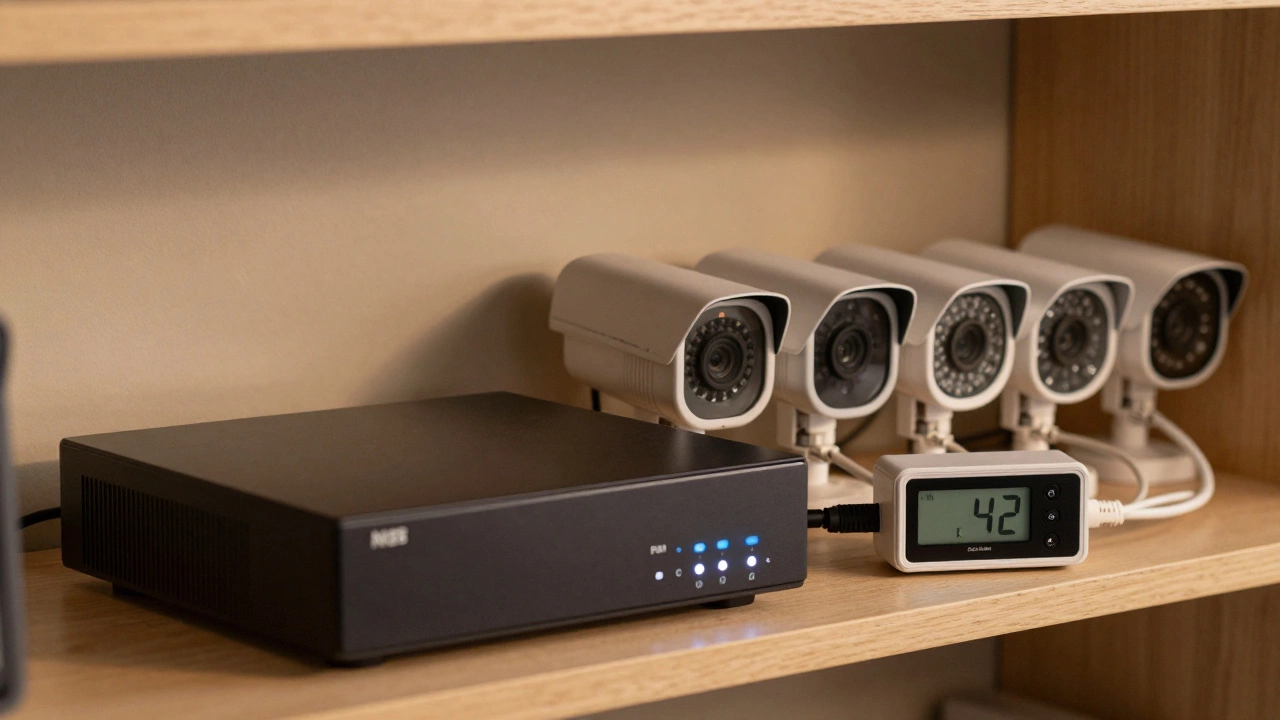
Here’s the catch: the cameras themselves aren’t the problem. It’s the DVR or NVR box. That little black box in your closet? It’s the real power hog.
While a camera uses 10 watts, a typical Hikvision DVR pulls 40-50 watts. A Dahua NVR? Up to 60 watts. That’s like leaving three LED bulbs on all day, every day.
Let’s say you have a 40-watt recorder running 24/7:
40 watts × 24 = 0.96 kWh per day
0.96 kWh × £0.24 = £0.23 per day
£0.23 × 30 = £6.90 per month
So if you have five cameras (£7) and one recorder (£7), your total is £14 a month. Still less than your Netflix subscription.
And if you’re using PoE (Power over Ethernet) switches? Those add another 10-20 watts depending on how many ports you’re using. But again, that’s not much. A 16-port PoE switch might draw 30 watts-another £2-£3 a month.
Smart Features: Do They Drain More Power?
People assume smart cameras with facial recognition, AI alerts, or 2K streaming use way more juice. Not really. Modern chips are incredibly efficient. A camera with 2K video and AI motion detection might use 10-12 watts-still within the normal range.
The real power drain comes from constant streaming. If you’re leaving the live feed open on your phone all day, that’s not the camera using power-it’s your phone’s screen and data connection. The camera itself is just sending data, not spinning motors or running heavy processors constantly.
Some cameras even have sleep modes. When idle, they drop to under 1 watt. That’s like a digital watch.
Solar-Powered Cameras: Zero Electricity Cost
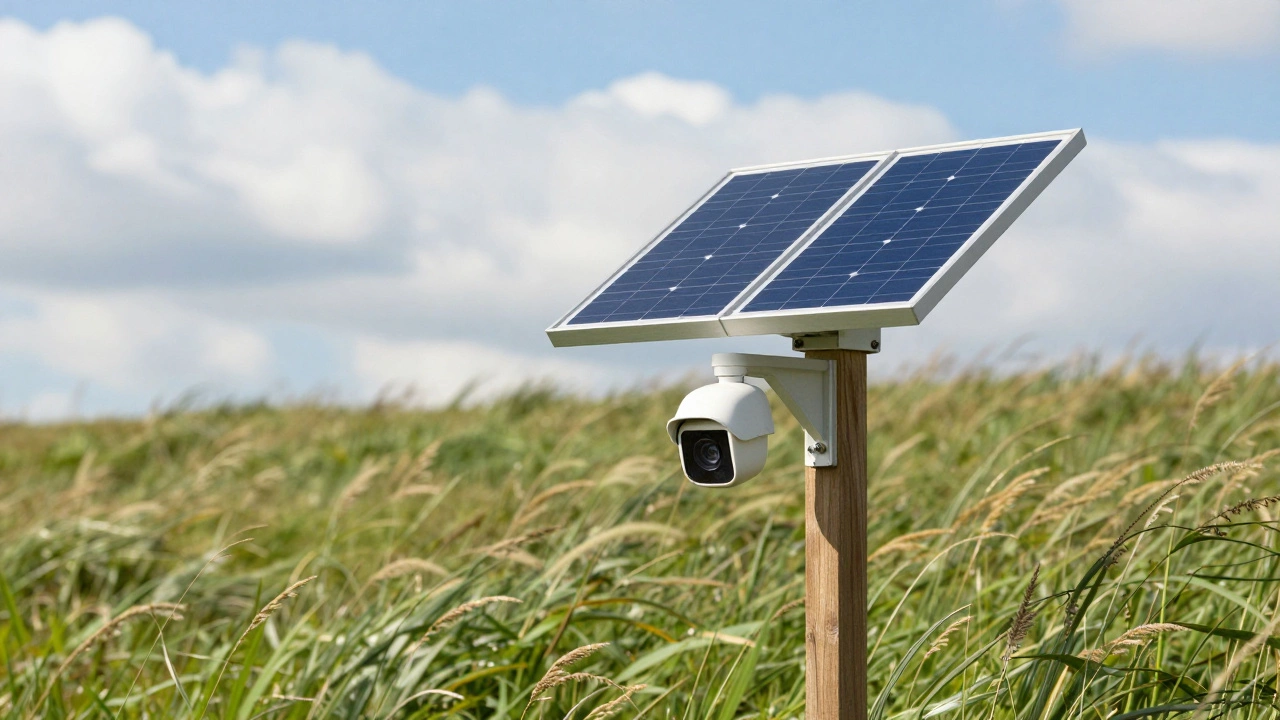
If you’re really trying to cut costs-or just want to go green-solar-powered cameras are a no-brainer. Models like the Reolink Argus 3 Pro or the Arlo Solar Panel Kit use sunlight to charge their batteries. They don’t plug in. They don’t use grid power. They just work.
These cameras are perfect for driveways, back gardens, or remote areas. Even in the UK’s cloudy weather, modern solar panels generate enough energy to keep them running. In summer, they charge fully. In winter, they still get enough to last through short daylight hours.
And since they’re battery-powered, you don’t need to run wires. No electrician. No extra circuit. Just stick it on a post and forget it.
What About Battery-Powered Cameras? Do They Add Cost?
Yes-but only indirectly. A camera with a 20,000mAh battery needs recharging every 2-4 weeks. Charging it uses about 0.05 kWh per cycle. At £0.24/kWh, that’s £0.012 per charge. Even if you charge it weekly, that’s £0.50 a month.
So yes, you’re using electricity to charge the battery-but it’s less than what you’d pay for a single bottle of water.
How Does This Compare to Other Devices?
Let’s put this in perspective. Here’s what else uses power in your home:
| Device | Watts | Monthly Cost (UK Avg.) |
|---|---|---|
| Security Camera (8W) | 8 | £1.40 |
| Wi-Fi Router | 10 | £1.75 |
| LED TV (55") | 80 | £14.00 |
| Refrigerator | 150 | £26.25 |
| Dishwasher (per cycle) | 1,200 | £12.60 (if used daily) |
| Electric Oven | 2,200 | £77.00 (if used 1 hour daily) |
| Electric Heater (1kW) | 1,000 | £175.00 |
See the difference? Your security system is barely a blip. Even if you have ten cameras and a recorder, you’re still using less power than your fridge.
How to Keep Costs Even Lower
Want to shave off a few more pence? Here’s how:
- Use motion detection: Cameras only record when movement happens. That cuts usage by 70%.
- Turn off night vision if you have outdoor lighting. IR LEDs use extra power.
- Choose solar: No plug, no bill.
- Upgrade to PoE: One cable powers the camera and connects it to your network. Fewer adapters = less wasted energy.
- Turn off recording during vacation or long absences. No need to store footage you won’t watch.
Final Answer: No, They Don’t Run Up Your Bill
Security cameras don’t run up your electric bill. Not even close. The average home system adds £1-£8 per month to your electricity costs. That’s less than the price of a bus ticket. The real cost? Peace of mind. The ability to check your front door from work. Knowing your garage isn’t being broken into while you’re asleep.
Forget the myth. The data doesn’t lie. Cameras are among the cheapest, most efficient security tools you can install. If you’re worried about cost, focus on where it actually matters: insulation, heating, and old appliances-not your security system.
Do security cameras use a lot of electricity?
No. Most home security cameras use between 4 and 15 watts. Running 24/7, a single camera costs less than £1.50 per month. Even a 10-camera system with a recorder adds under £20 per month-far less than most household appliances.
Is it cheaper to use battery-powered or solar cameras?
Battery-powered cameras don’t reduce electricity usage-they just shift it to charging. Solar cameras, however, use zero grid electricity. If you install solar-powered cameras, your electricity bill won’t increase at all. They’re ideal for outdoor areas with sunlight exposure.
Do smart cameras with AI use more power?
Not significantly. Modern AI chips are designed for efficiency. A camera with facial recognition or motion alerts uses about the same power as a basic model-usually under 12 watts. The real power drain comes from constant live streaming, not AI processing.
Does recording footage increase electricity use?
Only if you’re recording 24/7. Most cameras only record when motion is detected. Continuous recording increases usage slightly, but the bigger power draw comes from the DVR or NVR box-not the cameras themselves.
Can I reduce security camera electricity use?
Yes. Use motion detection instead of constant recording, turn off night vision if you have outdoor lights, choose solar-powered models, and turn off recording during long absences. These steps can cut usage by 70% or more.