Motion Sensor Light Reliability Checker
Answer these questions to determine if a standard motion sensor light is the right choice for your specific situation.
Ready to Analyze
Select your options above to see if motion sensors are reliable for your needs.
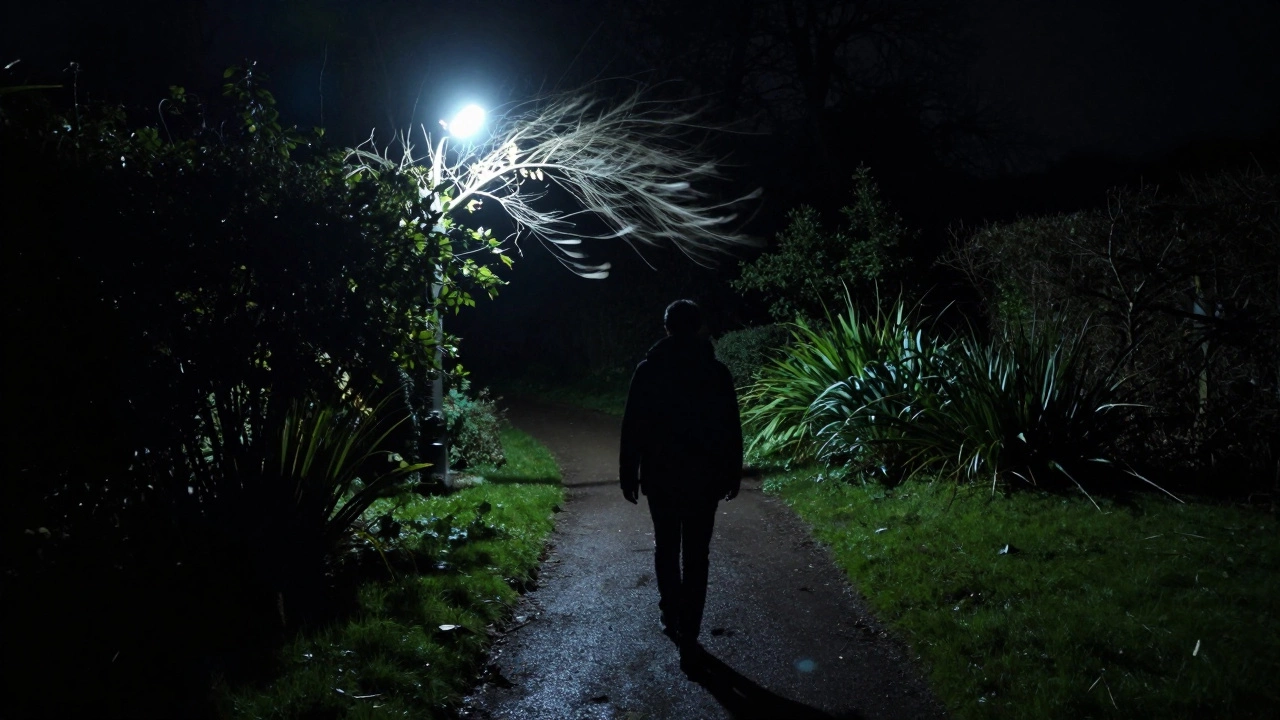
Imagine stepping out of your house at night to check the mail. The path is pitch black. You walk forward, heart rate slightly elevated, waiting for that reassuring burst of light. It doesn't come. Not until you've taken three more steps into the dark. Or worse, imagine waking up in the middle of the night because your front porch floodlight just blasted on-again-for the tenth time that evening, triggered by a passing car or a squirrel.
We install motion sensor lights are automated lighting fixtures designed to illuminate an area only when movement is detected, typically using Passive Infrared (PIR) technology to save energy and boost security. They promise convenience and safety. But if you’ve lived with them for more than a few months, you know the reality is often messier. These devices aren't magic wands; they are imperfect tools with significant flaws that can actually make your home less secure, less comfortable, and sometimes even more expensive to run.
The False Alarm Fatigue
The number one complaint from homeowners isn't that the lights fail to turn on-it's that they turn on too much, and for all the wrong reasons. Most residential units use Passive Infrared (PIR) sensors. These detect heat signatures moving across a specific zone. The problem? Nature doesn't care about your desire for a quiet night.
Strong winds shaking tree branches, rain hitting the lens, or even the thermal shift of a passing cloud can trigger these sensors. If you live near a busy road, every car that drives by might set off your yard lights. This leads to what experts call "desensitization." When your light goes off fifty times a night due to wind or wildlife, you stop paying attention. Then, when it finally triggers because someone is actually trying to break in, you’re already asleep and ignore it. The very device meant to alert you has trained you to tune it out.
Pets are another major culprit. Unless you buy expensive models with pet-immunity features (which have their own limitations), your dog running across the lawn will keep the lights cycling all night. This isn't just annoying; it drains batteries rapidly if you're using wireless units, turning a "year-long battery life" claim into a monthly chore.
Blind Spots and Missed Detections
Here is the uncomfortable truth: motion sensors cannot see through walls, windows, or corners. They require a direct line of sight. If you mount a sensor high on a corner of your house, it creates a cone of detection. Anything outside that cone is invisible to the system.
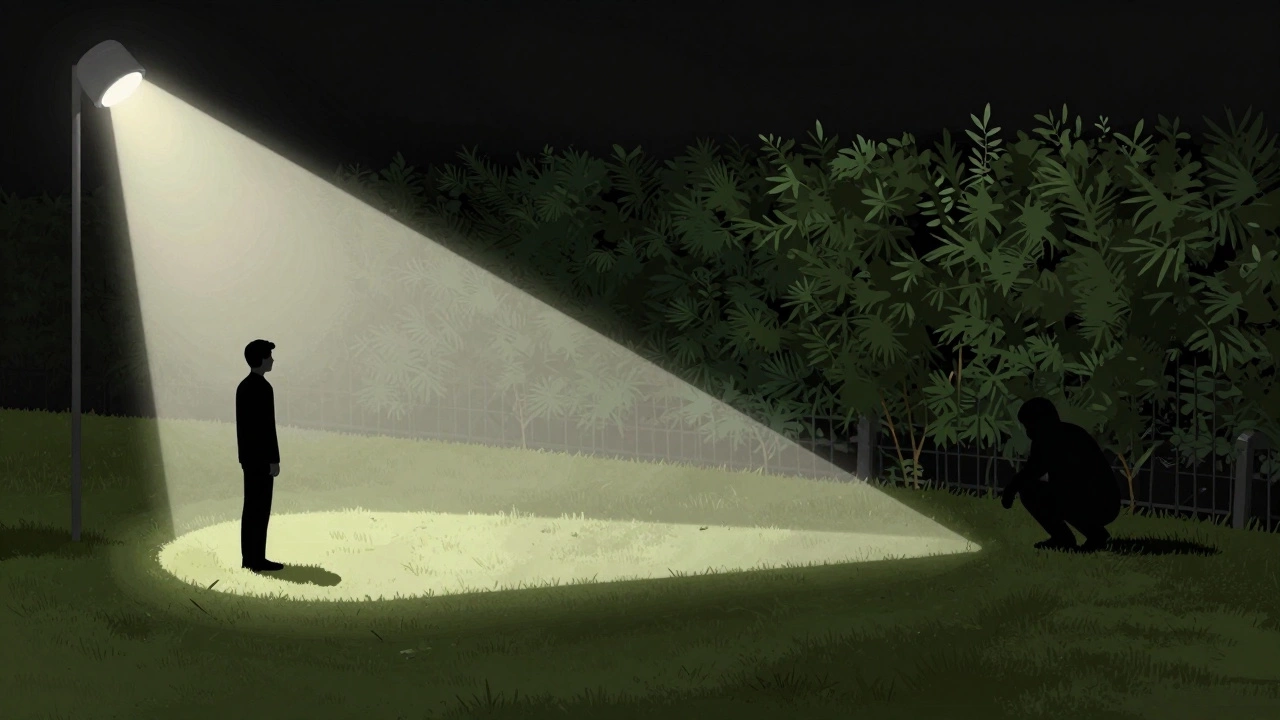
Skilled intruders know this. They don't sprint across your open lawn; they hug the perimeter, staying in the shadows behind fences or bushes where the sensor's field of view is blocked. If your mounting height is slightly off, or if a plant has grown into the detection zone, you create a literal blind spot. You might feel safe because the light works when you walk out the door, but that same logic fails to protect the side window or back door that sits just outside the sensor's range.
Furthermore, PIR sensors struggle in extreme temperatures. Since they rely on the contrast between body heat and the ambient environment, they become less effective on extremely hot days when the air temperature approaches human body temperature (around 37°C / 98°F). In these conditions, the sensor may simply not register a person walking past.
Limited Control and Indoor Annoyances
While outdoor false alarms are frustrating, indoor motion sensors can be genuinely intrusive. Think about reading a book on the couch or sitting quietly at your desk. After a minute of stillness, the light cuts out. To get it back, you have to wave your arms like you're signaling a plane or stand up and pace around. It breaks concentration and feels unnatural.
In bathrooms, this issue is amplified. If you sit on the toilet or stand still while brushing your teeth, the light may extinguish, leaving you in the dark. Many cheaper models lack a manual override switch, meaning you are at the mercy of the algorithm. Even higher-end models often have rigid timers that don't adapt to your behavior, forcing you into awkward movements just to maintain visibility.
Installation Headaches and Compatibility Issues
Replacing a standard bulb with a motion-sensing one seems easy, but wiring integrated motion fixtures is different. Older homes, particularly those built before the 1980s, often lack a neutral wire in the switch box. Many modern smart motion lights require this neutral wire to power the electronics inside the fixture. Without it, you either need to hire an electrician to rewire the circuit or settle for less reliable, non-neutral options that may flicker or fail prematurely.
Placement is also critical. For optimal performance, these lights usually need to be mounted between 2.4 and 3 meters (8-10 feet) high. If your existing junction boxes are lower or positioned poorly, you’ll end up with suboptimal coverage. Additionally, integrating these lights with smart home systems can be tricky. Some Wi-Fi bulbs reset to default settings or enter pairing mode every time the power cycles rapidly, leading to a frustrating setup loop.
Aesthetic Damage and Light Pollution
Let’s talk about curb appeal. High-intensity LED floodlights, especially those with cool white (5000K+) color temperatures, can wash out your home’s architecture. Instead of highlighting your beautiful landscaping, they create a harsh, sterile glare that eliminates depth and shadow. Your home can start to look like a parking lot or a construction site rather than a residence.
This intensity also contributes to light pollution. Even though motion lights are on for fewer hours than always-on lights, the sudden bursts of bright light can shine directly into neighbors' windows, disrupting their sleep and circadian rhythms. In many communities, this leads to complaints and potential violations of local dark-sky ordinances. The goal is security, not blinding everyone within a three-house radius.
Security Limitations
There is a dangerous misconception that motion lights equal total security. They do not. A determined intruder knows that most consumer-grade sensors have a delay timer. Once triggered, the light stays on for 30 seconds to 5 minutes. An intruder can simply wait for the light to go off and then proceed. Unlike constant lighting, which removes shadows entirely, motion lighting provides only temporary disruption.
Relying solely on these lights can give you a false sense of security, causing you to neglect more robust measures like solid deadbolts, monitored alarm systems, or physical barriers. Criminological studies suggest that consistent, well-designed ambient lighting is often more effective at deterring crime than sporadic motion-activated bursts.
| Feature | Motion Sensor Lights | Traditional/Dusk-to-Dawn Lights |
|---|---|---|
| Reliability | Prone to false triggers (wind, pets) and missed detections (blind spots) | Consistent operation; no detection failures |
| User Control | Limited; often cannot manually override without disabling sensor | Full manual control via switches |
| Maintenance | Requires regular lens cleaning; battery changes for wireless units | Bulb replacement only |
| Cost Over Time | Higher upfront cost; potential battery waste; shorter lifespan due to cycling | Lower upfront cost; predictable energy usage |
| Aesthetics | Sudden bright flashes can cause glare and light pollution | Stable, ambient illumination |
Health and Safety Concerns
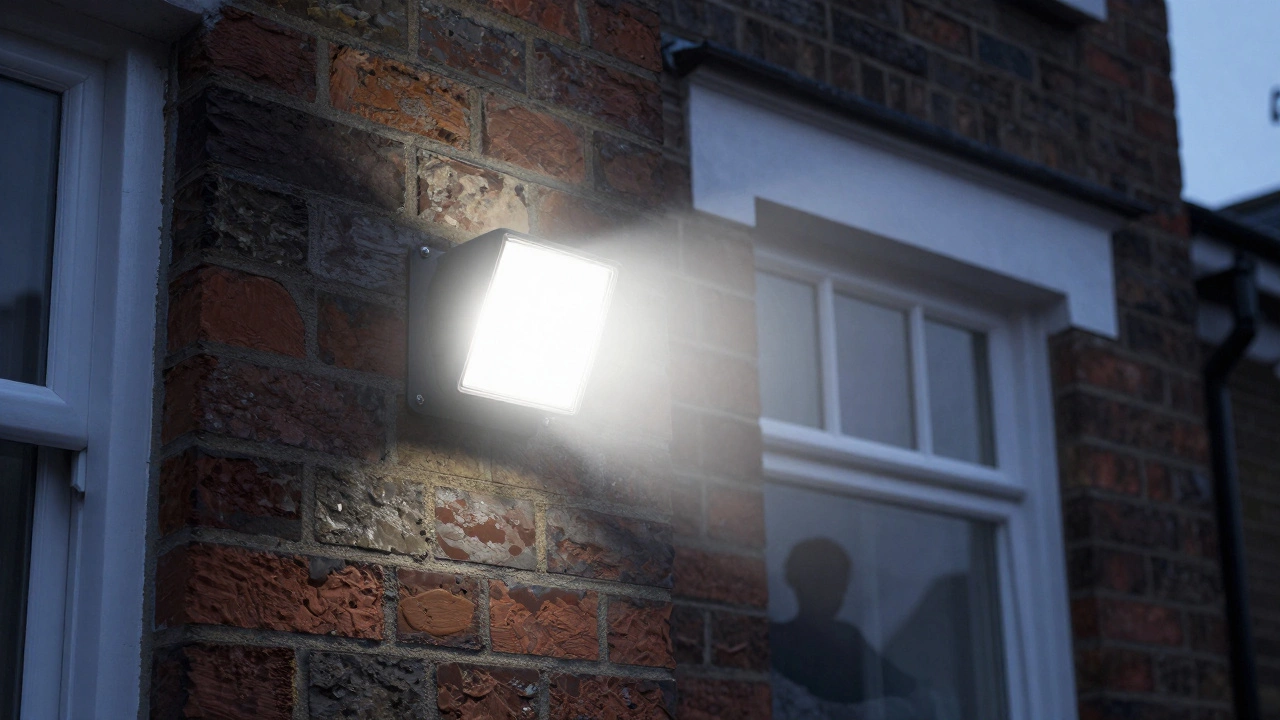
Sudden, intense light can be physically jarring. If you step out of your house at night and a 2000-lumen floodlight blasts on within two meters of your face, it causes temporary blindness. Your eyes, adapted to the dark, take several seconds to recover. During those seconds, you are vulnerable to tripping over uneven pavement or missing a step. This glare hazard is particularly risky for elderly residents or anyone navigating stairs.
Additionally, some active microwave sensors emit low-level radio frequencies. While generally considered safe by regulatory bodies, some users express concern about having continuous RF emissions directed into their living spaces, especially bedrooms or nurseries. Ultrasonic sensors, used in some indoor models, can produce high-pitched sounds that are audible to children and pets, causing distress.
Do motion sensor lights actually deter burglars?
They can deter opportunistic criminals who want to remain unseen, but they are not a foolproof solution. Determined intruders can exploit blind spots or wait for the light to timeout. Studies show that consistent, well-placed ambient lighting is often more effective than intermittent motion-activated bursts. Motion lights should be part of a layered security strategy, not the sole defense.
Why does my motion light keep turning on for no reason?
False triggers are common and usually caused by environmental factors. Wind blowing trees, rain hitting the sensor, insects flying near the lens, or even heat radiating from nearby vents can activate PIR sensors. Adjusting the sensitivity dial, trimming vegetation, or shielding the sensor from direct weather exposure can help reduce these nuisance activations.
Can I install motion sensor lights in older homes?
It depends on your wiring. Many modern motion lights require a neutral wire, which is often missing in homes built before the 1980s. If you don't have a neutral wire, you'll need to choose specific "no-neutral" models or hire an electrician to upgrade your wiring. Always consult a professional if you're unsure about your electrical setup.
How do I prevent motion lights from blinding me?
Proper aiming is crucial. Mount the light so it illuminates the path or entryway, not the immediate standing position. Use fixtures with shields or hoods to direct light downward. Consider warmer color temperatures (3000K) which are less harsh on the eyes than cool daylight whites (5000K+). Lowering the brightness setting, if available, can also reduce glare.
Are battery-powered motion lights worth the hassle?
They offer easy installation but come with ongoing maintenance costs. Frequent false triggers can drain batteries in weeks rather than months. If you live in an area with high wind or wildlife activity, hard-wired or solar-powered options with large batteries may be more reliable. Always check the activation rating to understand real-world battery life.