Outdoor Security Lumen Calculator
Higher values create better visibility but risk neighbor glare.
Your Recommendation
Recommended Power Per Fixture
Based on your inputs.
Stop Guessing About Security Light Brightness
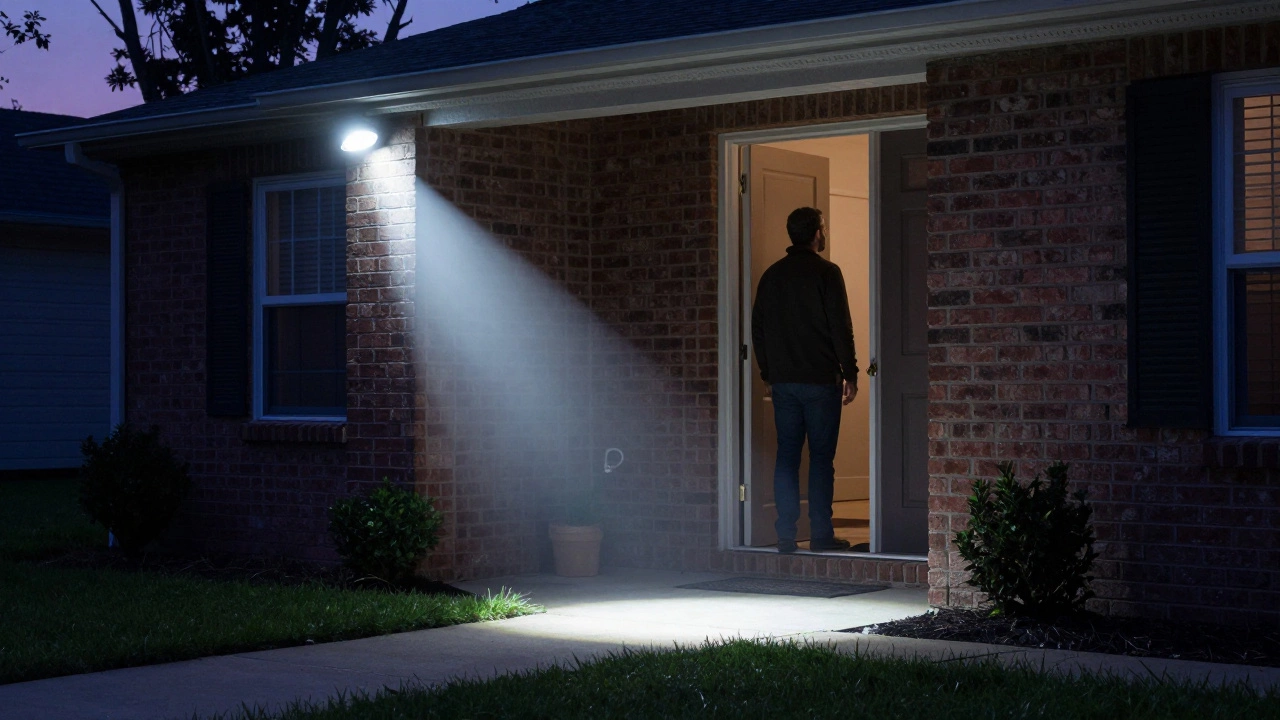
You stand in the store aisle staring at boxes of floodlights. One claims to be "Super Bright," another lists wattage, and a third talks about lumens. You walk away confused, unsure which bulb will actually keep your porch safe without blinding your neighbors. This confusion is common because marketing labels prioritize sales over clarity.
The core issue isn't just picking a light; it's understanding what brightness looks like in real life. We need to move past old measurements and focus on actual visibility. This guide cuts through the noise to tell you exactly how many lumens you need for specific areas of your home, helping you balance safety with comfort.
Understanding Lumens: The Only Metric That Matters
Before selecting a fixture, we must agree on the language. In the world of outdoor security lighting, Lumens are the total quantity of visible light emitted by a source. Older bulbs relied on watts, which measured energy consumption, not brightness. An LED bulb uses far less energy than an incandescent one, making wattage obsolete for judging light power.
Think of lumens as the water pressure in a hose. More lumens mean more water hitting the target area. For security purposes, general residential guidelines suggest a baseline minimum. According to industry standards, you typically want a range of 700 to 1,500 lumens for standard security applications. Anything below 700 lumens often fails to illuminate details clearly enough to identify a potential threat at night.
| Area Type | Recommended Lumens | Primary Purpose |
|---|---|---|
| Front Porch / Entry | 400 - 800 | Visitor Identification |
| Driveway | 1,200 - 2,000 | Movement Detection |
| Landscape / Garden | 100 - 300 | Ambient Safety |
| Backyard Perimeter | 1,000 - 3,000+ | Deterrence |
| Parking Lot (Commercial) | 1,500+ per fixture | Wide Coverage |
This breakdown shows why one size does not fit all. A dim landscape light is fine for a garden path, but useless for a driveway where cars enter. You need to match the lumen output to the zone's function.
Sizing Your Light to the Space
Brightness isn't a static number; it depends on square footage. A light that works perfectly for a small side door might leave your long driveway in total shadow. Professional electricians often calculate this using foot-candles, which measure light intensity hitting a surface. The formula is simple: Area (sq ft) × Desired Foot-candles = Total Lumens Needed.
For security zones, you generally aim for 1 to 2 foot-candles. Here is how that math plays out in reality:
- Small Porch (approx. 50 sq ft): Multiply 50 by 2 foot-candles. You need roughly 100 lumens just for visibility, but adding motion detection bumps this closer to 700 lumens to activate the sensor effectively.
- Large Garage Entry (approx. 200 sq ft): Multiplying 200 by 2 yields 400 lumens. However, to prevent shadows cast by vehicles, you likely need two fixtures totaling 1,000+ lumens.
- Entire Backyard (1,000+ sq ft): Using a single giant light creates harsh shadows. Instead, split the load. Three lights of 1,000 lumens each create overlapping coverage zones, eliminating blind spots where someone could hide.
This approach prevents dark corners while avoiding wasted energy. If you rely on a single high-lumen fixture for a large area, the center might be glaringly bright while the edges remain invisible.
The Impact of Mounting Height and Position
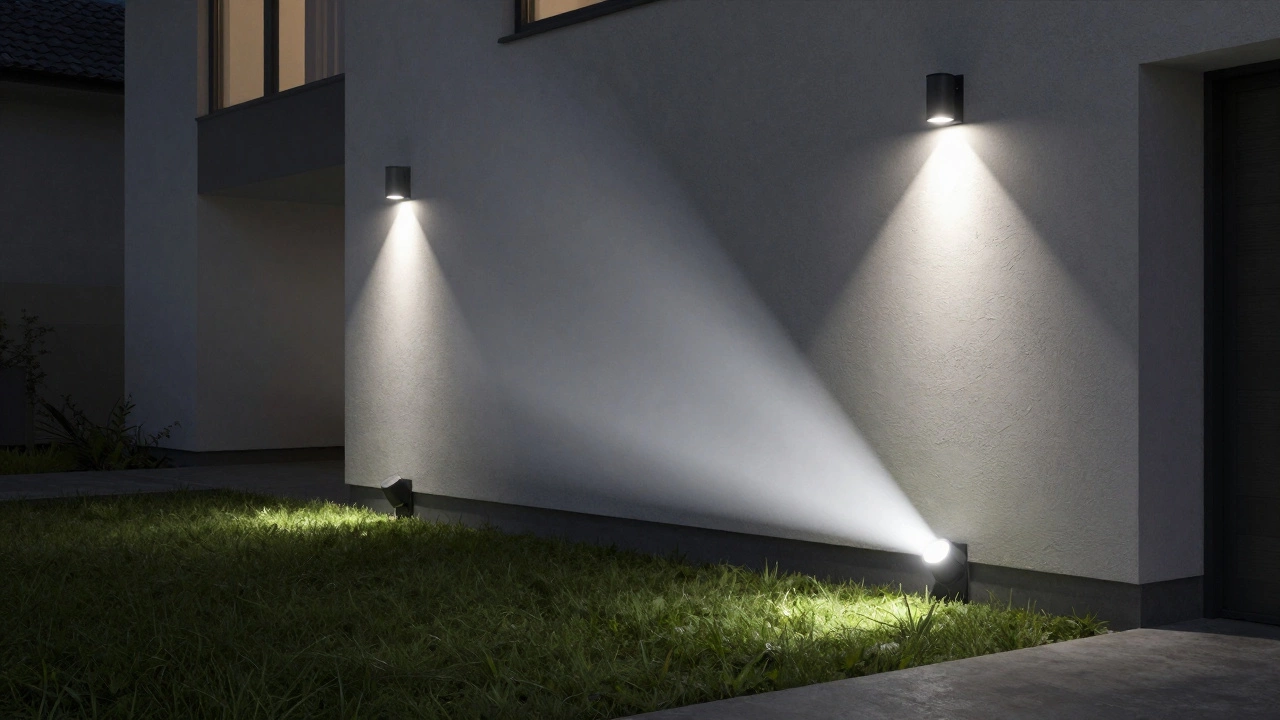
Placing the fixture correctly changes the lumen requirement. If you mount a light too high, the beam spreads out over a wider area, thinning the intensity reaching the ground. Conversely, mounting too low can cause excessive glare for passersby. The sweet spot for residential security lights is usually between 8 and 12 feet off the ground.
Consider the geometry of your wall. If you install a floodlight on a tall garage, a lower lumen bulb might suffice because the distance helps cover the yard naturally. However, if you place a fixture on a low fence post, you need significantly more lumens to reach the same depth of your property line. Always angle the fixture downward to reduce skyglow and maximize ground illumination.
Obstacles play a role too. Trees, bushes, and architectural features absorb or reflect light. A dense oak tree next to your patio might require a second fixture to push light through the leaves. This is why professional planning often suggests slightly higher output when landscaping obscures the view.
Beyond Lumens: Color Temperature and Human Vision
Brightness alone doesn't define security effectiveness. Color temperature determines how colors appear under the light. Measured in Kelvin (K), this metric affects color rendering and contrast.
For security, electrical engineers recommend a neutral white range between 3,000K and 4,500K. Here is the logic:
- Below 3,000K (Warm White): Looks yellowish. Similar to older street lamps. While cozy, it makes identifying skin tones or vehicle colors difficult.
- 3,000K to 4,500K (Cool/Neutral): Provides the crispest image for security cameras and human eyes. Shadows stand out better against the background.
- Above 5,000K (Daylight Blue): Can look sterile and harsh. It often increases eye strain and casts blue hues that might alter the perceived color of intruders.
If you pair security lights with surveillance systems, stick to this 3,000K-4,500K range. Most modern security cameras utilize sensors optimized for this spectrum, ensuring your recorded footage matches the live view.
Risks of Over-Lighting: Glare and Shadows
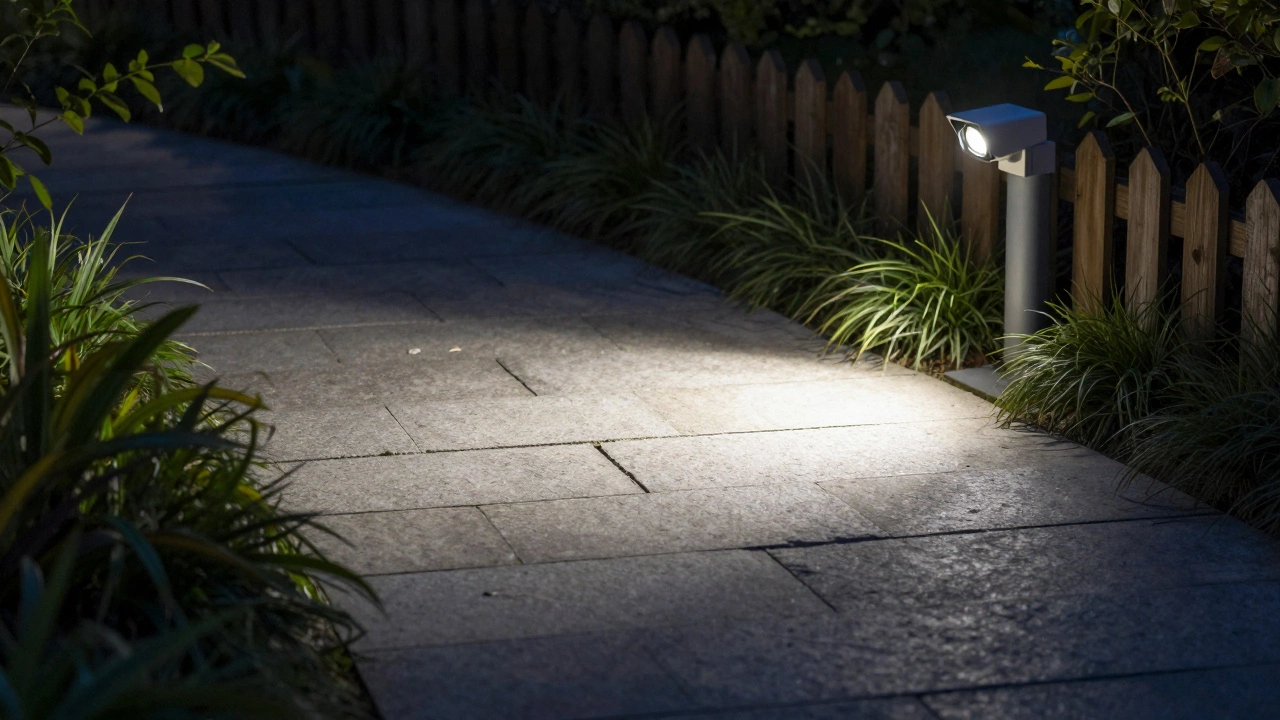
It seems logical to assume brighter equals safer, but exceeding needs creates counterproductive effects. Excessive brightness washes out contrast. Think of squinting into a camera flash-you see nothing but a blur. This phenomenon, called glare, can blind your own vision or render your security camera useless.
Bright lights also create deep, hard-edged shadows behind objects. Criminals learn to use these shadows for concealment. By over-lighting a specific spot, you inadvertently create darkness adjacent to it. The goal is even distribution. Multiple moderate-brightness fixtures are often superior to one massive spotlight.
Furthermore, over-illumination impacts your neighborhood. Light pollution disrupts sleep patterns and bothers neighbors. Local ordinances increasingly regulate outdoor lighting to limit horizontal spill light. Choosing the correct lumen rating ensures compliance and keeps relationships friendly.
Choosing Between Continuous and Motion-Activated Lights
The activation method dictates your lumen choice. Continuous running lights maintain a steady state of readiness. These generally require lower peak lumens (around 700) since they serve primarily as deterrents. Motion-activated floodlights (PIR sensors), however, operate differently.
When triggered, a motion sensor floods the area instantly. Because this sudden burst catches attention, effective sensors often run in the 1,000 to 2,000 lumen range. This intensity provides a psychological shock to anyone trying to loiter. However, some newer sensors allow you to tune sensitivity, allowing you to get away with 500-700 lumens for smaller trigger zones like front steps without waking the entire house.
Selecting the right type depends on your anxiety level and privacy needs. Constant light tells people "someone is always home." Flashing light tells people "the system knows you are here." Both work, but the lumen strategy differs.
What happens if my security light has too many lumens?
Excessively bright lights cause glare, reducing your ability to see details. They create deep shadows that offer hiding spots and may disturb neighbors or violate local light pollution laws.
Are 700 lumens enough for a front door light?
Yes, for a small entryway. However, if you want to see faces clearly on video or read license plates, bump it to the 1,000+ range to ensure adequate contrast and identification capability.
Does wattage matter for LED security lights anymore?
No, not really. Wattage measures energy consumption now. Since LEDs are efficient, a 10-watt LED can produce the same lumens as a 60-watt incandescent bulb. Focus entirely on lumens for brightness.
How does mounting height change brightness requirements?
Higher mounting causes light to spread over a larger circle, thinning the intensity. Lights mounted higher generally need more lumens to achieve the same brightness at ground level compared to lower mounts.
Is warm white or cool white better for security?
Cooler white (3,000K-4,500K) is preferred for security. It mimics daylight, offering better contrast and color accuracy for identifying threats and aiding security camera sensors.