Outdoor Light Bug-Repellent Calculator
Light Settings
Moderate Resistance
This setting provides decent visibility but may still attract some insects.
Adjust sliders to see how your lighting choice affects insect behavior.
There is nothing worse than setting up a relaxing evening on your patio, only to have it turn into a chaotic battle with moths, mosquitoes, and beetles. You might think the solution is simply turning off the lights, but that leaves you in the dark and potentially vulnerable. The real secret lies not in darkness, but in color. Specifically, the wavelength of light you choose dictates whether your outdoor space becomes an insect buffet or a human-only zone.
If you are wondering what color outdoor lights keep bugs away, the short answer is: long-wavelength colors like yellow, amber, and deep red. Conversely, you want to avoid blue, ultraviolet (UV), and cool white lights at all costs. This isn't just folklore; it is backed by decades of entomological research showing that insects see the world differently than we do. By understanding their vision, you can manipulate your lighting to stay visible while remaining invisible to them.
The Science Behind Insect Vision
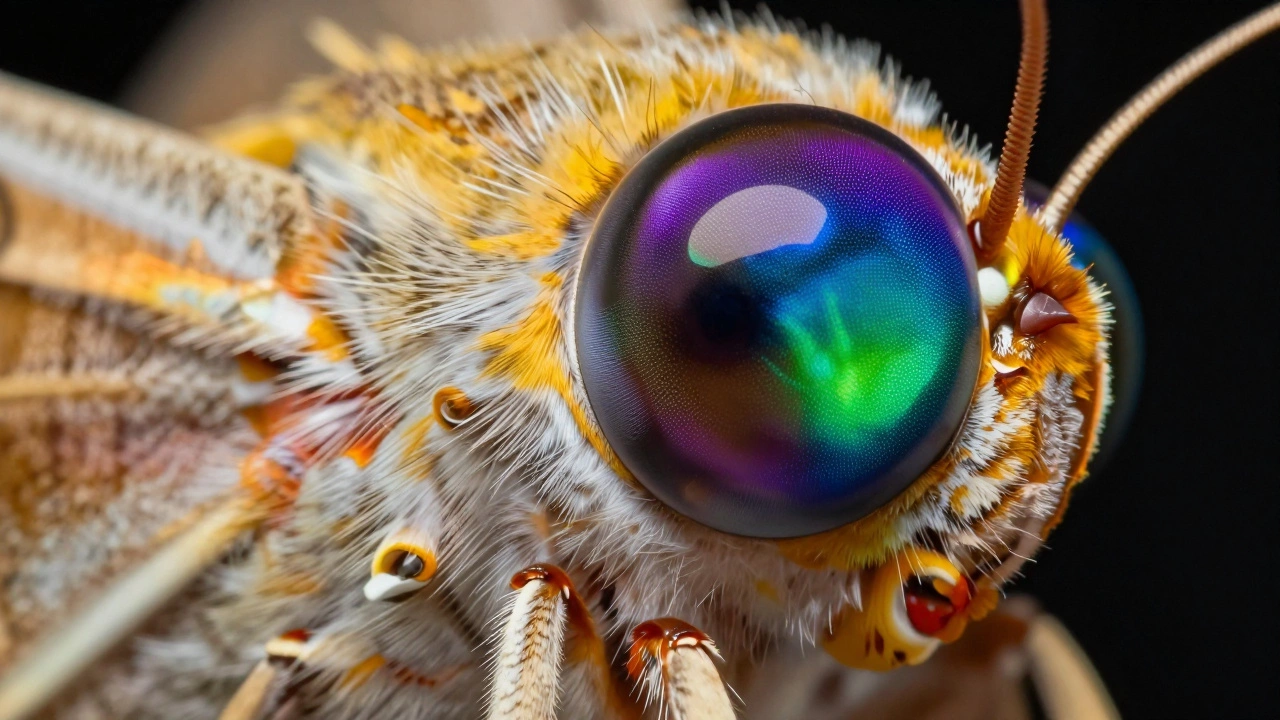
To understand why certain colors repel bugs, you first need to know how they see. Most flying insects, including the common pests that bother us at night, have peak visual sensitivity in the ultraviolet, blue, and green parts of the spectrum. Their eyes are essentially tuned to detect shorter wavelengths, roughly between 350 and 550 nanometers. This evolutionary trait helps them navigate using moonlight and starlight, which emit significant amounts of UV and blue light.
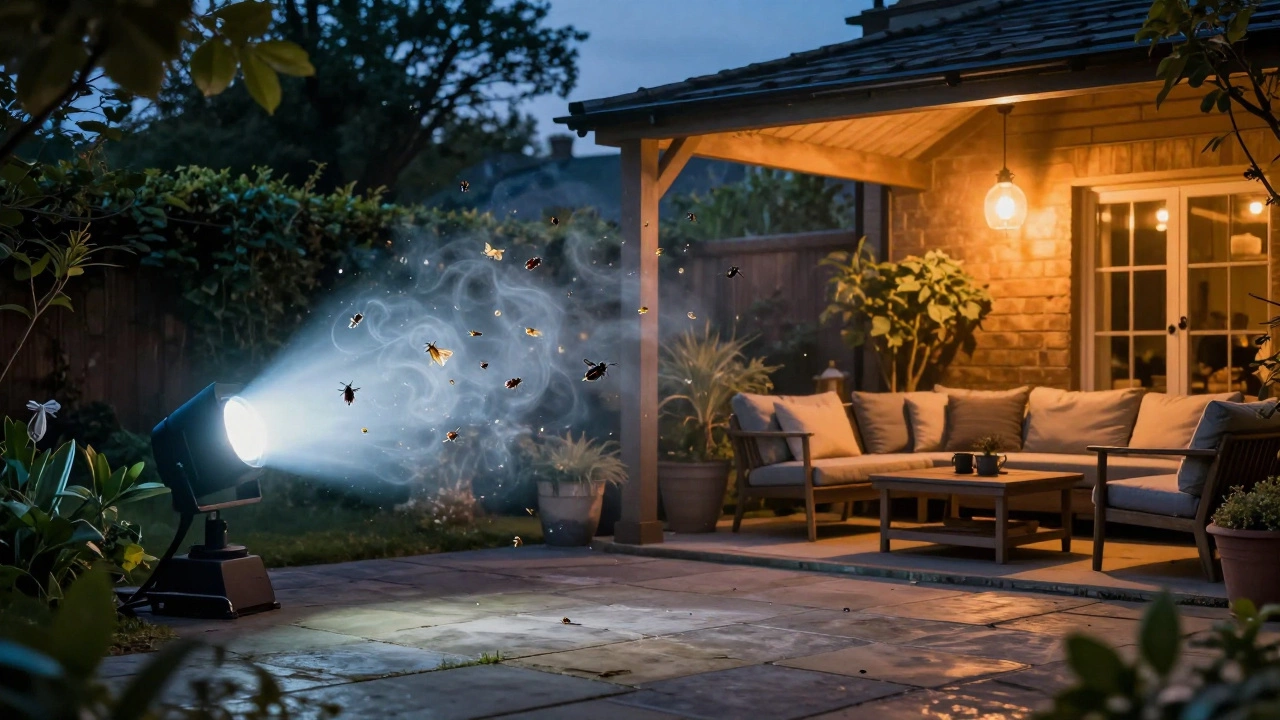
When you install a standard "daylight" bulb or a bright white LED, you are essentially creating a beacon that screams "I am here" to every moth within a mile radius. These bulbs emit high levels of blue and sometimes UV light, triggering the insects' navigation instincts and drawing them in. On the other hand, longer wavelengths-yellow, orange, and red-are largely invisible to many species. To a moth, a deep red light looks almost as dark as nighttime itself.
Why do bugs love white light?
White light, especially "cool white" or "daylight" varieties, contains a high proportion of blue and ultraviolet wavelengths. Since most insects have eyes sensitive to these shorter wavelengths, white light appears incredibly bright and attractive to them, acting as a powerful lure similar to how moonlight guides their flight.
Best Colors for Bug-Resistant Lighting
Not all "warm" lights are created equal. When shopping for bulbs, you will see color temperature measured in Kelvins (K). Lower Kelvin numbers mean warmer, yellower light, while higher numbers mean cooler, bluer light. Here is how the top contenders stack up based on current data from 2025 and 2026.
Amber and Yellow: The Gold Standard
Amber LED bulbs are widely considered the most effective consumer solution for reducing insect activity. Typically rated between 1800 K and 2200 K, these bulbs emit a deep orange-yellow glow. Research indicates that amber-filtered bulbs can reduce insect visits by up to 60 percent compared to standard white bulbs. They strike a perfect balance: they provide enough illumination for you to see where you are walking, but their wavelength is too long for most flying insects to perceive clearly.
Yellow "bug lights" have been around since the early 2010s, but modern LED technology has made them more efficient and durable. Unlike old sodium-vapor street lamps that cast a monochromatic orange haze, modern amber LEDs offer better color rendering while still staying outside the primary attraction range of most pests.
Warm White: The Practical Compromise
If amber feels too theatrical for your front porch, Warm white LEDs in the 2700 K to 3000 K range are your next best option. These bulbs look like traditional incandescent lighting-soft and inviting-but contain significantly less blue light than daylight bulbs. While they may attract a few more insects than pure amber, they are far superior to anything above 4000 K. For most homeowners, this is the sweet spot between aesthetics and pest control.
Deep Red: The Niche Solution
Deep red light (below 3000 K, often appearing almost burgundy) is arguably the least attractive color to flying insects because many cannot see it at all. However, it comes with a major trade-off: poor visibility for humans. Red light makes it difficult to distinguish objects and can make your patio feel like the interior of a submarine. It is excellent for specific applications like stargazing decks or garden paths where you don't need to read a menu, but it is rarely practical for general security or socializing.
| Light Color | Kelvin Range (K) | Insect Attraction Level | Human Visibility |
|---|---|---|---|
| Ultraviolet / Blacklight | N/A | Extremely High | Poor |
| Cool White / Daylight | 4000-6500 K | High | Excellent |
| Neutral White | 3500-4000 K | Moderate | Good |
| Warm White | 2700-3000 K | Low | Good |
| Amber / Yellow | 1800-2200 K | Very Low | Moderate |
| Deep Red | < 1800 K | Minimal | Poor |
Colors to Avoid at All Costs
If you want fewer bugs, you must actively avoid the colors that act as magnets. The worst offenders are:
- Ultraviolet (UV) Lights: Often found in blacklights or older fluorescent tubes, these are irresistible to moths and beetles. Some studies show UV LEDs attract nearly 90 percent of target insects in controlled tests.
- Cool White and Daylight Bulbs (4000-6500 K): These are the standard "bright" bulbs used in many security fixtures. Because they mimic midday sun, they are packed with blue wavelengths. If you have a bug problem, these are likely the culprits.
- Green Lights: Surprisingly, green LEDs can be highly attractive to certain species, such as stored-product beetles. While less common in residential lighting, avoid green-tinted accent lights if you are trying to minimize pest presence.
Beyond Color: Brightness and Placement Matter
Choosing the right color is only half the battle. How you use that light is equally important. Even an amber bulb will attract some insects if it is blazingly bright and positioned directly over your dining table.
Dimming Is Key
Insects are drawn to intensity as well as wavelength. A dim amber light is far less noticeable to bugs than a bright one. Use dimmers or smart bulbs to lower the brightness during hours when you are not actively needing full illumination. Moderate brightness reduces the "visibility radius" of your light source, keeping insects further away from your seating area.
Shielding and Directionality
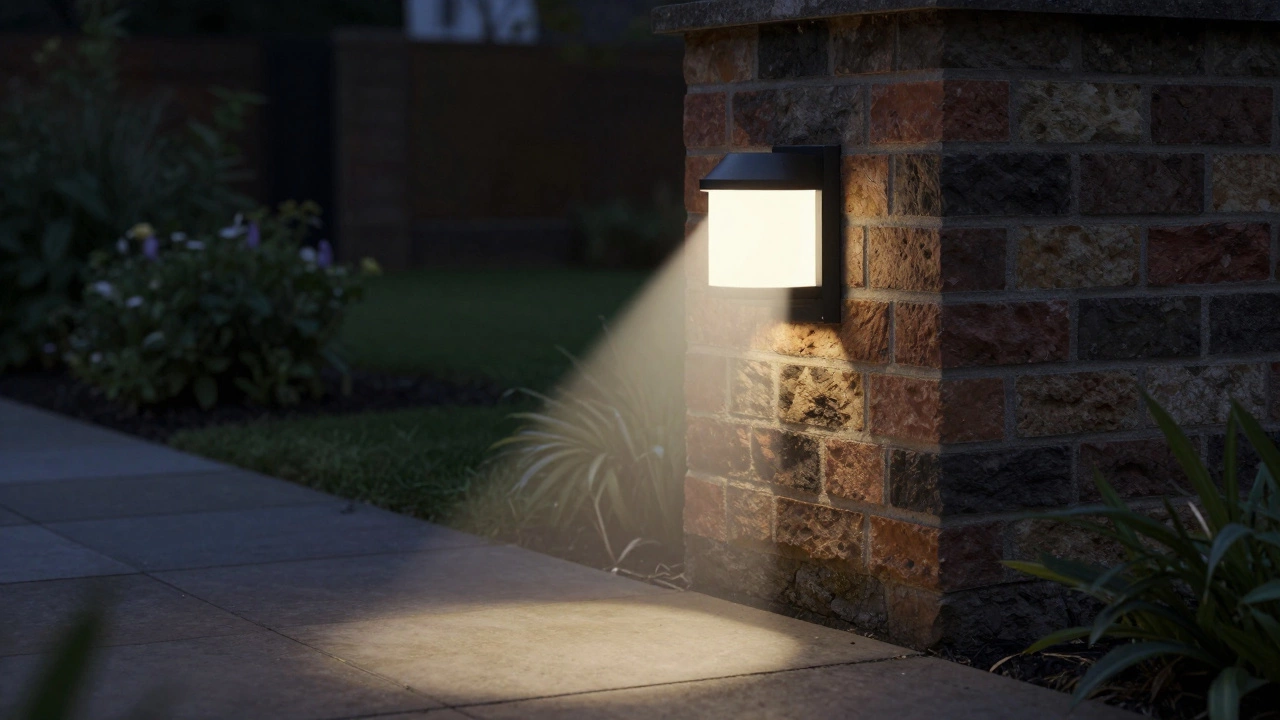
The design of your fixture plays a huge role. Open-faced bulbs that radiate light in all directions are insect traps. Instead, use shielded fixtures that direct light downward toward the ground. This technique, known as "full cutoff" lighting, minimizes upward spill light that attracts flying insects from a distance. It also improves security by illuminating potential entry points without creating glare.
Strategic Placement
Position your lights away from your primary gathering spots. Install perimeter lighting along fences or pathways, rather than directly above your patio furniture. This creates a buffer zone; insects may gather near the light source, but they are kept at a safe distance from you. If possible, place lights at least 20 feet away from doors and seating areas.
Technology Matters: LEDs vs. Old Bulbs
The type of bulb you use affects its spectral output. Older incandescent and halogen bulbs produce broad-spectrum light, including significant infrared heat and some UV radiation, which can attract pests. Compact fluorescents vary wildly in quality, with some emitting hidden UV spikes.
LED technology is the clear winner for bug-resistant lighting. Modern LEDs allow manufacturers to precisely control the phosphor coating inside the bulb, suppressing unwanted blue and UV wavelengths while maximizing the desired warm output. When buying LEDs, look for those specifically marketed as "bug-resistant" or "amber," as these often have additional filters to block residual short-wave light.
What About Mosquitoes?
You might hear conflicting advice about mosquitoes. Some sources claim they are repelled by white light, while others say they are attracted to it. The truth is nuanced. Mosquitoes rely heavily on carbon dioxide and body heat to find hosts, rather than just light. However, they are still influenced by visual cues. Cool white and UV-rich lights tend to attract more mosquito species than warm amber lights. While changing your bulb color won't eliminate mosquitoes entirely, switching to warm white or amber reduces the overall insect population around your home, which includes the mosquitoes that are visually oriented.
Putting It All Together: A Checklist
To transform your outdoor space into a bug-free zone, follow these steps:
- Audit your current lights: Identify any cool white, daylight, or fluorescent bulbs. Replace them immediately.
- Choose the right Kelvin: Aim for 2700 K for general use or 1800-2200 K for maximum bug reduction.
- Upgrade to LEDs: Ensure new bulbs are high-quality LEDs with low UV emission.
- Install shields: Use fixtures that direct light downward and prevent upward spill.
- Lower the intensity: Use dimmers to keep brightness at a comfortable, moderate level.
- Reposition fixtures: Move lights away from seating areas and toward perimeter boundaries.
By combining the right color temperature with smart placement and shielding, you can enjoy your outdoor security lights without inviting an uninvited audience of insects. It is a small change that yields a massive difference in comfort and usability.
Do yellow bug lights actually work?
Yes, yellow and amber lights are significantly less attractive to most flying insects than white or blue light. Studies show they can reduce insect attraction by up to 60 percent because the long wavelengths are harder for insects to see. However, they do not repel bugs actively; they simply make your light source less visible to them.
Is red light better than yellow for keeping bugs away?
Red light is technically less attractive to insects than yellow because many species cannot see red wavelengths at all. However, red light provides poor visibility for humans, making it impractical for general security or social areas. Yellow or amber offers a better balance of low insect attraction and adequate human visibility.
What Kelvin temperature should I buy for outdoor lights?
For the best balance of aesthetics and bug resistance, choose bulbs in the 2700 K to 3000 K range (warm white). If you want maximum bug reduction and don't mind an orange tint, go for 1800 K to 2200 K (amber). Avoid anything above 4000 K.
Do LED bug lights produce heat that attracts insects?
No, one of the advantages of LEDs is that they produce very little heat compared to incandescent or halogen bulbs. Since some insects are attracted to heat, the low thermal output of LEDs further reduces their appeal, making them a superior choice for bug-resistant lighting.
Can I use my existing outdoor fixtures with bug-resistant bulbs?
In most cases, yes. Simply replace your current bulbs with amber or warm white LED equivalents. However, for optimal results, ensure your fixtures have shields or covers to direct light downward. Open fixtures will still scatter light, reducing the effectiveness of the bug-resistant bulb.