Night Vision Technology Selector
Result Title
Price RangeDescription goes here.
Why this fits you:
You step outside at dusk, squinting into the dark, wondering if you’re missing movement in the yard or just seeing shadows. You want clarity without buying a military-grade device that costs more than your car. The question isn’t really “what is the best night vision?” because there is no single winner. The answer depends entirely on what you are trying to see, how far away it is, and whether you need to record it for later.
In 2026, the market has shifted dramatically. We have moved past the era of green-tinted analog tubes being the only option. Today, digital night vision, thermal imaging, and hybrid multispectral systems offer distinct advantages. Whether you are securing your home, hunting in dense brush, or just exploring the backyard, picking the right technology saves you money and frustration.
The Four Types of Night Vision Technology
Before looking at specific models, you need to understand the four main technologies available today. Each works differently, and each has a sweet spot where it outperforms the others.
- Digital Night Vision: This uses a CMOS or CCD sensor, similar to the camera in your smartphone but optimized for low light. It often pairs with an infrared (IR) illuminator to "paint" the scene in invisible light that the sensor can detect. The result is a clear, black-and-white or even color image that you can record directly to a memory card. It is durable, affordable, and works well in daylight too.
- Image Intensifier Tubes (IIT): These are the classic devices that produce the iconic green phosphor screen. They amplify existing ambient light (moonlight, starlight). Generations range from Gen 1 (budget) to Gen 3+ (military grade). They offer excellent resolution but are fragile, expensive, and cannot handle bright light without damaging the tube.
- Thermal Imaging: Instead of seeing reflected light, thermal cameras detect heat signatures emitted by objects. A warm-blooded animal or person stands out brightly against a cool background. Thermal works in total darkness, through smoke, fog, and light foliage. However, it does not show facial details or license plates clearly; it shows heat blobs.
- Multispectral (Fusion) Systems: This is the cutting edge of 2026. These devices combine thermal and digital (or IIT) sensors into one unit. You get the detection power of thermal to find a target and the detail of digital night vision to identify it. Brands like Pulsar and Anduril are leading this space.
Best Night Vision for Most Buyers: Mid-Range Digital Monoculars
If you are a general user-perhaps doing property checks, wildlife observation, or occasional hunting-the consensus among experts in 2026 points to mid-range digital monoculars. The price sweet spot sits between US$550 and US$650. In this bracket, you get high-resolution sensors, Wi-Fi connectivity, and robust build quality without paying for military-grade components you likely won’t use.
| Model | Price (Approx.) | Key Feature | Best For |
|---|---|---|---|
| Luna Optics DTM1 | US$599.95 | Lightweight (237g), Helmet-mountable | Tactical use, long-duration wear |
| G3 M50 | US$649.95 | QHD Recording, Wi-Fi Connectivity | Long-range observation, security |
| G3 MS50 | US$699.95 | Weapon-mountable, Recoil-resistant | Hunting, rifle mounting |
The Luna Optics DTM1 is frequently cited as the top pick for its balance of weight and performance. At roughly 237 grams, it is comfortable enough for helmet mounting during extended patrols or hunts. If you prioritize recording evidence or sharing footage via Wi-Fi, the G3 M50 offers QHD video capabilities that make identification easier later on. For hunters who need to mount the device on a rifle, the G3 MS50 is built to withstand recoil while maintaining zero alignment.
Best Budget Options: Entry-Level Digital and Binoculars
You don’t need to spend hundreds of dollars to see in the dark. For casual users, parents checking on kids in the garden, or hobbyists interested in astrophotography, budget digital devices have improved significantly. Prices start around US$150-$200.
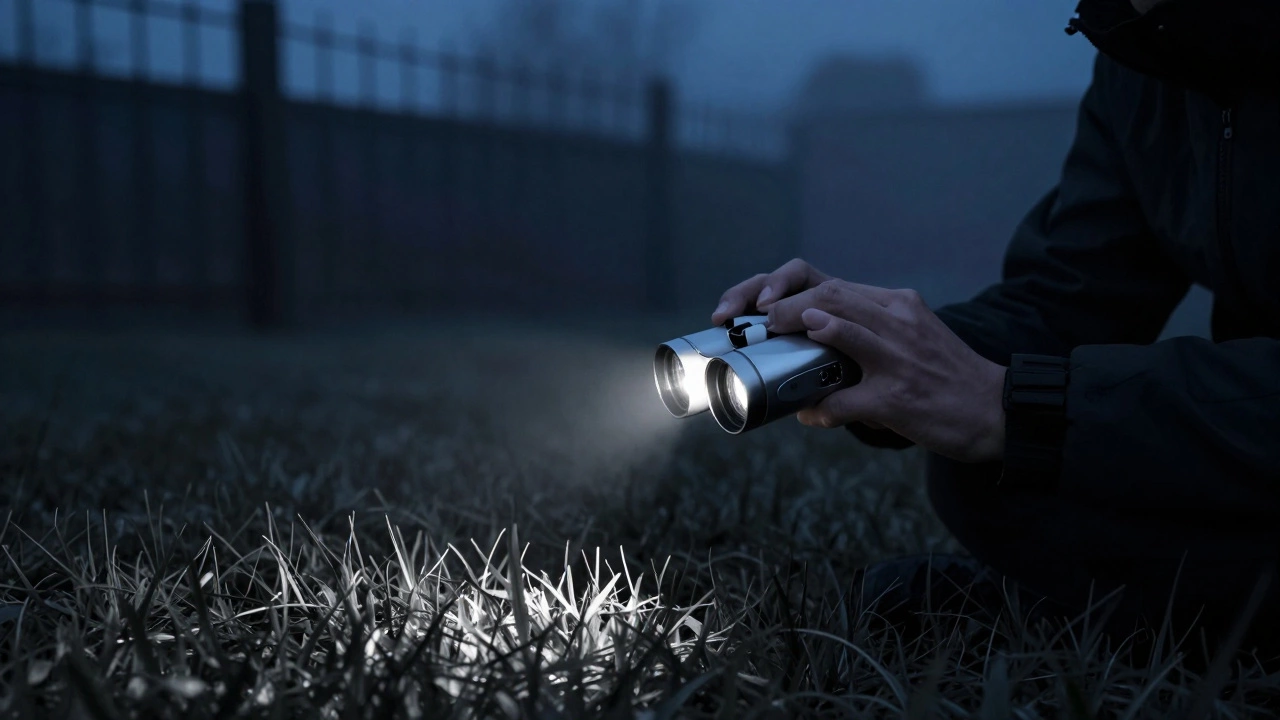
The Hexeum Night Vision Binoculars stand out in this category. They offer HD video recording (typically 720p or 1080p), integrated IR illumination, and long battery runtimes. While their effective range is limited to about 100-150 yards, they provide sufficient clarity for backyard use. Similarly, digital goggles starting at US$165 offer hands-free viewing for airsoft players or recreational explorers. Just be aware that budget devices often suffer from lower image clarity and shorter detection ranges compared to mid-tier options.
Best for Hunters: Multispectral and Thermal Binoculars
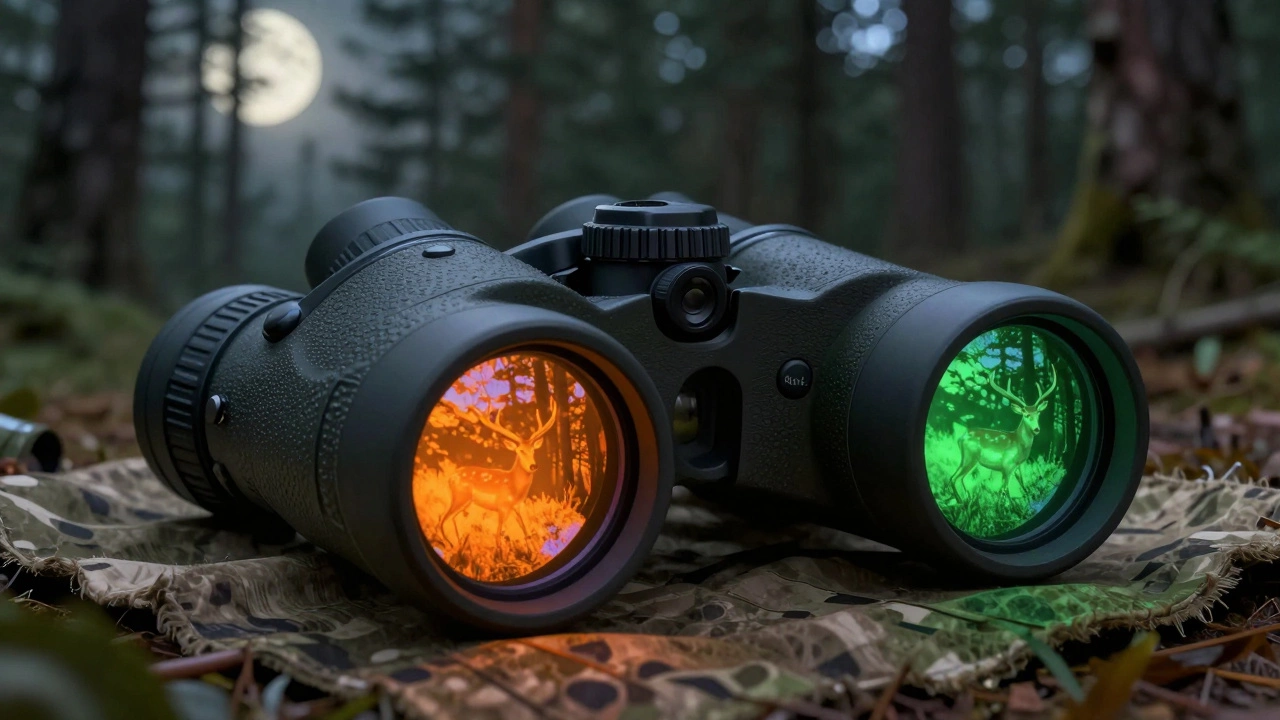
For serious night hunting, single-mode devices are becoming obsolete. The industry standard in 2026 is shifting toward multispectral binoculars. These devices allow you to scan a field using thermal mode to detect heat signatures up to 1,000 yards away, then switch to digital night vision mode to confirm the target’s identity before taking a shot.
Pulsar Vision leads this segment with binoculars that integrate high-resolution thermal sensors (320×240 to 640×480 pixels) with digital day/night channels. The advantage is adaptability. Thermal sees through light foliage and fog, which is crucial when conditions aren’t perfect. Digital provides the visual detail needed for ethical shot placement. While these units cost significantly more-often exceeding US$1,500-they replace the need to carry two separate devices.
Best for Professionals: High-End Fusion and AI Systems
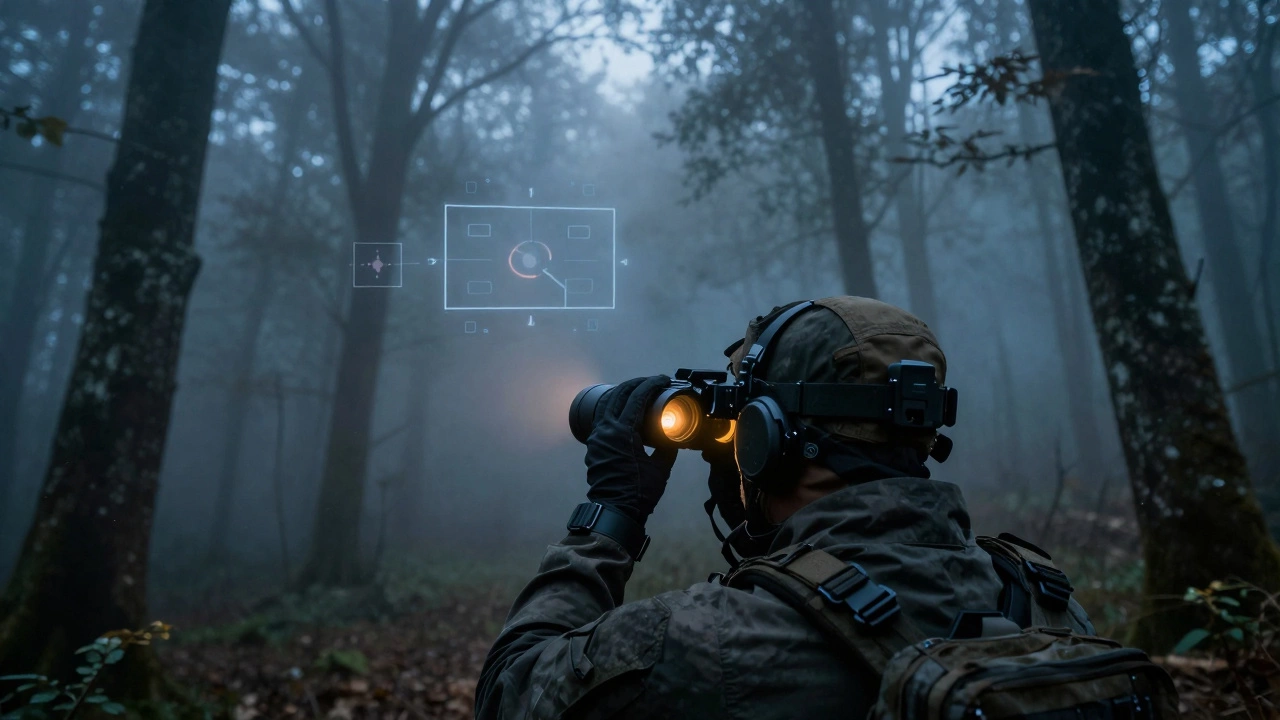
If you are in law enforcement, private security, or elite tactical operations, the "best" night vision involves advanced fusion systems and AI integration. Devices like Anduril’s EagleEye represent the bleeding edge. These are not just cameras; they are networked platforms that blend thermal and digital imagery, use onboard AI to classify targets, and share data across teams.
At the consumer-professional boundary, Gen 3+ Image Intensifier Tubes remain relevant for applications requiring extreme low-light sensitivity without IR illumination (which can give away your position). However, these are rare, heavily regulated, and cost upwards of US$3,000-$5,000. For most civilians, high-end digital/thermal fusion goggles offer Gen 3-competitive performance at a fraction of the price.
Key Specifications to Check Before Buying
When comparing specs, focus on three metrics that actually impact your experience:
- Resolution: For digital devices, look for 1920×1080 (Full HD) or 2560×1440 (QHD). Higher pixel counts mean sharper images, especially when zooming in on recorded footage. For thermal, check the sensor resolution (e.g., 384×288 is better than 320×240).
- Range: Be skeptical of marketing claims. A "detection" range of 1,000 yards means you can see *something* is there. An "identification" range might be only 200 yards. For most civilian uses, a usable range of 100-300 yards is sufficient.
- Magnification: Goggles typically use 1× magnification (true size) for situational awareness. Monoculars and binoculars often range from 2× to 6×. Higher magnification narrows your field of view and can make the image shakier unless mounted on a tripod.
Common Pitfalls to Avoid
Don’t buy a Gen 1 tube device if you plan to use it in any ambient light. They blow out instantly under streetlights or moonlight. Stick to digital or thermal for versatility. Also, avoid cheap thermal scopes with low-resolution sensors (below 320×240); the image will be blocky and hard to interpret. Finally, consider power management. Thermal and digital devices drain batteries quickly in cold weather. Carry spare lithium-ion batteries if you are operating outdoors for extended periods.
Is thermal imaging better than digital night vision?
It depends on your goal. Thermal is superior for detection in total darkness, fog, or through light foliage because it sees heat. Digital night vision is better for identification because it provides detailed, recognizable images similar to what you see with your eyes. For most users, a multispectral device that combines both is the ideal solution.
Can I use night vision cameras for home security?
Yes, but dedicated handheld night vision optics are different from fixed security cameras. For home security, modern IP cameras with strong IR LEDs work well. However, if you want to actively patrol your property at night, a digital night vision monocular or goggle allows you to move freely and inspect areas where fixed cameras might have blind spots.
What is the effective range of budget night vision?
Budget digital devices (under $300) typically have a useful detection range of 100 to 150 yards. Beyond that, the image becomes too grainy or dim to identify objects clearly. Mid-range devices ($500+) can extend this to 300-500 yards for detection and 100-200 yards for identification.
Do I need a license to own night vision in the UK?
In the United Kingdom, owning night vision equipment is generally legal for civilians. However, there are restrictions on importing certain military-grade devices (like Gen 3 tubes) without authorization. Always check current UK legislation regarding import controls and usage laws, especially if purchasing from overseas retailers.
What is the best night vision for hunting in 2026?
For serious hunters, multispectral binoculars are the top choice. They allow you to scan large areas with thermal to find game and switch to digital night vision for precise identification. Models from Pulsar and similar brands offering 384x288 or higher thermal resolutions are recommended for reliable performance in varied terrain.