Vision Tech Selector: Which Tool Do You Need?
Answer these quick questions to find the perfect visibility technology for your specific scenario.
How much ambient light is available in your environment?
Some Light
Moonlight, street lamps, or dim indoor lighting is present.
Total Blackout
Zero visible light, sealed rooms, or absolute darkness.
Your Recommended Technology
You've probably seen the green-tinted goggles in spy movies or the eerie black-and-white footage from a home security app. Most people use the terms "night vision" and "infrared" interchangeably, but if you're shopping for a security system or tactical gear, treating them as the same thing is a mistake. One relies on what's already there, while the other finds what's hidden. Depending on whether you're monitoring a dimly lit porch or a pitch-black warehouse, picking the wrong one could leave you staring at a blank screen.
How Night Vision Actually Works
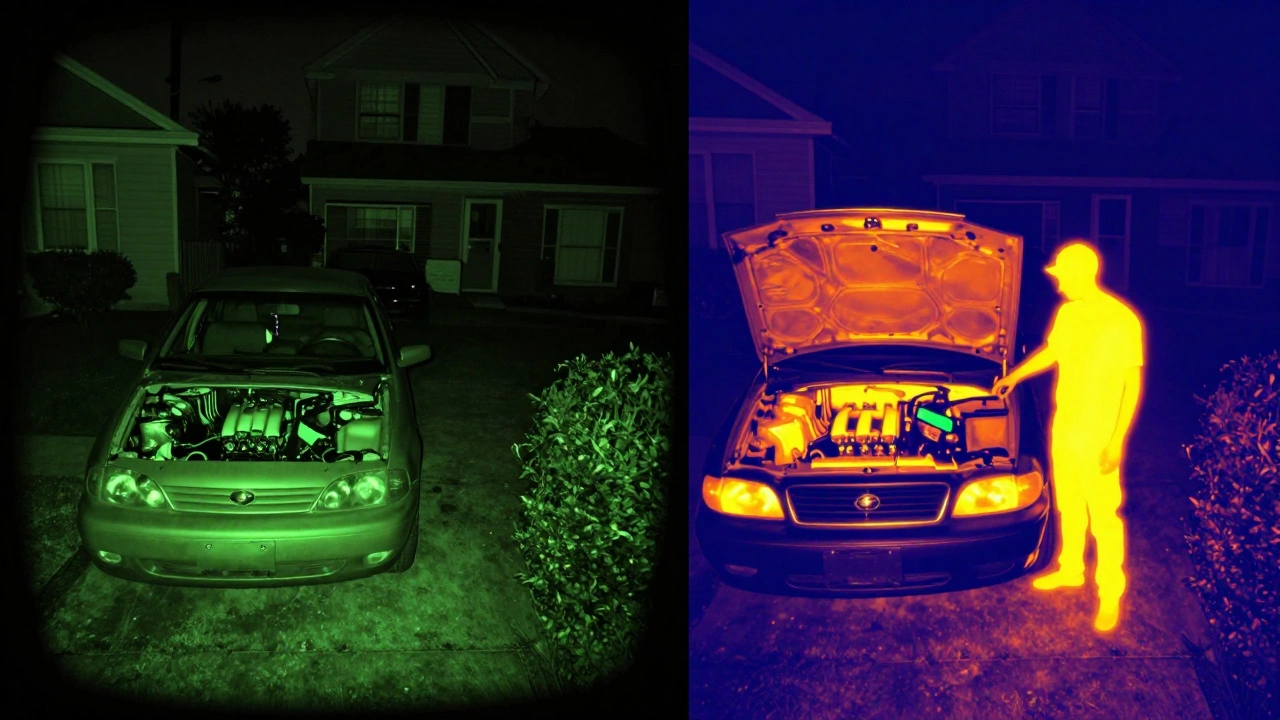
Think of night vision as a light amplifier. It doesn't create its own light; it just makes the most of what's available. When photons from a distant star or a flickering streetlight hit the sensor, a photocathode converts that light into an electrical signal. This signal is then cranked up-amplified-and turned back into a visible image.
Because it uses the visible light spectrum, Night vision can maintain a level of natural detail and color that other low-light techs can't touch. If you have a bit of moonlight, you can see the textures of a jacket or the specific color of a car. However, there's a catch: if you're in a room with zero light-literally a sealed basement-traditional night vision is blind. It has nothing to amplify, leaving you in the dark.
The Magic of Infrared and Thermal Imaging
Infrared technology plays a completely different game. Instead of looking for light, it looks for heat. Every object with a temperature above absolute zero emits infrared radiation. An infrared camera uses a specialized sensor, often a microbolometer, to map these temperature differences.
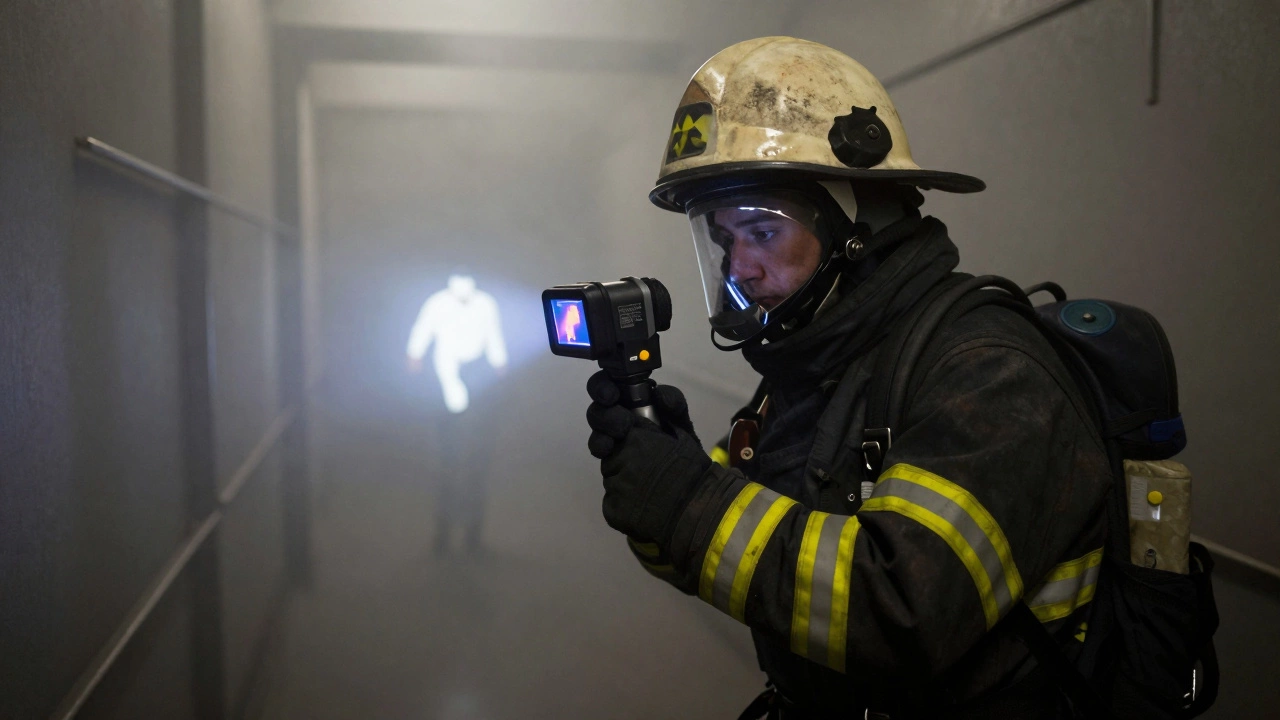
This means an infrared system doesn't care if the lights are on or off. It can see a human body standing in a pitch-black field because the person's 37°C body heat contrasts sharply with the cool night air. This is why firefighters use thermal imaging to find people through thick smoke-the smoke blocks visible light (which kills night vision), but heat signatures punch right through it.
| Feature | Night Vision (Amplification) | Infrared (Thermal) |
|---|---|---|
| Light Requirement | Needs ambient light (moon, stars) | Zero light required |
| Image Quality | High resolution, more natural | Lower resolution, heat-based |
| Color Palette | Green or Full Color | Grayscale or False-Color (Heat maps) |
| Obstacle Penetration | Blocked by smoke/fog | Sees through smoke/fog |
| Primary Use | Tactical, identification | Search and rescue, diagnostics |
Which One is Better for Home Security?
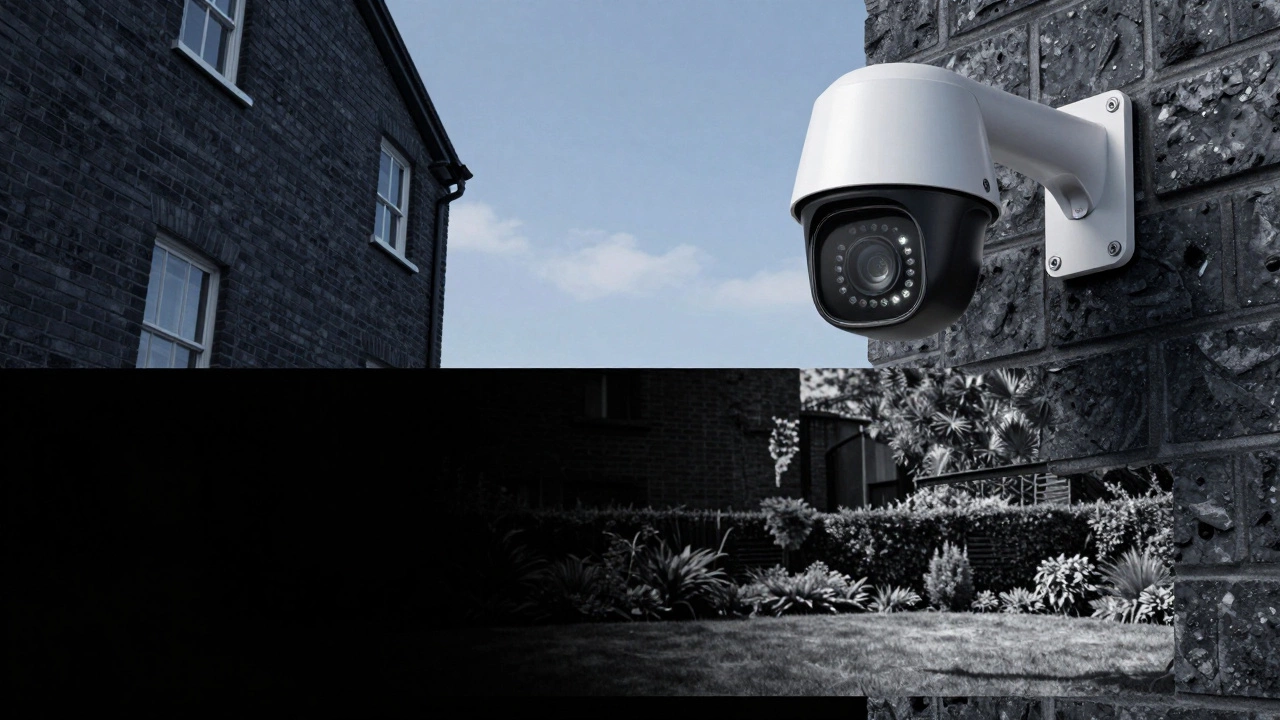
If you're installing security cameras, you'll likely encounter "IR Night Vision." This is actually a hybrid. Many home cameras use an infrared LED array to flood the area with light that is invisible to humans but visible to the camera. This gives you the best of both worlds: the high resolution of a standard sensor with the ability to see in the dark.
If your goal is to identify a face or a license plate, you want high-resolution night vision. The clear, natural-looking images make it much easier for the human eye to recognize a specific person. On the other hand, if you're monitoring a massive, unlit perimeter where you just need to know *if* something is moving (like a deer or an intruder), a thermal infrared setup is superior because it flags heat signatures instantly, even from a distance.
Environmental Pitfalls to Watch Out For
Neither technology is perfect. Night vision is at the mercy of the weather. On a heavy overcast night with no moon, your visibility drops significantly. It also struggles with "washout"-if a bright flashlight or car headlight hits the lens, the amplification can overload, blinding the user momentarily.
Infrared has its own set of quirks. Since it detects heat, a very hot summer day can create "thermal clutter." If the pavement is the same temperature as a human body, the contrast disappears, and the intruder blends into the ground. Reflective surfaces, like glass or polished metal, can also trick infrared cameras, reflecting heat from other sources and creating "ghost" images that aren't actually there.
Choosing the Right Tool for the Job
Deciding between these two comes down to your specific environment. If you're dealing with a softly lit driveway or a garden with some street lighting, night vision will give you the detail you need to actually identify a visitor. It's the better choice for mid-range security where clarity is king.
But if you're facing a total blackout, thick fog, or need to detect a heat source (like an overheating electrical panel or a hidden person in the brush), infrared is the only way to go. It's predictable, reliable, and completely independent of the sun, moon, or lightbulbs.
Can humans see infrared light?
No, the human eye is only sensitive to a small part of the electromagnetic spectrum called visible light. Infrared radiation has wavelengths longer than visible light, which is why we can't see the IR LEDs on a security camera, even though the camera sees them as bright spotlights.
Does thermal imaging work through walls?
Generally, no. While infrared can see through smoke and fog, it cannot penetrate solid walls. However, it can detect "thermal leakage," such as heat escaping through a thin wall or a window, which is why it's often used for home energy audits.
Why are night vision images usually green?
Phosphor screens used in traditional image intensifier tubes emit a green glow. Green was chosen because the human eye is most sensitive to different shades of green, allowing the user to distinguish more detail in the amplified image.
Is a "color night vision" camera actually infrared?
Usually, it's a high-sensitivity sensor that can pull in more light than a standard camera. Some use very low-light sensors (like Starvis technology) to create a color image from minimal light, while others use an IR illuminator but process the image to appear in color.
Which is more expensive, infrared or night vision?
Historically, high-end thermal infrared cameras were significantly more expensive due to the cost of microbolometers. However, prices have dropped drastically. Now, basic IR security cameras are very cheap, but professional-grade thermal imaging is still generally more costly than consumer-grade night vision.
Next Steps for Your Setup
If you're still unsure, start by auditing your lighting. Walk your property at 2 AM. If you can see the silhouette of a tree, night vision with a basic IR illuminator will work great. If you're looking at a void of absolute blackness where no light ever reaches, invest in a dedicated thermal infrared sensor.
For those mixing both, consider a "dual-spectrum" camera. These devices combine a standard visual sensor for daytime and a thermal sensor for nighttime, switching automatically so you never lose a detail regardless of the weather or light levels.